

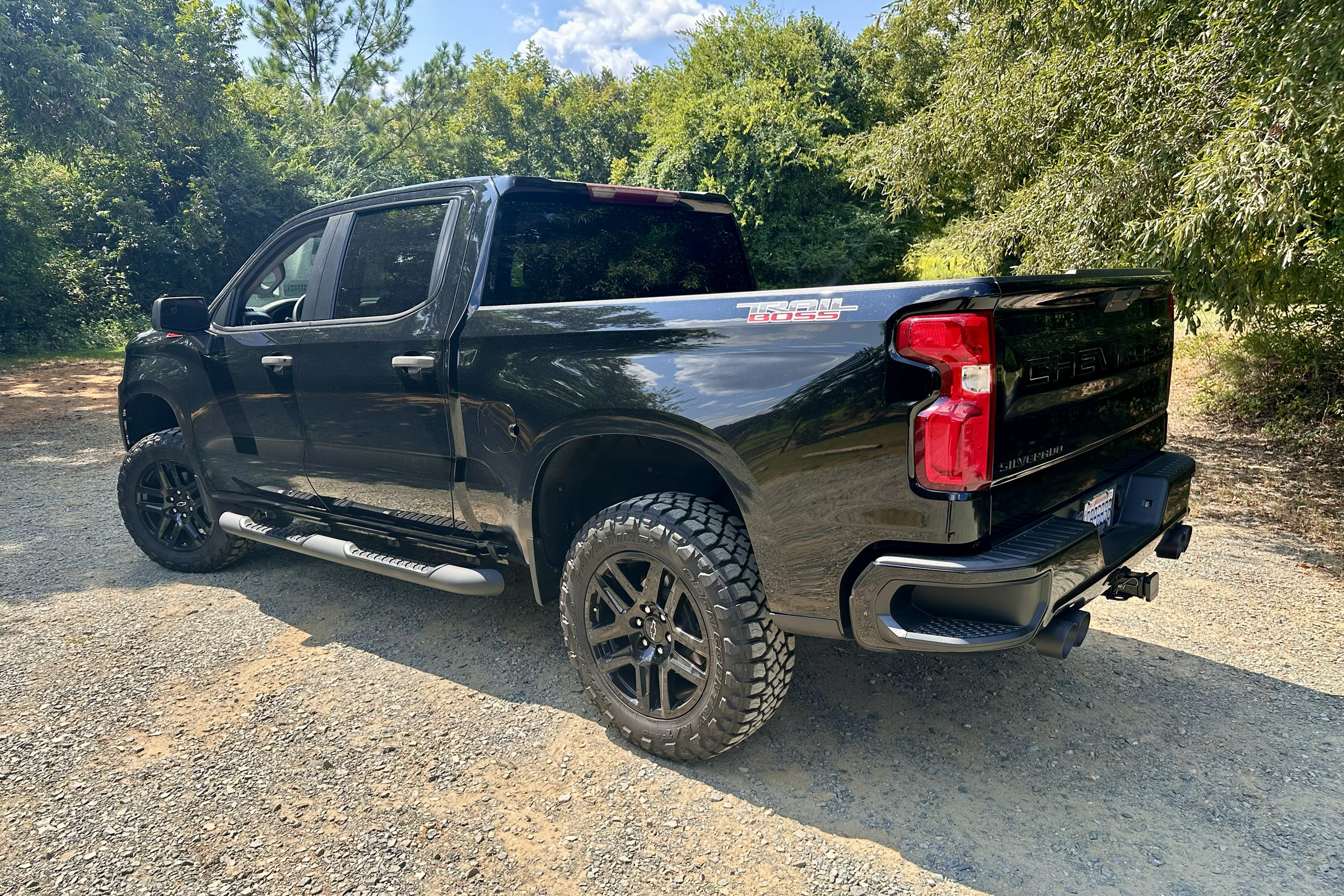
I’ve always been quite the Flowmaster fan. When I bought my first Camaro, I quickly replaced its Cherry Bomb glasspacks with 40 Series Flowmasters. When I added a second Camaro to the fleet, I ordered another pair of 40 Series mufflers. Then I decided my first Camaro wasn’t loud enough, so I welded up a pair of Super 10s. Needless to say, I’ve been a longtime supporter of the brand. So when Holley gave me the opportunity to bolt up a new cat-back system to my daily-driven Silverado, I jumped at the opportunity.
Here’s the thing: I like my classic muscle cars to be classic muscle cars. That means loud paint, loud exhaust, and badass vibes. My goal is really to be as rowdy as possible within the specific style of each build. But for my daily driver, I wanted something a little more tame. I wanted that deep Flowmaster sound I know and love, but in a package that wouldn’t fatigue my ears during long highway stints.
With the help of Flowmaster’s sound clips, I eventually decided to go with the company’s moderately aggressive American Thunder system. By moderately aggressive, the company means the system creates an aggressive exterior tone while maintaining moderate interior noise. And in this author’s opinion, the setup is pretty much perfect for any daily-driven truck that needs a little bit of attitude. But more on that later.
Bolt It Up And Go
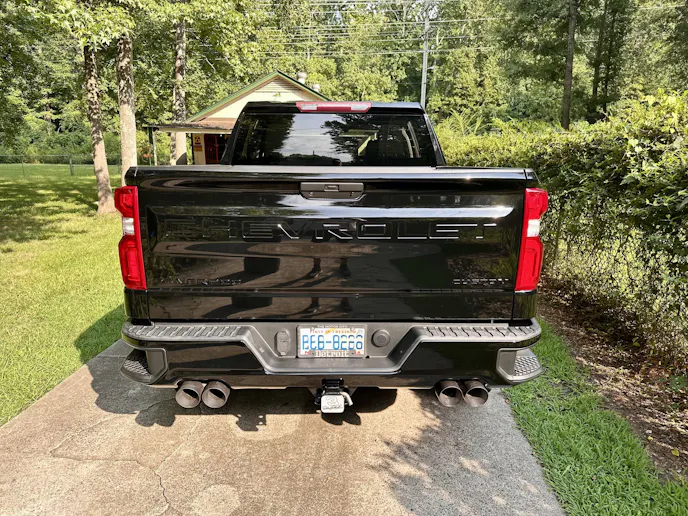
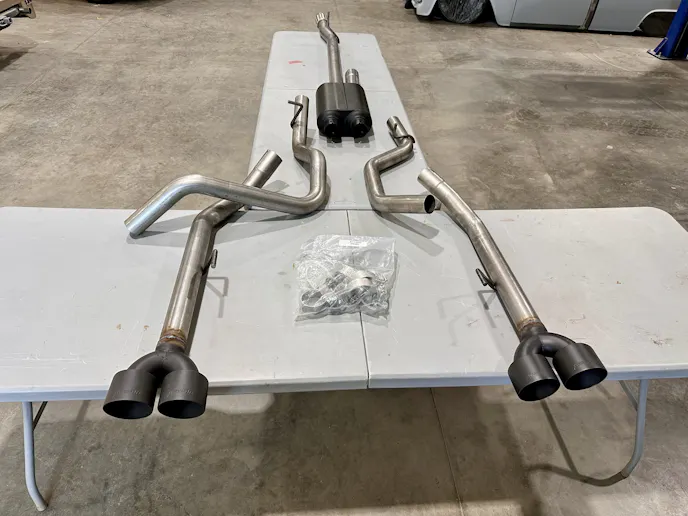
The American Thunder Cat-Back Exhaust System for the 2019-2026 Silverado 1500 (PN 817895) with a 5.3L engine is a CARB-compliant, bolt-up exhaust kit that can be installed in your driveway or garage. The kit includes 2.5-inch stainless steel pipes, a stainless Super 40 Series muffler that’s coated with high-temp paint, welded hangers, flat band clamps, and welded stainless tips that are ceramic-coated in black. In addition to creating more horsepower and torque, the system maintains your truck’s factory warranty and comes with its own limited lifetime warranty.
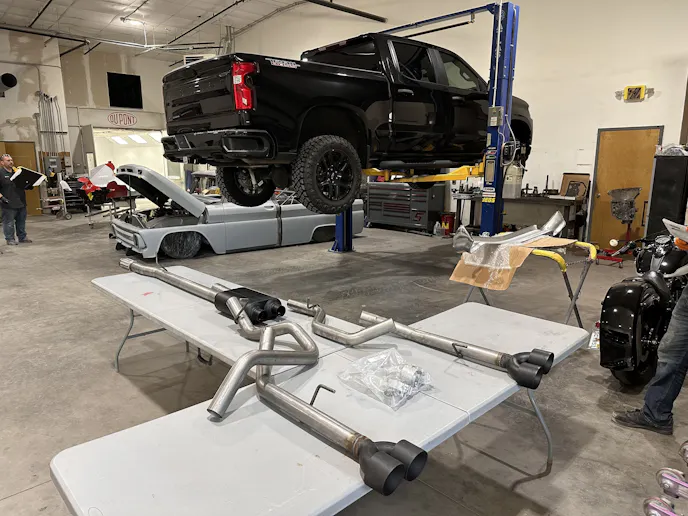
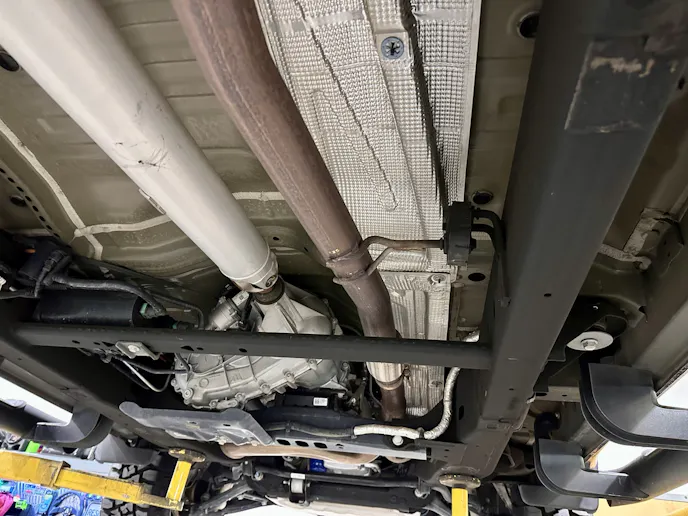
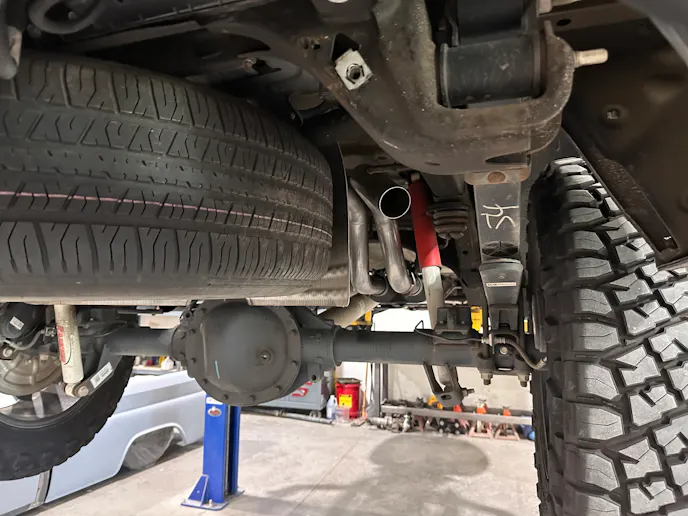
Since I have a Trail Boss that, with tires and spacers, sits roughly three inches higher than a factory Z71, I had the crazy idea of trying to pull off the install without jack stands. But one look at the factory pipes shut that idea down real quick. Because the truck’s exhaust aligns with the passenger’s side tailpipe, the whole system is pretty much one big piece. That means you’ll either need to lift the truck so the pipe can pivot and clear the axle, or you’ll need to be pretty confident with a hacksaw.
There are also two more things to consider here. First, I’m not a spring chicken, and I don’t care to roll around on the ground all afternoon. Secondly, I’m fortunate enough to know the fine folks at ForgeSpeed, in Mooresville, North Carolina. In addition to specializing in upmarket and high-performance builds, ForgeSpeed does lifts, paint and body, and simple installs just like the one you see here.
Without Further Ado, Deconstruction
After getting the Silverado on the lift, the first thing we did was lube the bolts and hangers. It’s kind of surprising how stubborn factory bushings become after they’ve been exposed to the elements for four or five years. Lubing your bushings and hangers will pay dividends when you’re trying to wrestle the pipe and muffler assembly off the truck in about 20 minutes.
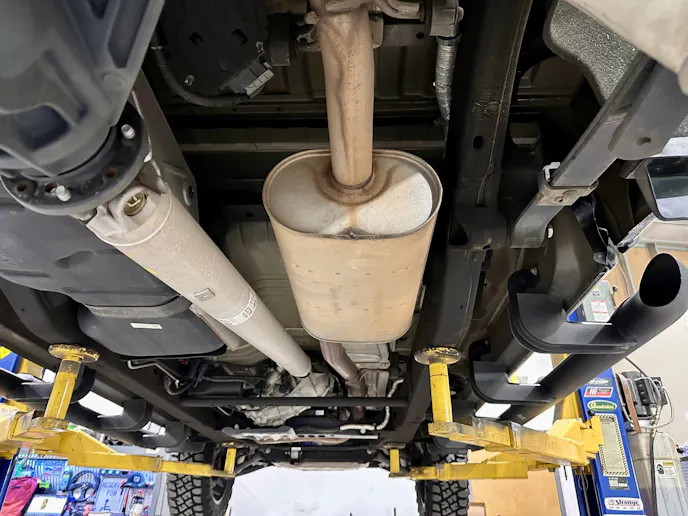
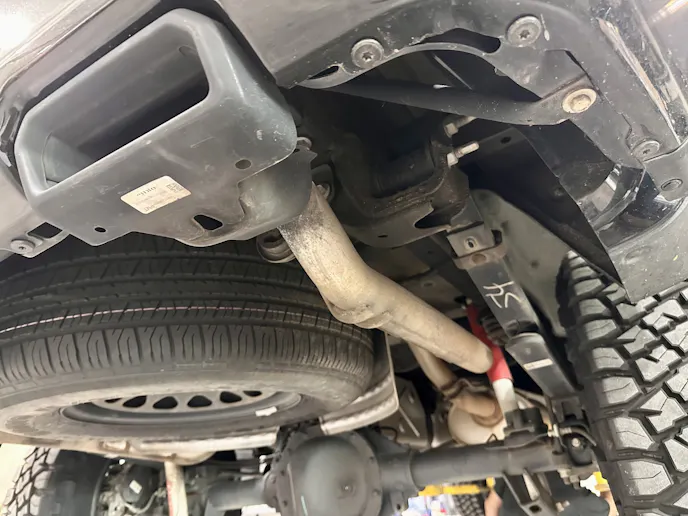
Next, we set about trying to figure out the best way to remove the truck’s factory exhaust tips. Now, I had sort of a personal dilemma about whether or not I wanted to install a system with new tips. Flowmaster sells this system, which includes four 4.5-inch, Flowmaster-branded trumpets. But they also sell the Signature Series system (PN 737894), which is another moderately aggressive cat-back setup that utilizes a proprietary muffler design and the truck’s factory tips.
I’m one of those rare enthusiasts who appreciates the design of GM’s ‘USB port’ exhaust tips. I like how they’re integrated into the truck’s bumper and, being a 1990s kid, I guess I was sort of conditioned to love square Chevy exhaust tips. Plus, my truck is a Midnight Edition, which means my powder-coated tips were added as optional equipment. (Nerd alert, right?)
That said, I do like the more aggressive design of the Flowmaster units. Plus, I didn’t want to miss out on any of the system’s glorious sound. I also want people to know, subtly, that this truck has been worked on, and in a tasteful way.
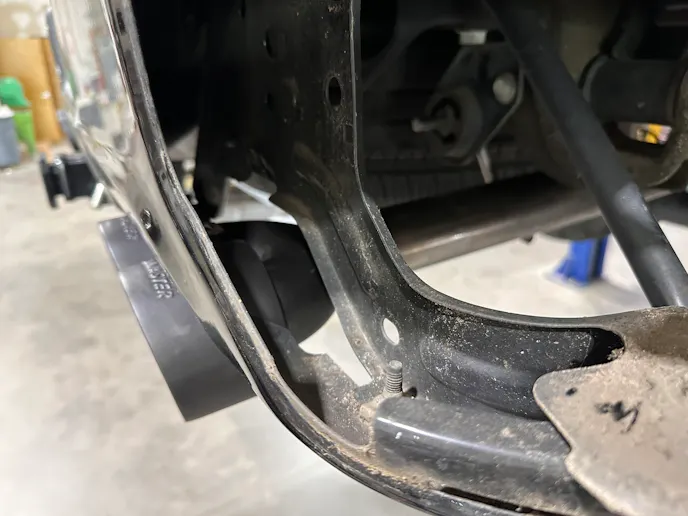
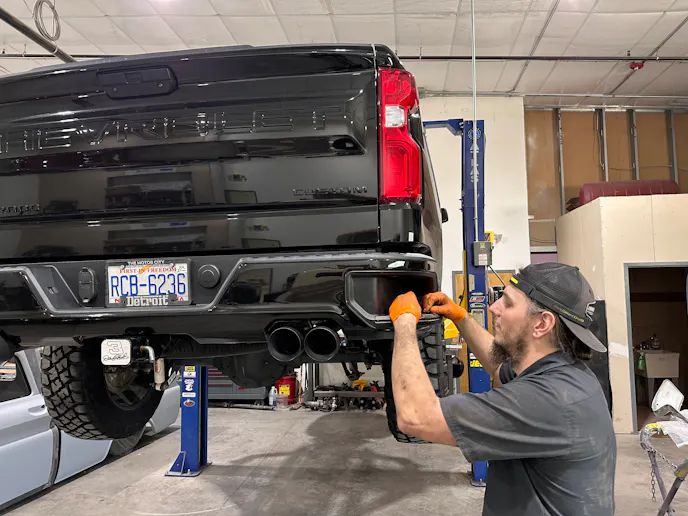
Anyway, after some tactical interweb research, the easiest way I found to remove the tips was to drop the tailpipes and bend said tips down to expose the three bolts securing them to the bumper. At the shop, we found a better way. Removing the steps from the truck’s bumper allows direct access to the tips. To remove the steps, gently pry on the textured pieces until they pop out. Then remove the three screws that hold the step assembly in the bumper, and voila! This was especially useful for me since I wanted to keep my Midnight Edition tips and stash them back like the hoarder I am.
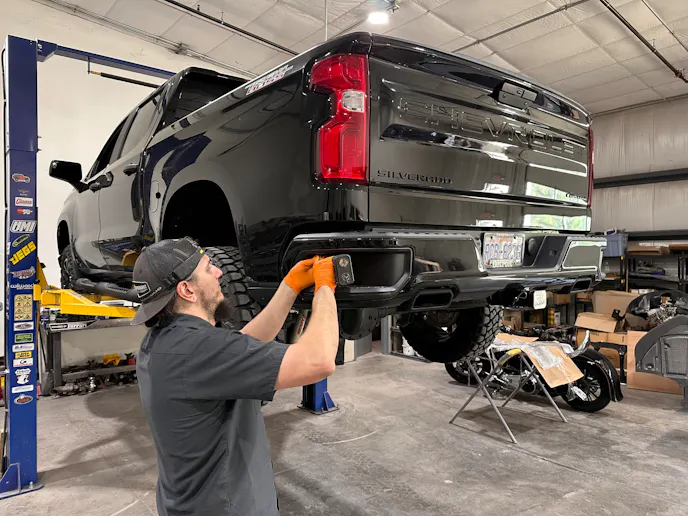
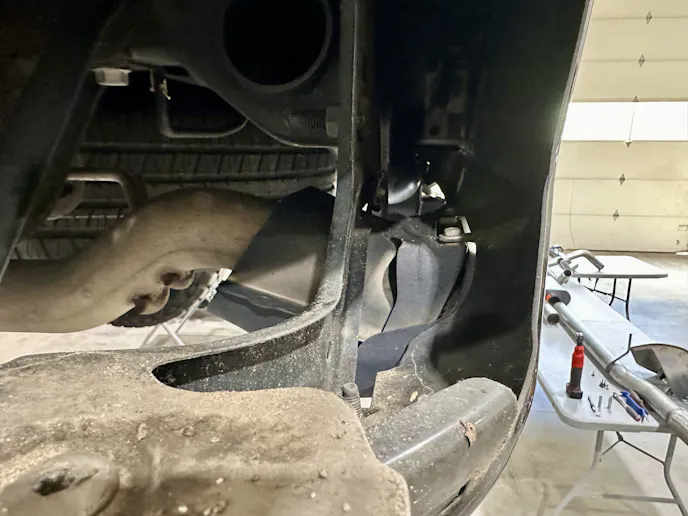
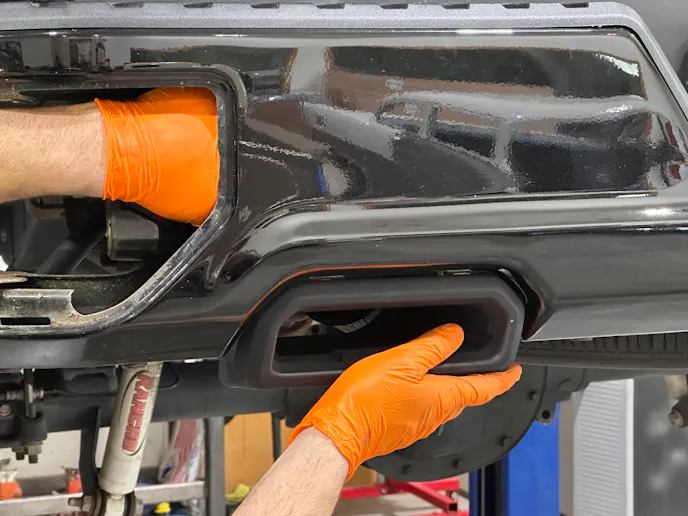
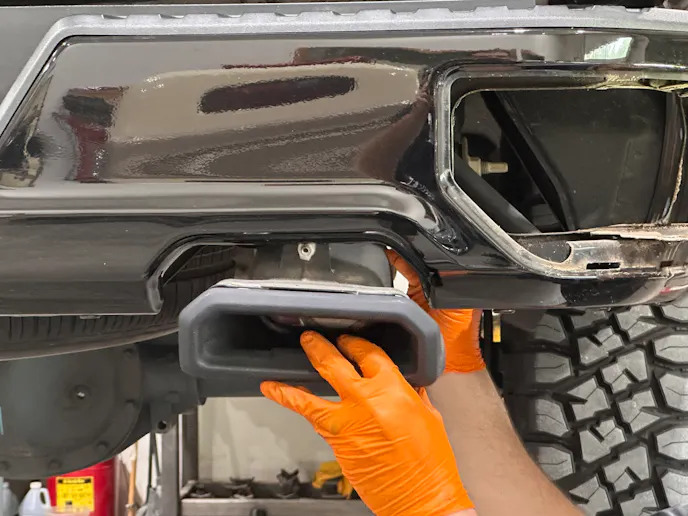
Simplification of assembly of multiple versions of this truck results in the exhaust running primarily down the passenger’s side of the vehicle. The main pipe actually aligns the converter more with the passenger’s side pipe and tip. In fact, the driver’s side tailpipe is really just an accessory pipe. That means removing the driver’s side pipe is as simple as unbolting it and taking it out from under the truck.
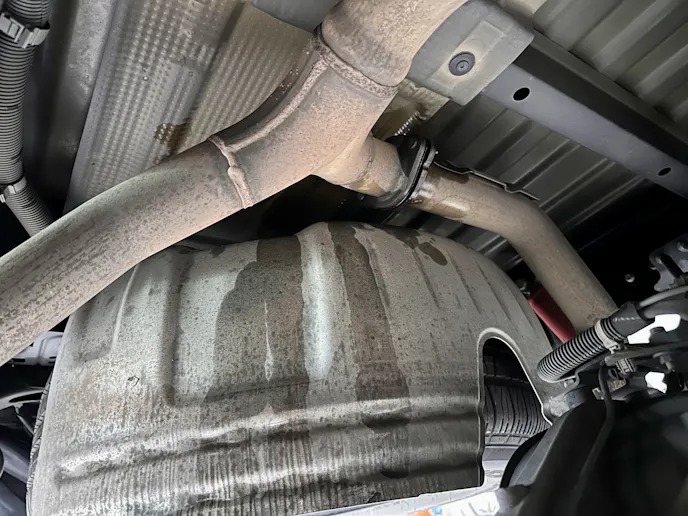
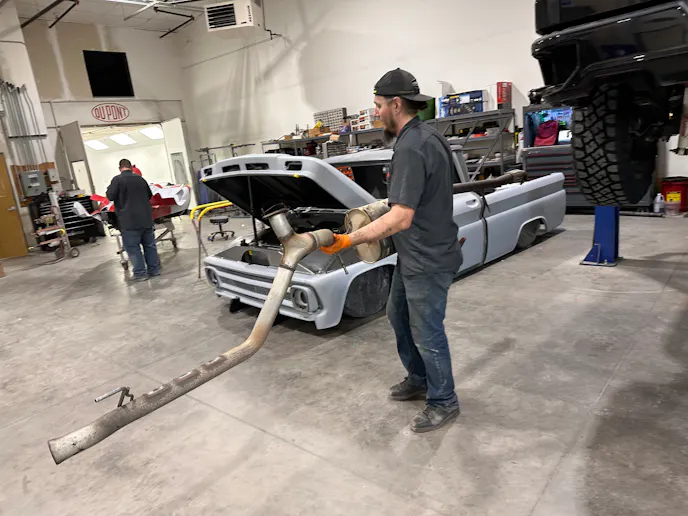
But that passenger’s side pipe is where things get interesting. Since we were lucky enough to have a lift, we unbolted the entire assembly at the converter and wrestled it off all the bushings at once. This is where the hacksaw would come in handy if we were on the ground using stands. In that scenario, we would simply hacksaw the pipes in two or three spots, remove the clip from the converter, and take it out piece by piece. That’s because the whole assembly will never have enough room to clear the rear axle if the truck is on the ground.
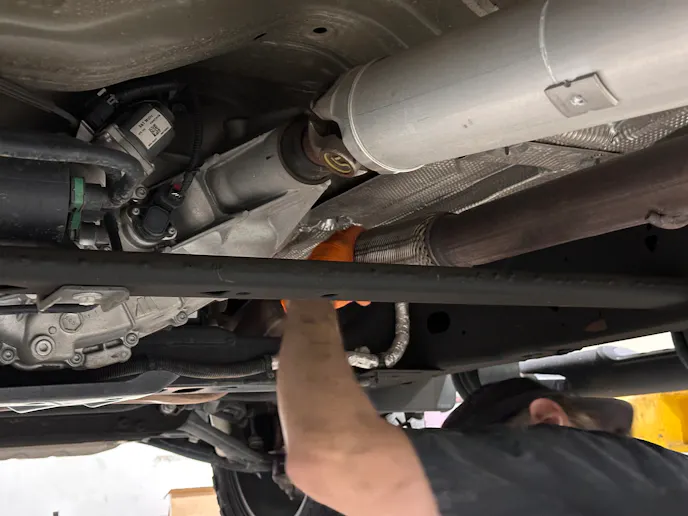
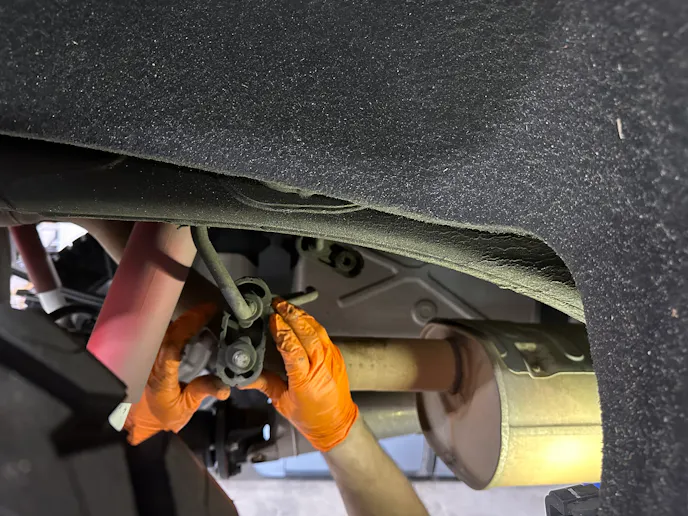
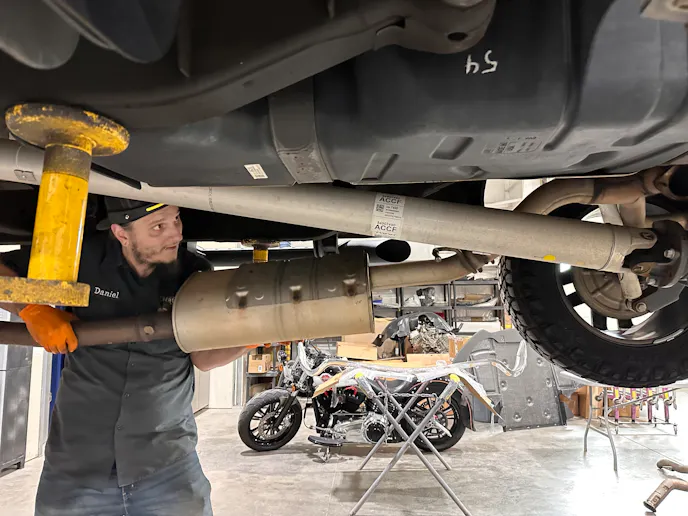
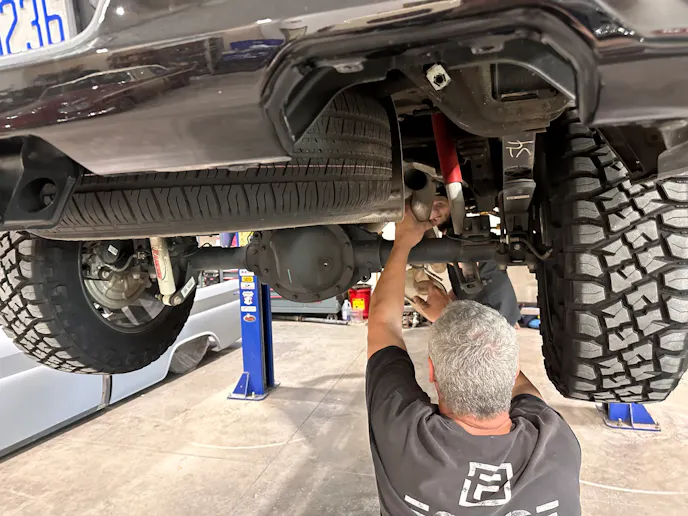
Naturally, removing the whole assembly was much easier to do with two people. It isn’t all that heavy; it’s just long and hard to navigate around the rear axle. This is also where it’s important to remember that you’ll need to retain the cat clip from the truck’s factory exhaust.
And Now, The Main Act: Installation
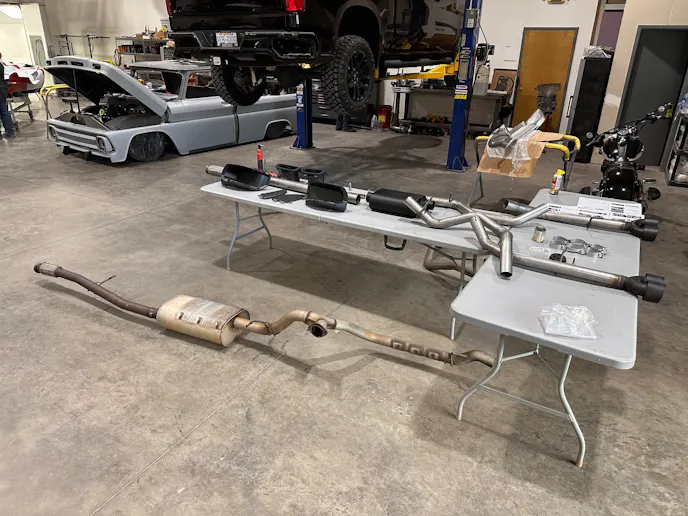
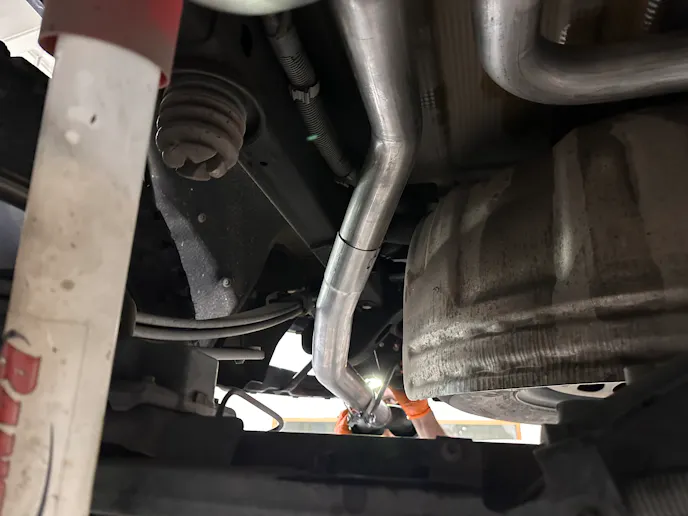
We began by laying every piece of the Flowmaster kit on a table. Since my Silverado has the shortest bed option, we didn’t need the extension piece that’s included in the kit, so we connected the muffler to the intermediate pipe and carried it over to the truck. One thing the American Thunder system shares in common with the factory exhaust is that the intermediate pipe installs on the converter using a factory cat clip. One thing it does not is the fact that, with the Super 40, we step up to a dual-outlet muffler, meaning we’ll need to assemble two pieces of tailpipe per side. Not to worry, though, since the tailpipes are very straightforward.
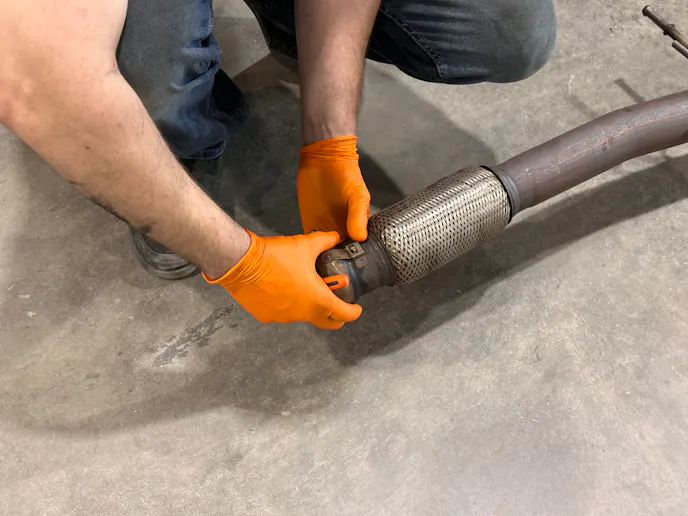
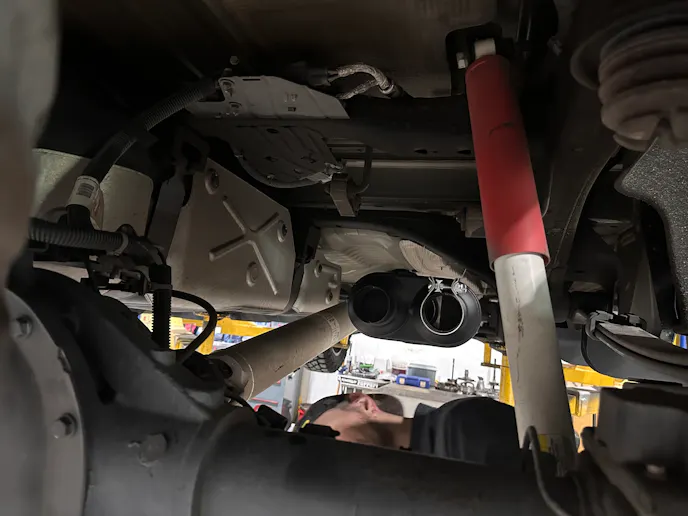
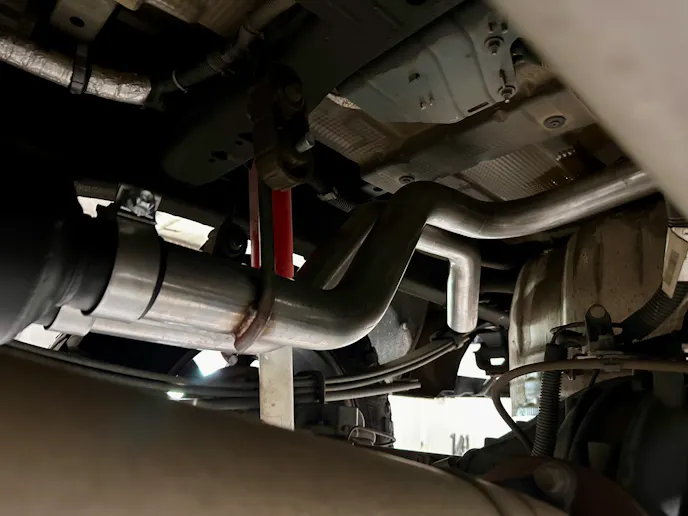
Our next step was to slip the supplied clamps onto the muffler and connect and hang the first pair of pipes. Then we clamped and hung the second pair of pipes and tightened everything up. At this point, we could loosen individual clamps and slide individual pipes to perfect the alignment of the tips with the truck’s bumper. Once we had everything looking sharp, we reinstalled the step assemblies and gently tapped the textured plates back into their clips.
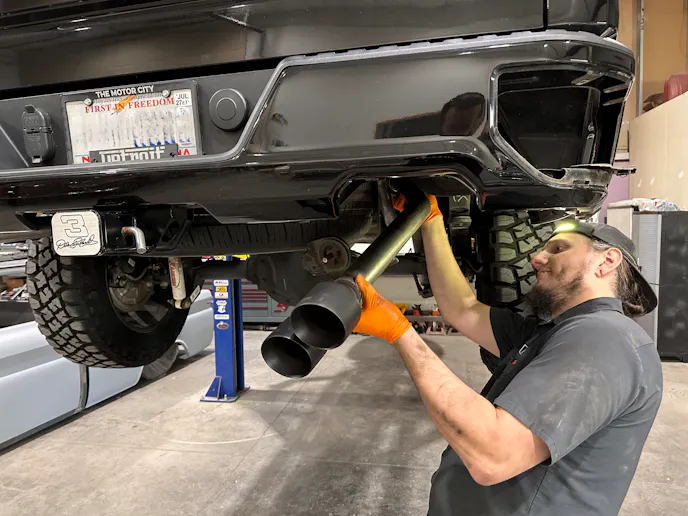
The best way to describe the truck’s sounds is familiar but better. GM’s LT V8 has a nice, deep idle to begin with, and Flowmaster’s American Thunder system does a nice job of amplifying that rumble just enough to sound cool but not annoy the neighbors – something I personally tested the following week since I left for the track at 5:45 am. The truck is now loud enough to get noticed, but not so loud that I can’t pull up, roll the window down, and talk to someone in a parking lot.
On the road, the Series 40 sings when it counts. When you smash the go pedal, Flowmaster’s familiar deep rumble fills the cab, but not to the point of being an annoying drone or impeding conversations, even with the windows down. When the truck hits fifth or sixth gear, the system is so subtle that you can cruise for hours without getting fatigued. The flip side is that eight- and ten-speed trucks might sound a bit more eventful since those are more athletic transmissions, which isn’t a bad thing.
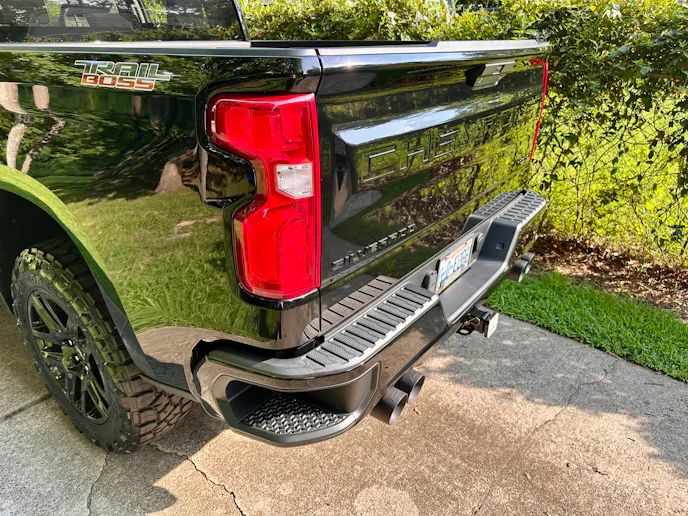
After living with this system for over 1,000 miles, I think Flowmaster pretty much nailed it. The installation was straightforward, the ceramic-coated tips fit the Midnight Edition theme, and the truck has even greater personality. My Camaros can rattle windows, anger neighbors, and generally make questionable amounts of noise. That’s part of their charm. But the Silverado has to haul parts, cover road trips, sit in traffic, and occasionally leave the house before the rest of civilization wakes up. Now, I have just enough thunder to do it in style!
You might also like
Chevy Goes Big Again: New Gen 6 5.7L And 6.6L V8s Transform The 2027 Silverado
The 2027 Chevy Silverado debuts new Gen 6 5.7L and 6.6L V8 engines with more power, advanced technology, and classic Small Block DNA.