
In the world of serious off-road Toyotas, the Bilstein B8 8112 and 8100 series dampers have earned a reputation that borders on mythical. For many enthusiasts, they represent the sweet spot between race-proven desert performance, long-distance overland comfort, and daily-driver civility.
That’s a difficult balance to achieve in a platform like the fifth-generation 4Runner. Toyota’s venerable SUV is beloved for its durability and versatility, but anyone who has pushed one hard off-road understands its limitations. Factory suspension tuning prioritizes comfort and reliability, not high-speed control over endless washboard roads or repeated hard hits through desert terrain. Even well-regarded entry-level upgrades like Bilstein’s own 5100 series or the popular 6112/5160 combinations eventually reveal their performance ceiling when speeds increase and terrain becomes more punishing.
The 8112/8100 package was engineered specifically to address those shortcomings.
At first glance, the system looks like a premium coilover-and-reservoir-shock setup similar to offerings from Fox, King, or ICON. But Bilstein’s flagship Toyota dampers distinguish themselves through sophisticated internal damping technology, large-capacity shock bodies, extensive external adjustability, and an unusual ability to feel composed both on pavement and at speed in rough terrain.
For serious 4Runner enthusiasts, that combination has made the 8112/8100 setup one of the most respected suspension systems available today.
Built For Heat, Speed, And Control
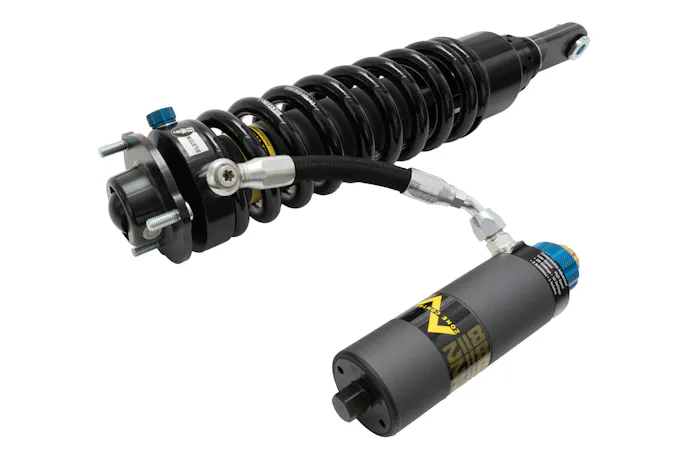
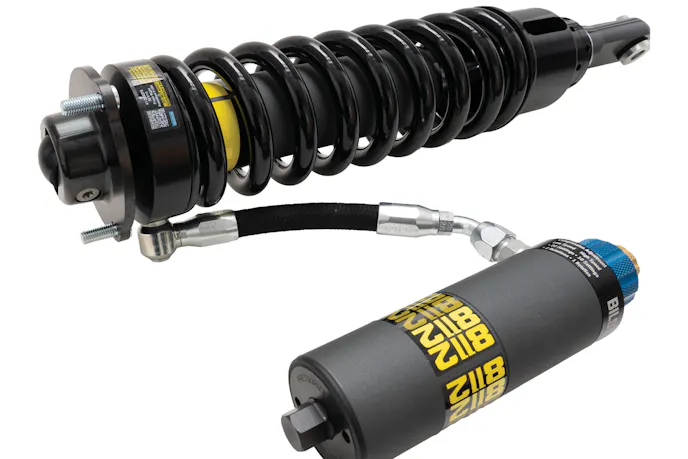
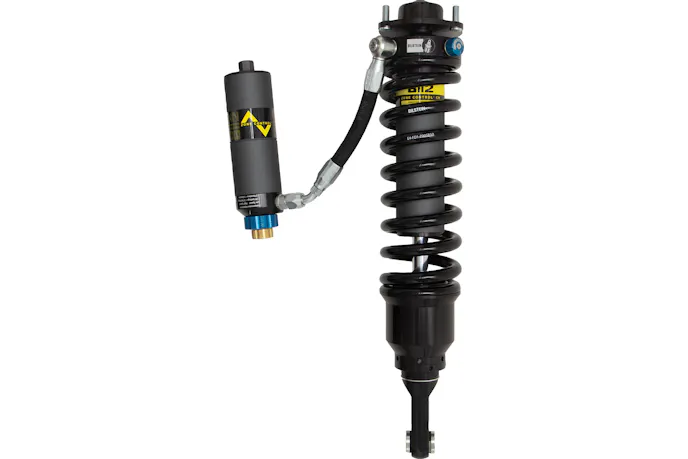
Bilstein designed the B8 8112 front coilovers and B8 8100 rear shocks as direct-fit solutions for the Toyota 4Runner, FJ Cruiser, and Lexus GX platforms. The systems feature aerospace-quality billet components, remote reservoirs, and oversized 2.65-inch shock bodies built around massive 60mm digressive pistons.
That large piston size matters more than most people realize. A larger piston allows the damper to move greater volumes of oil while providing finer control over damping forces. In practical terms, that translates into improved heat management, greater consistency over rough terrain, enhanced body control, and dramatically reduced fade during aggressive driving.
Heat is the enemy of shock performance. Once a damper overheats, the oil begins to aerate, damping consistency drops, and vehicle control deteriorates rapidly. The 8112’s remote reservoir and high oil capacity were specifically designed to combat that issue over extended distances. According to Bilstein’s own literature, the reservoir setup “offers a higher oil volume capacity to control heat while tackling rough road surfaces over long distances.”
That becomes critically important on long desert roads, heavily loaded overland trips, or high-speed fire road driving where lesser shocks begin to lose composure.
ZoneControl CR: The Technology Behind The Reputation
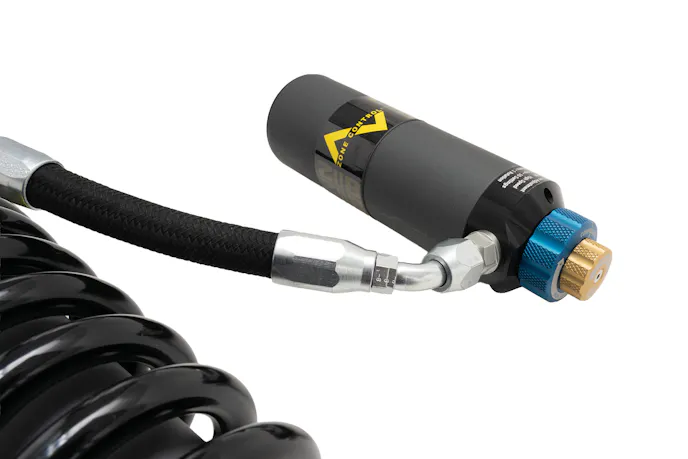
The defining feature of the 8112 front coilover is Bilstein’s proprietary ZoneControl CR technology.
Unlike traditional monotube dampers that rely on a single damping curve throughout suspension travel, the 8112 uses a multi-stage, position-sensitive internal design that changes behavior depending on where the shock is within its stroke. Bilstein refers to the system as ZoneControl CR DSA+, and it’s arguably one of the most sophisticated suspension technologies ever offered in a bolt-on Toyota application.
The “CR” designation stands for Compression and Rebound control, while DSA+ refers to Dual Speed Adjustment Plus.
The system incorporates a triple-piston design that delivers different damping characteristics through multiple suspension zones. During small suspension movements — such as expansion joints, washboard roads, or broken pavement — the shocks remain surprisingly compliant. The truck feels controlled without becoming harsh.
As suspension travel increases, damping forces ramp up substantially. Body roll decreases, nose dive under braking becomes more controlled, and the vehicle feels more planted during aggressive transitions. Near the end of the stroke, the system dramatically increases bottom-out resistance.
Bilstein also integrated an internal hydraulic bump stop known as JCO, or Jounce Cut Off. According to the company, the two-stage telescoping compression stop “eliminates the need for an external hydraulic bump stop.”
That feature is one reason many owners describe the suspension as “bottomless.”
Instead of crashing harshly into the bump stops during large impacts, the 8112 progressively absorbs energy deep within the shock stroke itself. The result is a truck that feels remarkably composed over terrain that would unsettle conventional suspension systems.
On the rebound side, Bilstein engineered a secondary rebound stop designed to dissipate spring energy following major compression events. That technology helps stabilize the suspension immediately after hard hits while preventing harsh top-out events.
In practice, that means the truck settles faster after impacts instead of bouncing or oscillating excessively.
External Adjustability Moves The Game Forward
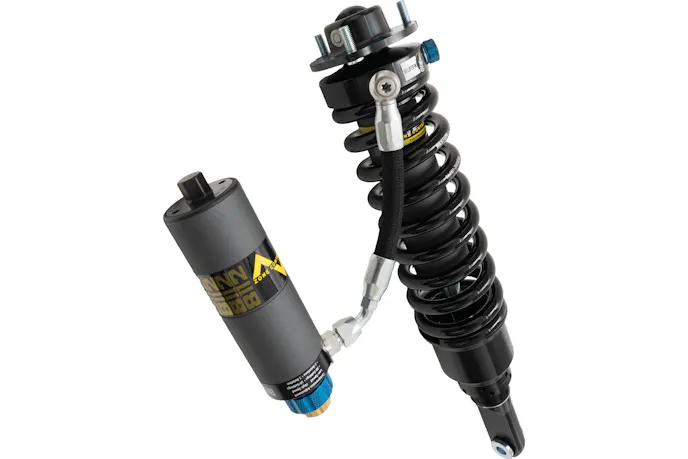
One of the most important evolutions in the latest 8112/8100 systems is the addition of external dual-speed compression adjustment.
The DSA+ system allows drivers to independently tune both high-speed and low-speed compression through external click-adjuster knobs.
This level of adjustability pushes the Bilstein system closer to race-oriented dampers while remaining approachable for enthusiasts who don’t want to disassemble shocks for tuning changes.
Low-speed compression adjustments primarily influence body motion. That includes characteristics like brake dive, body roll, steering feel, and weight transfer during cornering. High-speed compression adjustments affect how the suspension responds to rapid impacts such as rocks, potholes, whoops, or square-edge hits.
Being able to tune both independently allows owners to tailor the vehicle to wildly different uses.
A heavily loaded overland 4Runner towing a trailer through the Mojave Desert requires a very different damping profile than a lightly loaded daily driver navigating city streets. With the DSA+ system, owners can adapt the suspension without revalving or removing components.
That versatility has become one of the system’s strongest selling points.

The Rear 8100 Shocks Complete The Package
While the 8112 front coilovers receive most of the attention, the rear 8100 shocks are equally important to the system’s performance.
Available in both bypass and DSA configurations depending on application, the 8100 series brings many of the same technologies to the rear suspension. Like the fronts, they feature remote reservoirs, large oil capacity, and extensive adjustability.
Bilstein also engineered the rear shocks with 18mm piston rods designed to provide “brute tensile strength” while reducing internal gas-force ramp-up for a smoother ride.
That smoother ride quality is a recurring theme with the 8112/8100 setup.
Many high-end off-road dampers deliver incredible performance at speed but become noisy, harsh, or tiring during normal driving. Bilstein’s system has earned widespread praise for retaining excellent on-road behavior despite its off-road capability.
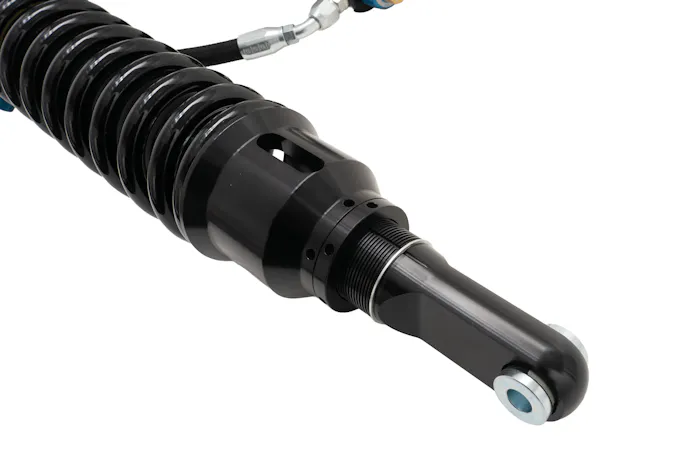
The rear shocks also utilize billet rod ends with vulcanized mounts for OE-style fitment and long-term durability.
Real-World Lift Heights And Fitment
Bilstein offers multiple configurations for different Toyota and Lexus applications.
For the 2010-2024 Toyota 4Runner and Lexus GX460, the latest 8112 ZoneControl CR DSA+ front coilovers provide adjustable lift ranges between approximately 1.2 and 3.8 inches depending on configuration. Rear lift capability ranges between 0 and 2.5 inches.
Systems are available for both KDSS-equipped and non-KDSS vehicles, although Bilstein specifies that the setups are not compatible with X-REAS, Adaptive Variable Suspension, or factory rear air suspension systems.
The company also offers optional heavy-load springs for owners carrying armor, rooftop tents, or expedition equipment.
Importantly, the coilovers arrive pre-assembled and preloaded to recommended ride height, simplifying installation compared to some competing systems. Bilstein also designed the systems to be owner rebuildable and revalvable — a major advantage for enthusiasts intending to keep their vehicles long-term.
How The 8112/8100 Compares To The Competition
The premium Toyota suspension market has become intensely competitive over the past decade.
Fox’s 2.5 DSC systems are known for plush ride quality and predictable behavior in desert terrain. King’s 2.5 coilovers remain a benchmark for pure high-speed performance and racing pedigree. ICON’s CDCV and electronic CDEV systems offer extensive adjustability and modern electronic integration.
Yet the Bilstein setup occupies a unique position within that landscape.
Compared to Fox systems, many drivers describe the 8112 as feeling more controlled and less floaty during aggressive driving. Compared to King, the Bilstein package generally requires less maintenance while still delivering excellent off-road composure. Against ICON, Bilstein benefits from a longstanding reputation for durability and consistency.
Perhaps the most telling comparison is within Bilstein’s own lineup.
The 5100 series remains one of the best-value suspension upgrades available for the 4Runner, while the 6112/5160 combination dramatically improves ride quality and capability at a reasonable price point. But neither approaches the sophistication, heat management, or adjustability of the 8112/8100 system.
The flagship Bilstein setup exists in an entirely different performance category.
The Suspension That Changes The Personality Of The 4Runner
What ultimately makes the 8112/8100 series special isn’t a spec sheet or a dyno graph. It’s the way the system transforms the driving experience.
A stock 4Runner often feels top-heavy, underdamped, and overwhelmed when pushed hard off-road. The Bilstein setup changes the vehicle’s personality entirely.
The truck becomes calmer at speed. Steering feels more precise. Body motion becomes controlled instead of sloppy. Large impacts disappear into the suspension instead of crashing through the cabin. Washboard roads that once demanded caution become smooth and manageable.
And yet, despite its capability, the suspension remains surprisingly civilized during daily driving.
That dual-purpose refinement is difficult to engineer, and it’s why the Bilstein 8112/8100 system continues to command enormous respect among serious Toyota enthusiasts.
You might also like
2027 Jeep Cherokee Trailhawk Packs Real Off-Road Hardware
The 2027 Jeep Cherokee Trailhawk combines hybrid efficiency with low-range 4x4, 9 inches of ground clearance, and Trail Rated capability.