


Walk through the aisles of an overland expo or spend a few minutes shopping for a GMRS mobile radio online, and you’ll quickly notice one specification that manufacturers love to advertise: transmit power. Five watts. Fifteen watts. Twenty-five watts. Fifty watts. Some brands even promote output levels above the legal GMRS limit, creating the impression that more power automatically translates into better communication.
It’s an easy assumption to make. In the automotive world, bigger numbers usually mean better performance. More horsepower accelerates harder. More torque pulls heavier loads. It’s natural to think the same logic applies to two-way radios. But radio communications don’t work that way.
When it comes to vehicle-mounted GMRS systems, transmitter power is only one piece of a much larger equation. Antenna efficiency, antenna placement, receiver sensitivity, and overall RF engineering often have a greater impact on real-world communication than simply adding more watts. That’s why companies like GME have built a reputation around 5-watt mobile radios that consistently perform alongside competitors advertising significantly higher output.

Bigger Numbers Don’t Equal Bigger Range
One of the biggest misconceptions surrounding GMRS radios is that doubling the transmit power doubles your communication range.
Radio power is measured on a logarithmic scale, meaning it takes a surprisingly large increase in output to produce a relatively small increase in signal strength. Moving from a 5-watt radio to a 10-watt radio only increases signal strength by about 3 decibels—a difference that is measurable but often difficult to notice in everyday use.
To achieve what most users would consider a substantial increase in range, you typically need roughly four times the transmitter power under ideal conditions.
Now add in the real world. Trails wind through canyons. Mountain ridges block signals. Trees absorb RF energy. Vehicles themselves create interference. In those situations, the terrain is often the limiting factor—not whether your radio is transmitting 5 watts or 15.

The Antenna Is Where Performance Begins
If there’s one component that deserves more attention than transmitter power, it’s the antenna.
A radio can only communicate as effectively as the antenna allows. An inefficient antenna wastes valuable RF energy before it ever leaves the vehicle, while a well-designed antenna radiates more of that energy toward its intended destination.
This is where the overall system matters. GME has long approached radio design with the philosophy that every component should work together. Rather than relying on higher transmitter power alone, the company designs its mobile radios to work in conjunction with its own line of antennas, which are engineered and manufactured in Australia. The result is a balanced RF system that makes efficient use of every available watt.
That’s one reason a GME 5-watt mobile radio paired with a properly matched GME antenna can often communicate every bit as effectively as higher-powered competitors in typical off-road conditions. The radio isn’t overcoming physics—it simply isn’t wasting as much of the energy it already has.
Height Is Often More Valuable Than Horsepower
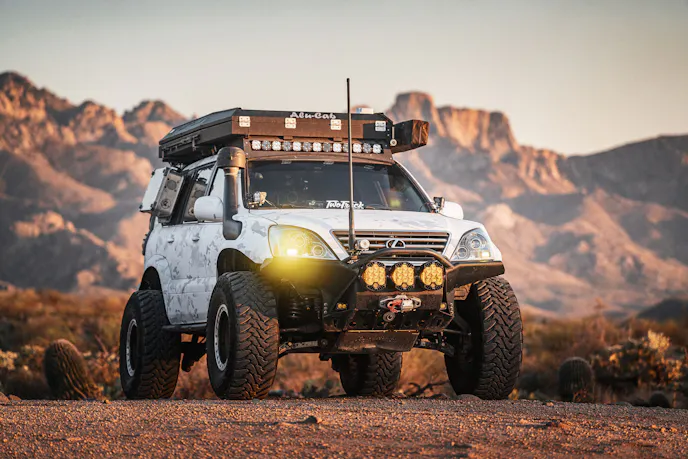
Vehicle-mounted radios already have one major advantage over handheld units: the antenna.
Installing an antenna on the roof, hood, or bed rack places it significantly higher than a handheld radio inside the cab. That added elevation dramatically improves line-of-sight communication, which is one of the biggest factors affecting GMRS performance.
An external antenna also avoids many of the signal losses caused by the vehicle itself. Steel body panels, passengers, recovery gear, and camping equipment can all interfere with RF signals when the antenna remains inside the vehicle.
The result is that a properly installed 5-watt mobile radio with a quality external antenna will frequently outperform a more powerful radio that’s paired with a compromised antenna or poor installation.
Simply put, antenna placement often delivers more real-world performance than adding another 10 or 20 watts.
Listening Is Half The Conversation
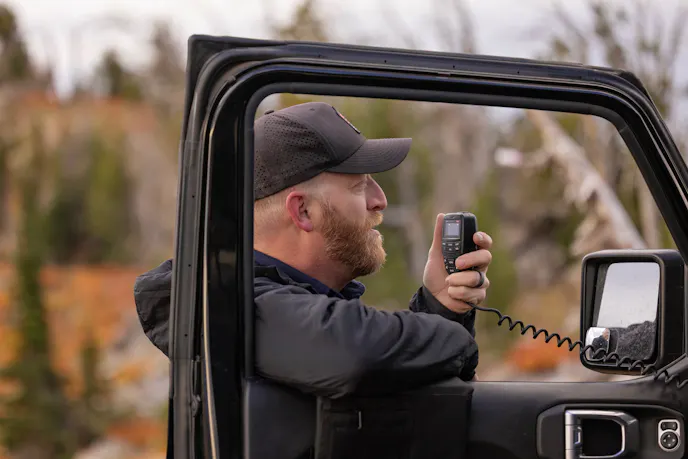
Transmit power tends to dominate marketing because it’s easy to compare, but every radio conversation has two sides. Your radio has to hear just as well as it talks.
Receiver sensitivity plays a major role in determining whether weak incoming signals are received clearly or lost in background noise. Two radios with similar transmit power can perform very differently depending on how well their receivers process faint signals.
This has long been an area of emphasis for GME. With decades of experience designing communications equipment for Australia’s vast and often remote Outback, the company has historically focused on building radios with strong receiver performance alongside efficient transmitting systems.
A radio with a sensitive receiver won’t magically extend your range, but it may allow you to hear transmissions that another radio simply misses.
More Power Comes With Trade-Offs
That’s not to say higher-power mobile radios don’t have their place. They absolutely do.
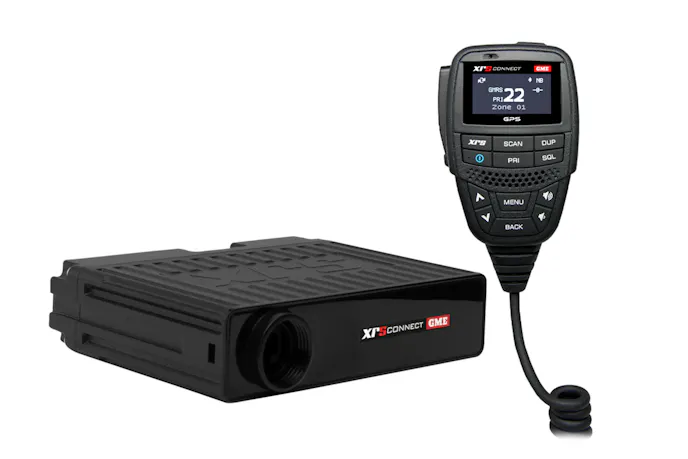
A 50-watt GMRS mobile radio paired with a quality external antenna will generally outperform a 5-watt system, particularly across wide-open terrain or when communicating over longer distances. Additional transmit power becomes increasingly valuable once every other part of the system has already been optimized.
The important distinction is that a 50-watt system represents a meaningful jump in capability. By comparison, moving from 5 watts to 10 or even 15 watts often produces a much smaller improvement than many buyers expect.
Higher-output radios also generate more heat, draw more electrical current, and require larger cooling provisions. Those aren’t necessarily drawbacks, but they are engineering considerations that manufacturers must balance alongside reliability and efficiency.
Looking Beyond The Wattage Wars
It’s understandable why wattage has become such a popular marketing tool. It’s a single number that’s easy to compare, and bigger almost always sounds better.
Real-world radio performance, however, is determined by the complete RF system. A well-engineered mobile radio paired with a properly matched antenna, quality coaxial cable, careful installation, and a capable receiver will often outperform expectations, even if the transmit power appears modest on paper.
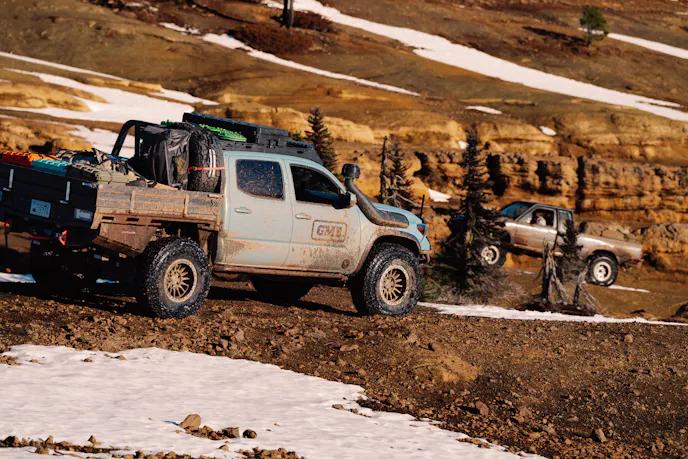
That’s ultimately the philosophy behind GME’s mobile GMRS lineup. Rather than chasing wattage for the sake of advertising, the company has focused on building complete communication systems where the radio and antenna are designed to complement one another.
For most off-roaders, overlanders, and trail leaders, that balanced approach delivers dependable communication where it matters most. And it reinforces a lesson that’s been understood by experienced radio operators for decades: if you’re looking for better performance, don’t focus only on the transmitter. The biggest gains often come from improving the entire system.
You might also like
Edge Pulsar LT Install: Unlocking More Control Over Our Silverado Trail Boss
We install the Edge Pulsar LT on our 5.3L Silverado Trail Boss to improve throttle response, disable DFM, and correct tire size settings.