
When enthusiasts hear the name TMI Products, they usually think of classic muscle cars, Broncos, Jeeps, and high-end custom trucks. For more than 40 years, the California company has built a reputation for producing some of the aftermarket’s nicest interiors, whether that’s replacement upholstery, molded door panels, or complete seating systems. But over the past few years, TMI has quietly turned its attention to a completely different market, one where comfort is just as important as horsepower.
On paper, replacing the seats in a side-by-side might seem like a cosmetic upgrade. Spend a full day in the desert, however, and you’ll quickly realize how much your seats influence the entire driving experience. Factory seats are designed to satisfy a broad range of buyers while meeting aggressive production costs. Even many aftermarket suspension seats follow the same basic formula they’ve used for years.
TMI decided to start with a clean sheet of paper. Rather than simply building another suspension seat, the company applied decades of automotive seating experience to develop a complete replacement system engineered specifically for today’s high-performance UTVs. The result is a seat that looks every bit as premium as you’d expect from TMI, but more importantly, one that’s designed to reduce fatigue, improve support, and make long days behind the wheel noticeably more comfortable.
A Different Way To Enter The UTV Market
TMI’s move into powersports wasn’t about chasing the latest trend. If anything, it feels like a natural evolution of what the company has already been doing for decades.
Designing a good seat isn’t just about making it softer. It’s about understanding ergonomics, body positioning, impact absorption, durability, and how all those elements work together over hours of use. Those are lessons TMI has learned while developing interiors for everything from first-generation Camaros to modern Broncos and lifted trucks.
As side-by-sides have become more capable, owners have started spending more time in them. What used to be a quick afternoon ripping around the dunes has evolved into multi-day overlanding trips, cross-country trail rides, and long weekends exploring public land. That shift changes what drivers expect from a seat.
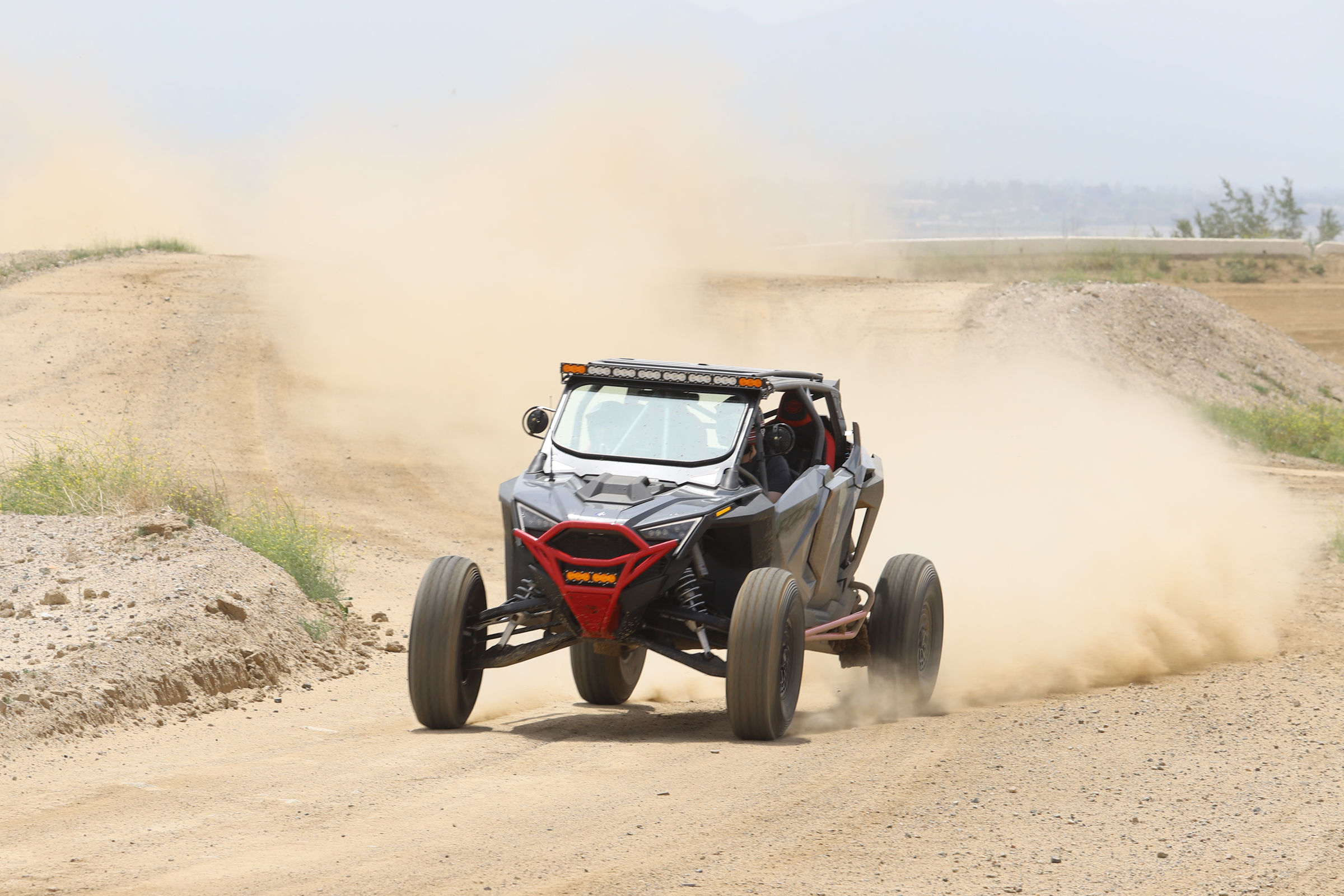
The company officially introduced its new powersports seating line during the 2024 Sand Sports Super Show, choosing the Polaris RZR as its launch platform. Given the RZR’s popularity in both the sport and recreation markets, it was an obvious place to begin, but TMI has made it clear the RZR is only the first step in a much larger program.
Rethinking The Suspension Seat
The biggest surprise isn’t what these seats look like. It’s what’s hidden underneath the upholstery.
Nearly every aftermarket suspension seat uses some variation of the same design. A flexible suspension panel stretches beneath the foam, creating a sort of hammock that cushions impacts before they reach the driver. It’s a proven concept that’s been around for years. TMI took a different path.
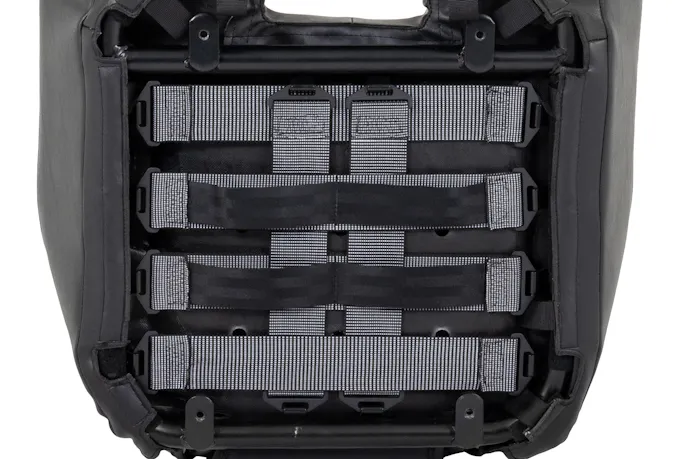
Instead of relying on a single suspended membrane, the company developed an adjustable webbed suspension system inspired by helicopter seating.
At first glance, aviation and off-roading don’t seem to have much in common, but both environments subject occupants to repeated impacts over long periods of time. Helicopter seating has long focused on spreading those loads across multiple suspension points rather than concentrating them into a single surface.
The interconnected webbing distributes impacts across the entire seating surface, helping reduce pressure points while softening repeated hits from rocks, whoops, and rough trails. Better yet, the webbing can be re-tensioned over time as the material naturally stretches with age.
It’s one of those features you rarely see discussed in marketing material, but from an engineering standpoint, it’s genuinely clever. Rather than accepting that a suspension seat will gradually lose support over years of use, TMI built in a way to restore it.
More Than Just A New Seat Cover
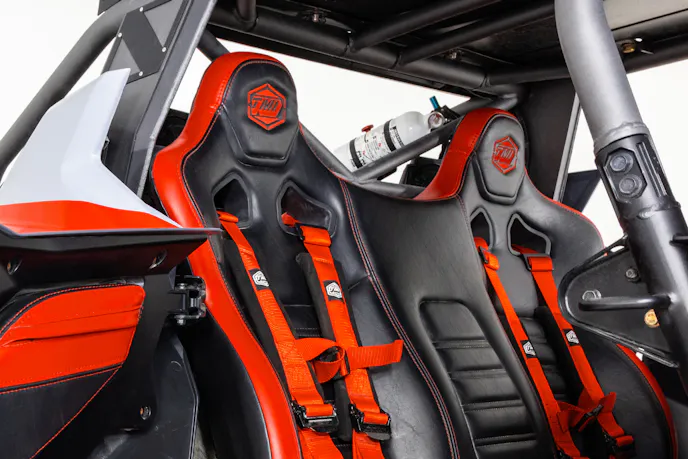
Another thing that separates TMI from many aftermarket options is that you’re not rebuilding your factory seats. Everything arrives as a complete assembly.
Each seat includes its own welded frame, molded foam, integrated suspension webbing, upholstery, and vehicle-specific mounting hardware. Depending on the application, factory adjustability is retained as well.
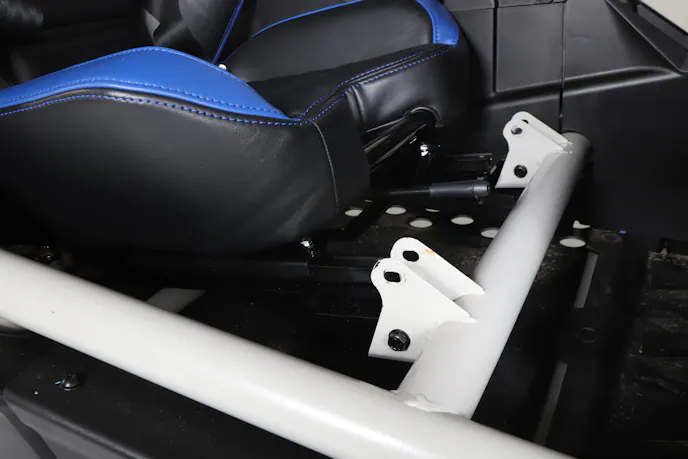
That means no transferring foam. No stripping upholstery, wrestling with hog rings, or trying to make a universal suspension seat fit factory mounting points. Pull the factory seat out, bolt the new one in, and you’re done.
Comfort That Lasts All Day
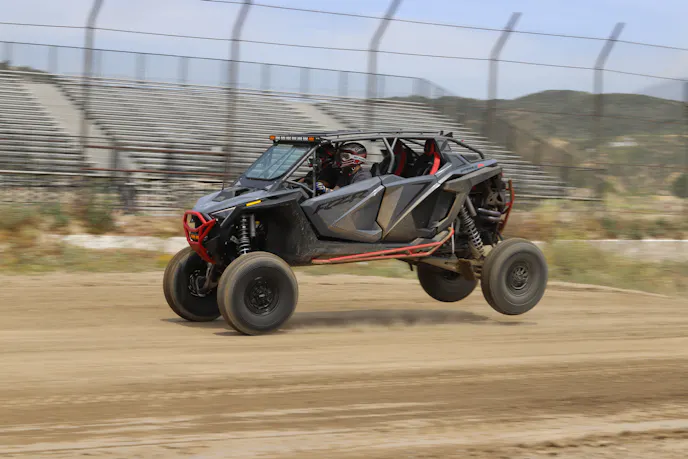
Ask anyone who’s spent eight hours behind the wheel of a side-by-side, and they’ll tell you the same thing. It’s usually not the suspension that wears you out first. It’s the seat.
Repeated small impacts gradually take their toll, especially when you’re constantly shifting your body to stay planted during rough terrain. That’s where TMI’s automotive background really starts to show.
The molded foam isn’t simply thick, it has shape. Pronounced side bolsters help keep occupants centered during aggressive driving while the suspension webbing underneath absorbs much of the constant chatter coming through the chassis.
The two systems work together instead of relying on one to do all the work. You don’t necessarily notice it during the first few miles. You notice it four hours later when you’re still comfortable enough to keep driving.
Built For Life Outside
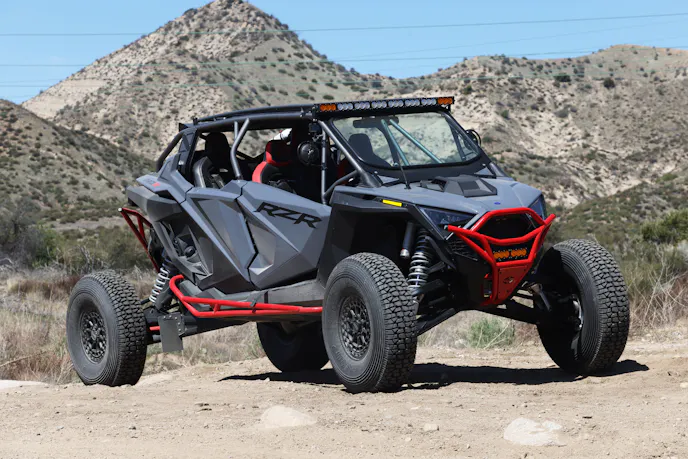
UTVs live hard lives. They’re parked in the sun, blasted with sand, soaked during river crossings, and coated in mud more often than they’re cleaned. That environment demands different materials than you’d use in a street vehicle.
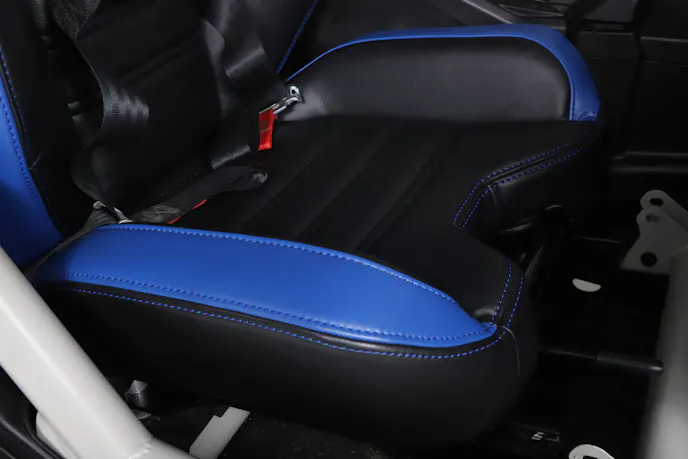
TMI chose marine-grade vinyl throughout the powersports lineup because it offers excellent resistance to ultraviolet exposure, moisture, mildew, and abrasion. Heavy-duty stitching and reinforced wear areas further improve long-term durability while still delivering the upscale appearance the company has become known for.
The materials aren’t flashy for the sake of being flashy. They’re there because they can survive years of abuse while still looking good.
Interior Styling Worth Looking At
Let’s be honest, appearance matters. Nobody spends thousands of dollars building a custom side-by-side only to ignore the interior. Fortunately, making interiors look good has been TMI’s specialty for decades.
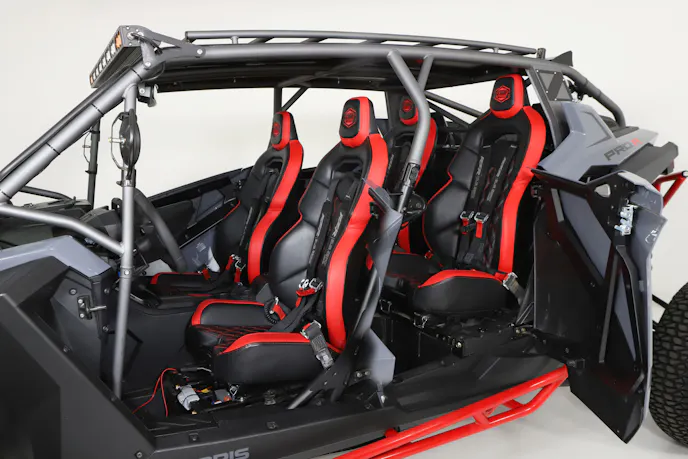
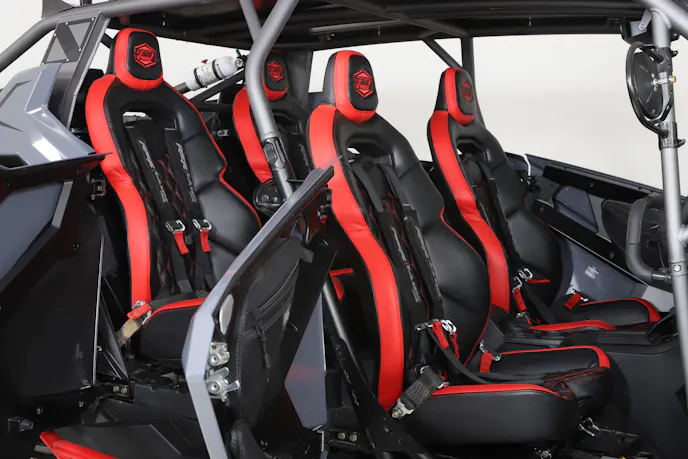
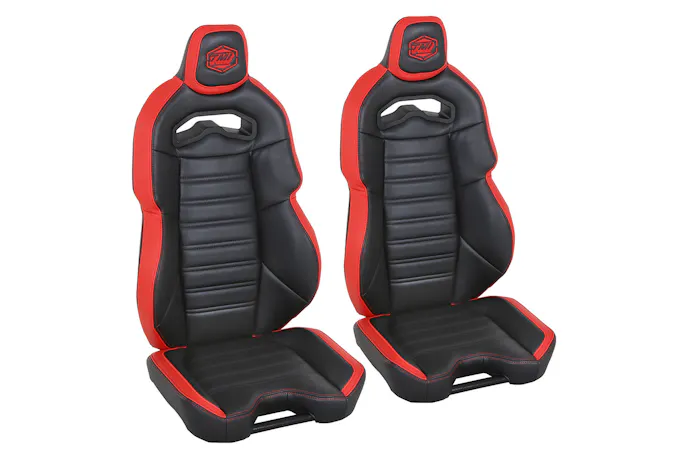
Instead of copying the factory look, the company leaned into its custom interior heritage. Aggressive bolsters, contrast stitching, sculpted upholstery, and signature Double Diamond patterns immediately elevate the cabin without looking overdone.
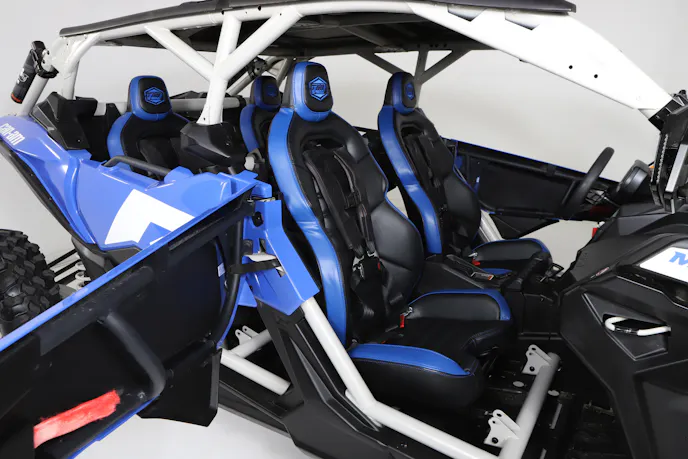
Perhaps the biggest advantage is consistency. Owners of four-seat RZRs can order matching front and rear seats, giving the interior a finished appearance that’s difficult to achieve when mixing components from different manufacturers.
It feels less like an aftermarket upgrade and more like something that could have rolled out of a premium factory performance division.
Designed To Keep You Planted
Good seats do more than provide comfort. They help you drive.
When you’re constantly bracing yourself with the steering wheel through every corner or rough section of trail, you’re wasting energy that should be focused on controlling the vehicle.
The deeper bolsters help hold both driver and passenger in position, reducing unnecessary movement without making it difficult to get in and out of the vehicle. Integrated harness pass-throughs also accommodate aftermarket multi-point harness systems for owners looking to maximize occupant retention during more aggressive driving.
It’s a simple concept, but an important one. The less effort it takes to stay in the seat, the more energy you have left to enjoy the trail.
Just Getting Started
Today, the lineup centers around the Polaris RZR and Can-Am Maverick, offering complete front and rear replacement seating systems for both two-seat and four-seat models. The RZR and Maverick remain the most popular performance side-by-sides on the market, giving TMI an enormous customer base while the program continues to grow.
The company has already indicated that additional vehicle applications are in development, and it’s easy to imagine these seats eventually finding their way into platforms like the Honda Talon, Kawasaki KRX, Polaris General, and others.
Automotive Thinking Meets Off-Road Performance
The aftermarket UTV seating segment isn’t short on competition. Companies like PRP, Corbeau, Simpson, and Pro Armor have spent years building excellent products, and they’ve earned loyal followings in the off-road community. TMI isn’t trying to reinvent everything they’ve done.
Instead, the company has brought a different perspective to the conversation. Its experience designing automotive interiors shows up everywhere—from the fit and finish to the molded foam, complete replacement construction, and perhaps most notably, the adjustable suspension webbing hidden beneath the upholstery.
Some of these ideas may seem subtle at first glance. But they’re the kinds of engineering details that become increasingly appreciated the longer you spend behind the wheel.
As side-by-sides continue evolving into legitimate long-distance adventure machines rather than weekend toys, seating will play an even bigger role in the overall driving experience. By combining proven automotive craftsmanship with fresh engineering ideas borrowed from outside the powersports industry, TMI has created something that feels genuinely different.
And in a market where many products look increasingly similar, that’s probably the biggest compliment you can give it.
You might also like
Pinned In Pennsylvania: Full Send At The 2026 Summer 4-Wheel Jamboree
The 2026 Summer 4-Wheel Jamboree rolled into Bloomsburg, Pennsylvania, bringing with it almost 2,000 4x4s and lots of off-road action.