


When you’re crawling through a rock garden in Moab, hammering across desert trails in Baja, or towing a trailer deep into the backcountry during the middle of summer, heat becomes the enemy. Modern off-road rigs generate serious thermal loads, and once engine temperatures start climbing, performance—and reliability—can quickly go south.
That’s why cooling system upgrades have become one of the most important modifications for today’s off-road enthusiasts. Larger tires, lower gearing, forced induction, added vehicle weight, armor, recovery equipment, rooftop tents, and slow-speed trail use all place enormous strain on factory cooling systems. And unlike highway driving, off-road conditions often limit natural airflow through the radiator exactly when your engine needs it most.
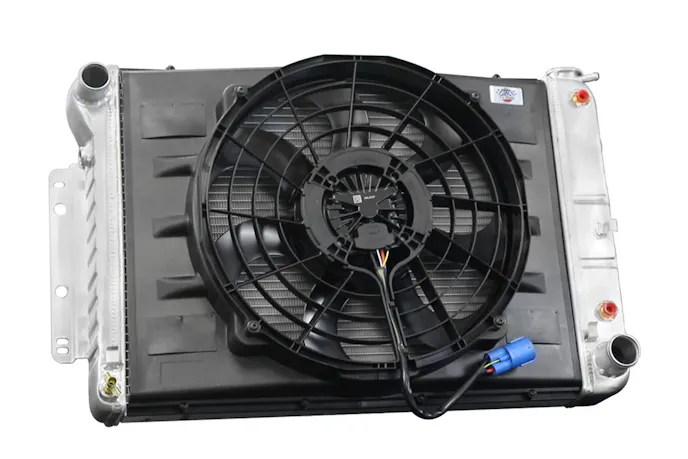
Electric cooling fans play a huge role in keeping temperatures under control in these environments, and one technology is rapidly becoming the gold standard for serious builds: brushless electric fans.
Companies like SPAL Automotive have helped push that technology from OEM applications into the performance aftermarket, offering enthusiasts cooling solutions that are smarter, stronger, and dramatically more durable than traditional brushed fan systems.
Why Off-Road Vehicles Need Better Cooling
The reality is that off-road vehicles spend a lot of time operating in conditions that are brutal for cooling systems. Slow vehicle speeds mean less ram air through the radiator. Engine RPM can remain elevated for long periods during technical climbs or sand driving. Add high ambient temperatures and additional accessories like light bars, winches, onboard air systems, and dual batteries, and your electrical system is suddenly working overtime.
Traditional brushed electric fans can struggle under those demands.
Conventional electric motors rely on carbon brushes that physically contact the rotating portion of the motor to switch electrical current. That constant contact creates friction and heat while gradually wearing the motor internally. Over time, performance drops, efficiency suffers, and eventually the fan fails altogether.
For a street-driven commuter, that may not be a major issue. For an off-road vehicle hundreds of miles from pavement, it absolutely is.
That’s where brushless technology changes the game.
What Makes A Brushless Fan Different?
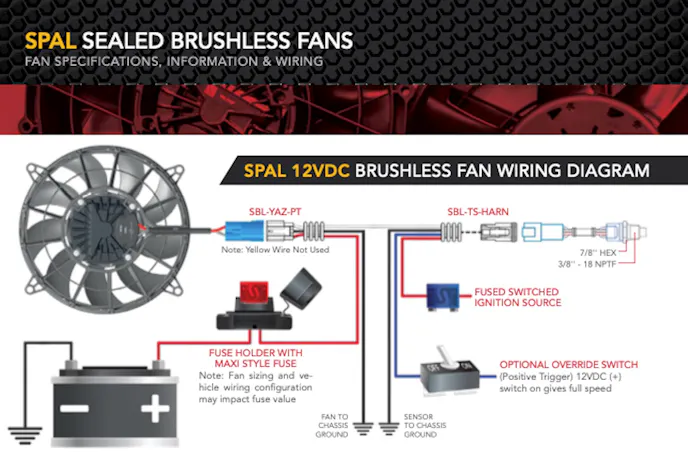
Brushless motors eliminate the physical brushes entirely. Instead of relying on mechanical contact, brushless motors use electronic control systems to manage motor operation. The result is significantly improved efficiency, durability, and precision.
According to Tom Longo of SPAL Automotive, the difference in longevity alone is substantial.
“A typical fan with a brushed motor will have a 5,000-to-10,000-hour lifespan,” Longo explains. “Compare that to SPAL’s 40,000-hour brushless fan lineup, and you’ll start to see the appeal.”
For off-road enthusiasts, that added reliability matters. Trail rigs are often exposed to vibration, mud, water crossings, dust, and extreme temperatures. A fan that can survive those harsh conditions while continuing to deliver consistent cooling performance becomes a critical piece of the build.
OEM Technology Built For The Performance World
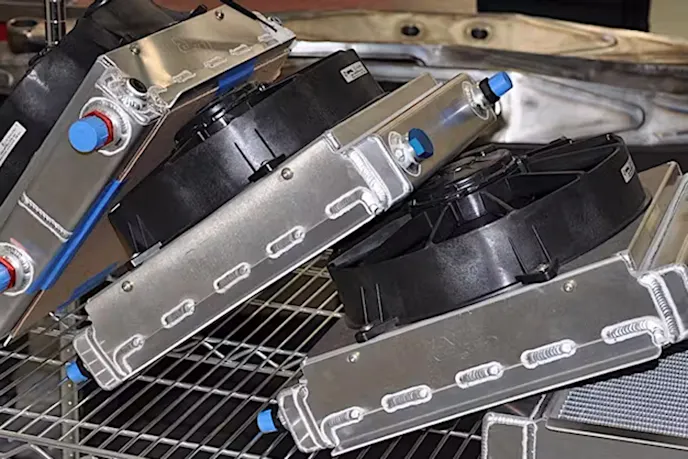
SPAL Automotive isn’t new to advanced cooling technology. The company has long supplied fans and thermal management systems to OE manufacturers around the globe, and much of that engineering has filtered directly into its aftermarket lineup.
That OEM background is important because modern brushless fans are far more sophisticated than simple on-off cooling devices. They’re intelligent systems capable of constantly adapting to cooling demand in real time.
That capability also allows SPAL to build substantially more powerful fan packages.
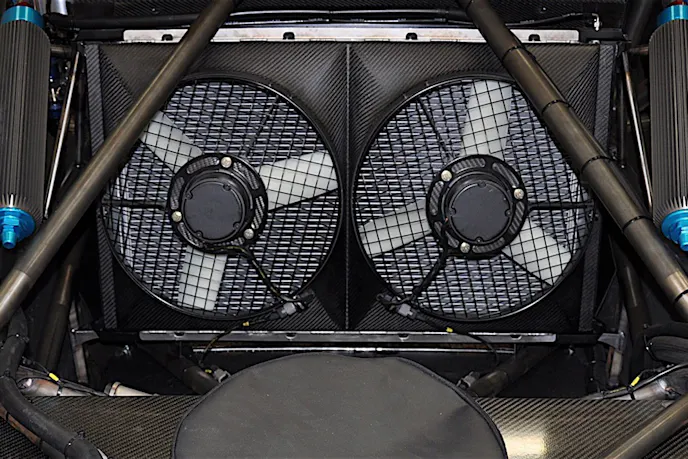
For example, SPAL can equip a 16-inch brushless fan with a 500-watt motor, while traditional brushed fans in the same size range often use motors rated between 150 and 225 watts.
More available power means the fan can spin faster and move significantly more air. Pair that with SPAL’s optimized blade designs, and the result is increased airflow through the radiator when cooling demand spikes.
Smarter Cooling For Modern Builds
One of the biggest advantages of brushless technology is intelligent fan control.
Traditional brushed fans typically operate at full speed before shutting off completely once coolant temperatures drop. That constant cycling creates large swings in temperature while also placing higher loads on the electrical system.
Brushless fans operate differently.
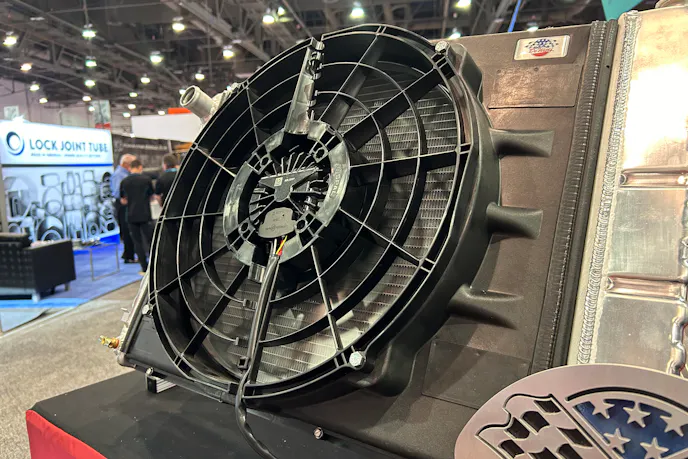
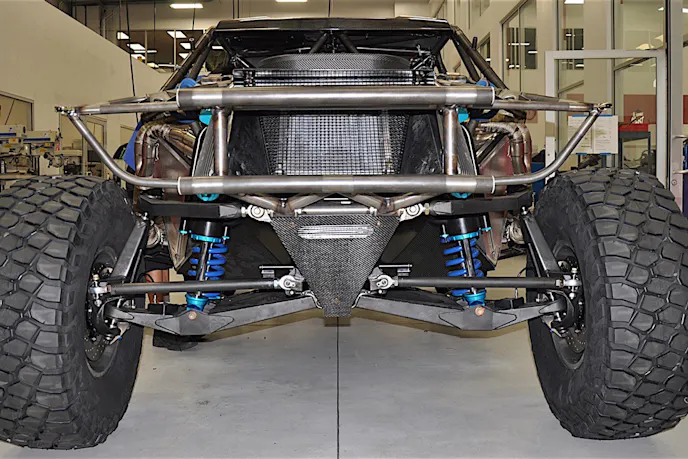
SPAL brushless systems utilize PWM (Pulse Width Modulation) control, allowing fan speed to constantly adjust based on real-time temperature data from the ECU or a SPAL brushless temperature sensor. Instead of running at maximum speed all the time, the fan only works as hard as necessary to maintain target temperatures.
Reduced Electrical Load And Noise
Electrical demand is a growing concern for modern overland and off-road builds. Between onboard refrigerators, radios, compressors, GPS systems, auxiliary lighting, winches, and charging systems, many vehicles are already pushing their electrical systems hard.
Brushless fans help reduce that strain.
Because the motor speed can vary based on cooling demand, the system consumes far less power during normal operation. In many situations, the fan may only need to operate at 50 percent capacity to maintain proper temperatures, significantly reducing amperage draw compared to a traditional full-speed fan setup.
SPAL brushless fans also feature soft-start technology that minimizes the initial current spike during startup before gradually ramping to operating speed. That smoother startup reduces stress on the charging system while improving overall efficiency.
An added bonus is reduced fan noise. Anyone who has spent time around aggressive cooling systems knows how loud traditional electric fans can become, especially when cycling repeatedly at full speed. Variable-speed brushless operation greatly cuts down on that noise while still delivering excellent cooling performance.
The Future Of Off-Road Cooling
As off-road vehicles become more powerful, heavier, and increasingly dependent on electrical accessories, cooling systems must evolve to keep pace. Brushless fan technology represents one of the most significant advancements in aftermarket cooling in years, offering increased airflow, smarter control, greater efficiency, and dramatically improved durability.
For enthusiasts building vehicles designed to survive harsh terrain and punishing environments, that combination matters.
Whether you’re piecing together a dedicated crawler, a high-speed desert truck, or an overland rig built for extended backcountry travel, upgrading to a brushless cooling fan may be one of the smartest reliability modifications you can make.
You might also like
2027 Jeep Wrangler Switchback: Twelve 4 Twelve Saves Its Wildest For Last
The 2027 Jeep Wrangler Switchback closes out Twelve 4 Twelve with bold styling, Gecko accents, contrasting panels, and Rubicon X capability.