


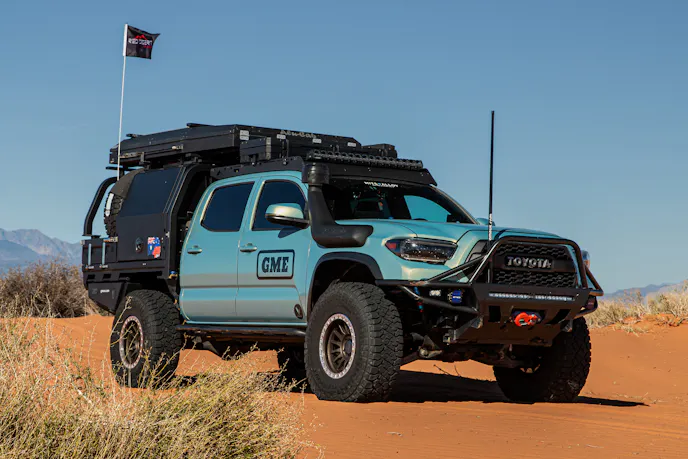
GME’s entry into the U.S. GMRS market showed up fully formed, carrying decades of engineering philosophy rooted in the harsh realities of the Australian outback. While many American GMRS antenna offerings feel like adaptations of consumer-grade mobile radio gear, GME’s lineup reflects a fundamentally different starting point. These antennas were not originally designed for casual use or short-range convenience. They were built for remote travel, long-distance communication, and environments where equipment failure is not just inconvenient, but potentially dangerous.
How GMRS Antennas Work
At a fundamental level, every GMRS antenna serves the same purpose: converting electrical energy from the radio into electromagnetic waves that propagate through the air, and vice versa when receiving signals. GMRS operates in the UHF band between 462 and 468 MHz, a frequency range that favors line-of-sight communication. That means signals tend to travel in relatively straight paths, making antenna placement, height, and radiation pattern critical to overall performance.
The physical length of an antenna is directly tied to wavelength. At GMRS frequencies, a quarter-wave antenna is roughly six inches long, while longer antennas often use internal coils or phasing sections to electrically lengthen the antenna and shape its radiation pattern. This is where gain comes into play. Antenna gain does not increase transmitter power; instead, it redistributes the energy into a more focused pattern. A low-gain antenna radiates energy in a more spherical or vertical pattern, while a high-gain antenna compresses that energy horizontally, extending range across flat terrain but reducing its ability to reach over hills or through uneven landscapes.
Another critical factor is the ground plane. Many traditional antennas rely on a conductive surface, such as a vehicle roof, to reflect and complete the antenna’s radiation pattern. Without an adequate ground plane, performance can degrade significantly. Ground-independent antennas solve this by incorporating design elements that replicate or eliminate the need for that reflective surface, making them far more flexible in terms of mounting location.
Coaxial cable and connectors also play a role in overall system efficiency. Signal loss can occur between the radio and antenna, particularly with longer cable runs or lower-quality materials. For GMRS users pushing the limits of range, minimizing these losses is just as important as selecting the right antenna.

A System, Not A Product Line
At the core of GME’s GMRS antenna strategy is a structured, system-based approach rather than a loose collection of standalone products. The lineup is divided into distinct categories based on durability, size, and intended use, allowing users to select equipment that matches their vehicle, terrain, and communication needs. This organization reflects a deeper understanding of how antenna performance interacts with real-world conditions, particularly in off-road and overland scenarios where terrain and mounting limitations play a significant role.

Heavy-Duty Radome Antennas: Built For Extremes
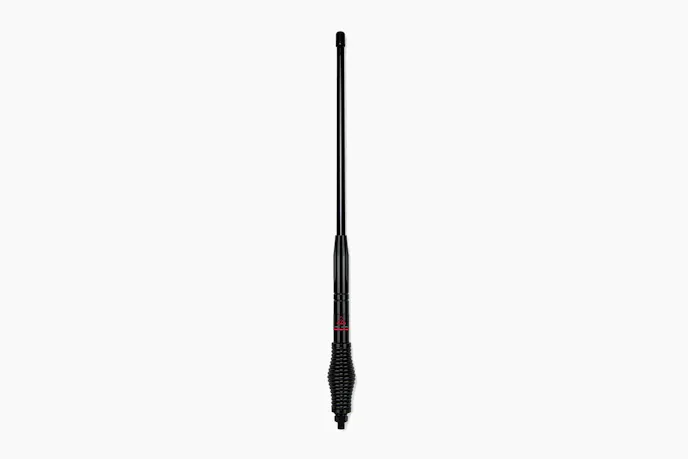
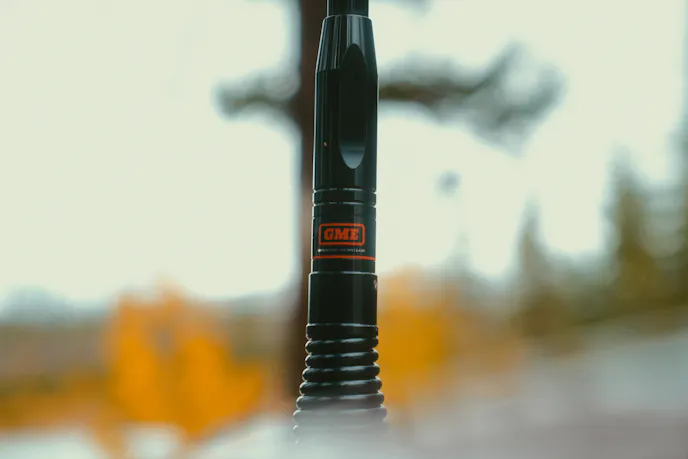
The flagship of the range is the heavy-duty radome series, commonly identified by the AE4700 designation. These antennas are immediately recognizable by their thick fiberglass radome construction and robust spring bases, both of which are engineered to survive continuous vibration, impacts from brush or debris, and prolonged exposure to sun and weather. Unlike many traditional antennas that rely on a vehicle’s metal body to complete their radiation pattern, these designs are ground-independent. This allows them to be mounted on bull bars, tire carriers, roof racks, or other non-traditional locations without suffering the performance losses typically associated with poor ground planes.
What sets the AE4700 series apart even further is its modularity. Rather than committing to a single radiation pattern, users can swap between different antenna whips on the same base. This allows a vehicle to be configured for specific environments. A lower-gain whip, typically around 2.1 dBi, produces a broader, more vertical radiation pattern that performs better in mountainous or heavily wooded terrain where signal needs to climb and descend. A higher-gain option, around 6.6 dBi, compresses that pattern into a flatter shape, extending range across open terrain such as deserts or highways. This ability to adapt the antenna to the terrain is a defining characteristic of GME’s system and stands in contrast to the fixed designs that dominate much of the U.S. market.
Medium-Duty Options: The Everyday Workhorse
Stepping slightly down in construction without abandoning the core design philosophy, the medium-duty radome antennas offer a more balanced solution. These models retain the ground-independent design and similar gain options but use lighter spring assemblies and slightly less overbuilt construction. They are aimed at users who still demand reliability but may not subject their vehicles to the same level of abuse as extreme rock crawling or expedition travel. For many overlanders and trail users, this category represents the practical middle ground, delivering most of the performance and durability benefits without the added weight or cost of the heavy-duty variants.
Low-Profile Antennas: Subtlety Over Reach
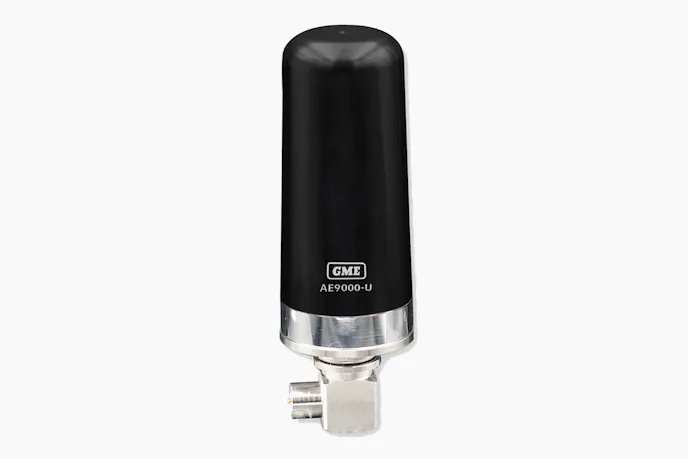
At the opposite end of the spectrum lies the low-profile segment, where GME departs from its typical design language. The compact antennas in this category are designed to be discreet, measuring only a few inches in height. Their small size makes them appealing for daily-driven vehicles or installations where visual impact and clearance are concerns. However, this reduction in size comes with a shift in engineering requirements. Unlike the radome antennas, these low-profile designs rely on a ground plane to function correctly, meaning they perform best when mounted on a suitable metal surface. Their lower gain and compact form factor inherently limit range, but they offer a clean, unobtrusive solution for users who prioritize simplicity over maximum performance.
Lightweight Antennas: Balanced and Accessible
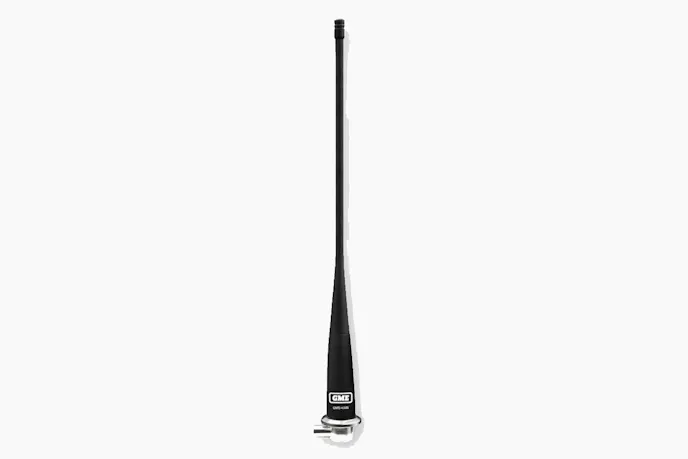
Between these extremes sits the lightweight antenna range, which provides a straightforward and versatile option for users who want improved performance without the complexity of modular systems. These antennas typically feature a slim, flexible design with moderate gain, often around 4 dBi. This places them in a balanced position, offering reasonable range across mixed terrain while remaining easy to install and less visually imposing than the larger radome models. They are also ground-independent, maintaining one of GME’s key advantages in installation flexibility.

Understanding Gain In The Real World
Underlying the entire lineup is a deliberate approach to gain selection that reflects fundamental radio frequency principles. Lower-gain antennas emphasize vertical radiation, making them better suited for uneven terrain where signals must navigate elevation changes. Higher-gain antennas concentrate energy horizontally, maximizing distance over flat landscapes but reducing effectiveness when elevation shifts come into play. GME’s decision to build its product range around clearly defined gain options, and in some cases allow those options to be swapped on the same mount, demonstrates a commitment to real-world usability rather than simplified marketing claims.

Durability As A Design Philosophy
Durability is another area where GME distinguishes itself. The company’s antennas are subjected to extensive environmental testing, including ultraviolet exposure, salt fog, and mechanical stress. These tests are not merely theoretical; they reflect the conditions encountered in remote regions where equipment must endure constant punishment. This focus on resilience results in antennas that feel purpose-built rather than adapted, with construction that prioritizes longevity as much as performance.

A Complete Ecosystem
Equally important is the ecosystem that surrounds the antennas. GME’s mounting solutions, cabling, and connectors are designed to integrate seamlessly, reinforcing the idea that the antenna is part of a larger communication system rather than an isolated component. The use of flexible connectors and adaptable mounting hardware simplifies installation across a wide variety of vehicle types, from traditional steel-bodied trucks to modern builds incorporating aluminum or composite materials.
A Different Approach To GMRS
In the broader context of the GMRS market, GME’s approach represents a shift toward more specialized, terrain-aware equipment. Where many competitors focus on ease of use or cost, GME emphasizes adaptability, durability, and system integration. The result is a lineup that caters particularly well to off-road enthusiasts, overlanders, and anyone who relies on consistent communication beyond the reach of cellular networks.
Ultimately, GME’s GMRS antennas are not defined by any single feature, but by how those features work together. The combination of ground-independent designs, modular components, terrain-specific gain options, and rugged construction creates a cohesive system that addresses the realities of off-road communication. For users who understand the importance of matching equipment to environment, the value of that approach becomes immediately clear.
You might also like
Edge Pulsar LT Install: Unlocking More Control Over Our Silverado Trail Boss
We install the Edge Pulsar LT on our 5.3L Silverado Trail Boss to improve throttle response, disable DFM, and correct tire size settings.