

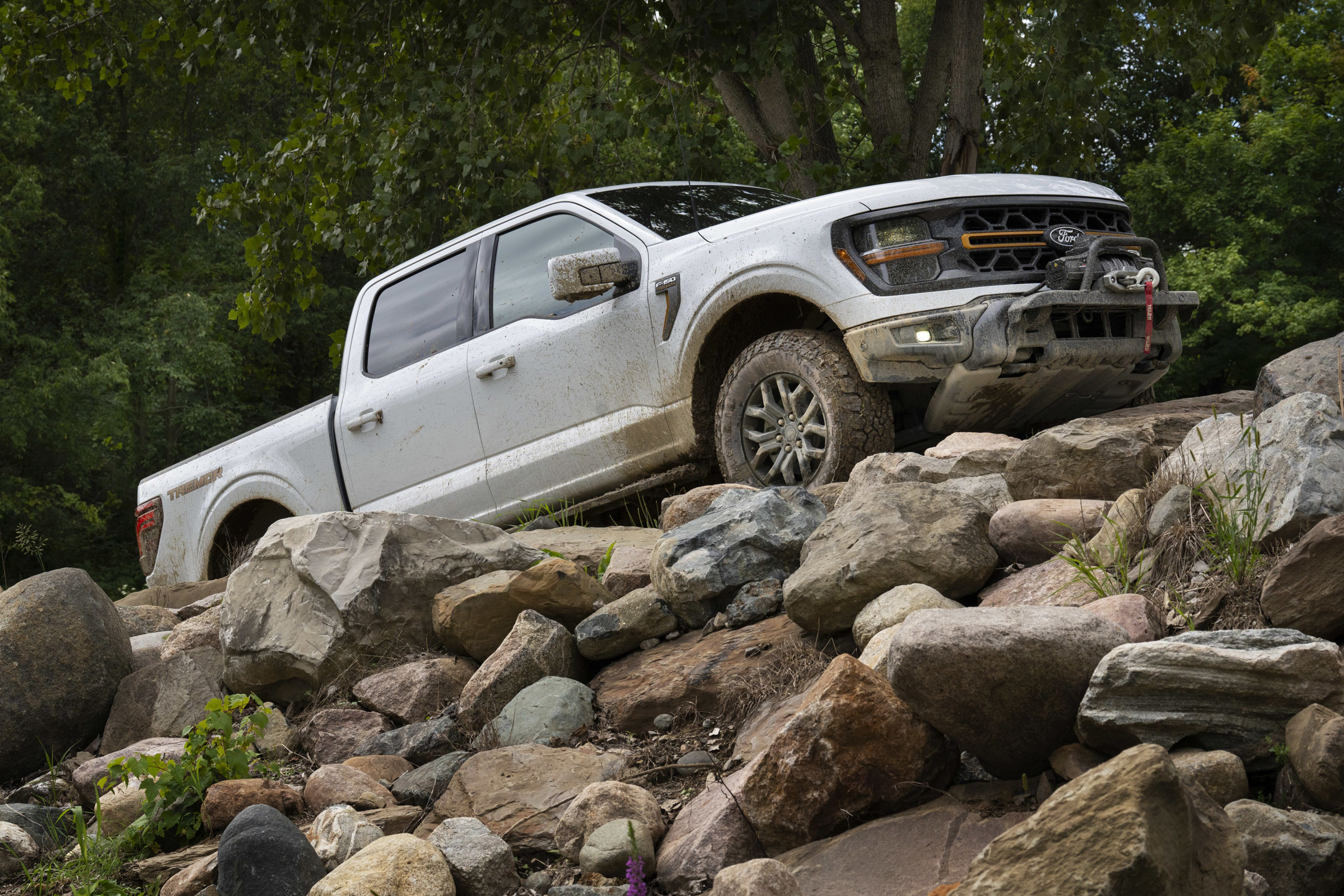
There’s something undeniably satisfying about waking up a modern V8—and with Ford’s 5.0-liter Coyote under the hood of the 2021 F-150, the foundation is already strong. From the factory, the engine delivers a well-balanced blend of power, drivability, and efficiency, but like most OEM setups, the intake system is designed with compromises in mind. Noise restrictions, emissions requirements, and cost considerations all shape how air ultimately reaches the throttle body. For enthusiasts, that leaves room on the table.
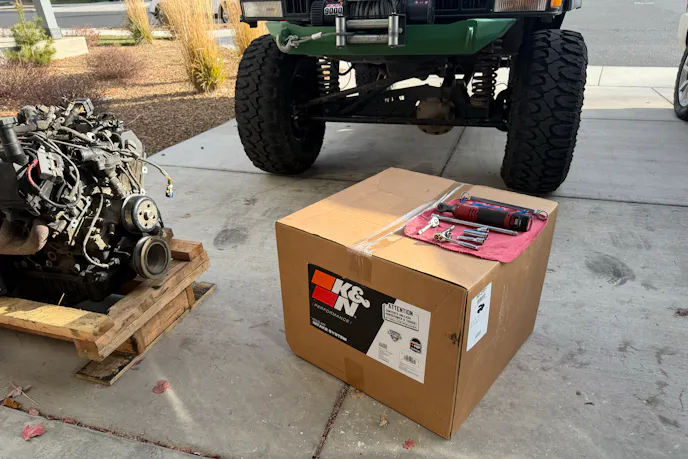
Breathing Better: The NextGen Approach
K&N Engineering has been in the airflow game since 1969, building its reputation on one simple principle: engines make more power when they can breathe more efficiently. Over more than five decades, that philosophy has been proven across motorsports, street performance, and everyday driving. The company’s signature oiled cotton gauze filters have become synonymous with reusable performance, offering long service intervals and consistent filtration.
The NextGen intake system represents K&N’s latest step forward. Rather than a complete reinvention, it’s a thoughtful refinement of everything the brand has learned—focusing on maximizing airflow, simplifying installation, and improving thermal management under the hood.
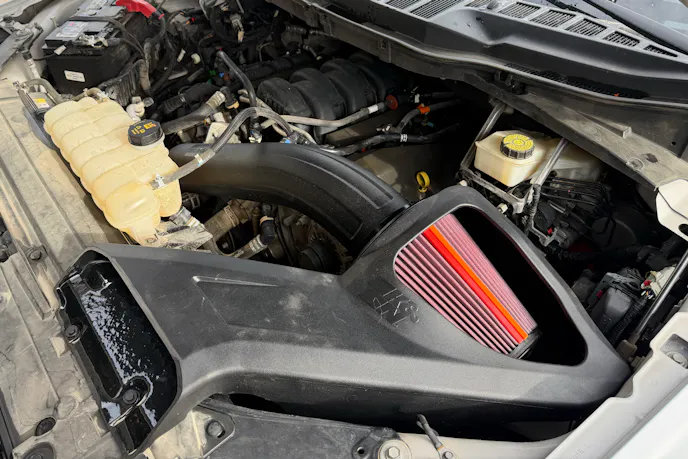
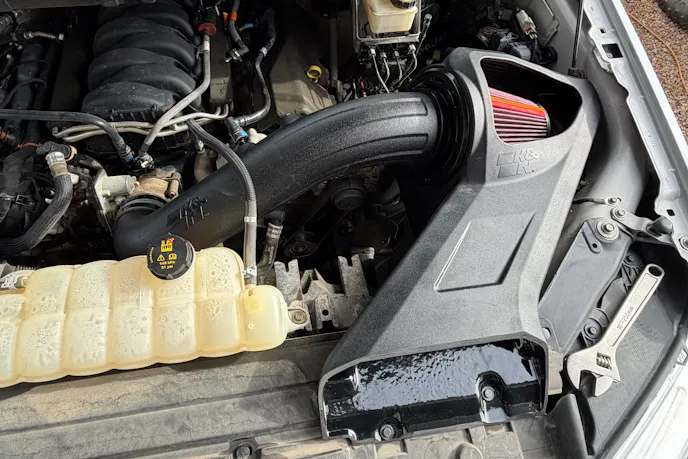
For our 2021 Ford F-150 equipped with the 5.0-liter V8, we installed K&N’s 50-2591 cold air intake system. Designed specifically for 2015–2026 trucks with the Coyote engine, this kit brings together a high-density polyethylene intake tube, a large conical filter, and a hybrid airbox engineered to strike a balance between airflow and protection.
The results are more than theoretical. According to K&N’s dyno testing, the system increases airflow by an impressive 46.24 percent. That translates into measurable gains of 15.22 horsepower at 3,854 rpm and 20.37 lb-ft of torque at 2,177 rpm—all achieved without the need for a tune. In an era where many upgrades require ECU recalibration to realize their full potential, that plug-and-play performance is a major advantage.
A Closer Look At The Hardware
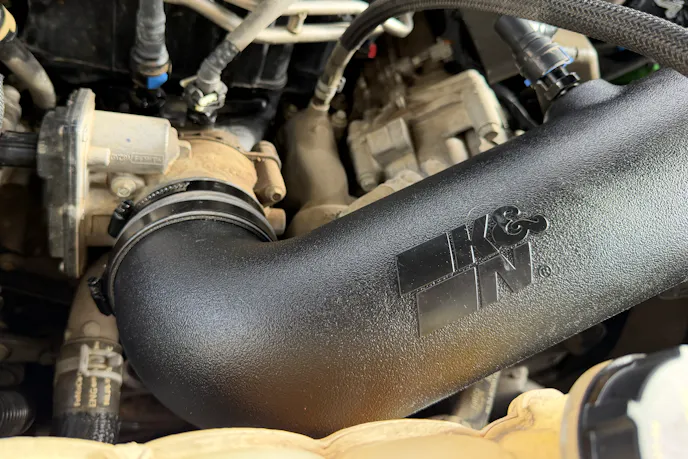
At the center of the system is K&N’s NextGen airbox, which departs from traditional open-element designs in favor of a semi-enclosed configuration. This hybrid layout helps shield the filter from engine bay heat while still allowing a generous volume of cool, fresh air to enter through an enlarged inlet. Cooler air is denser, and denser air supports more efficient combustion—an essential ingredient in both power and efficiency gains.
The intake tube itself is constructed from high-density cross-linked polyethylene and designed using CAD to optimize airflow. Its large diameter and carefully shaped internal geometry promote smoother air movement, increasing both volume and velocity as air travels toward the engine.
Then there’s the filter. K&N’s oversized, conical High-Flow Lifetime Air Filter uses oiled cotton gauze media, allowing it to capture contaminants while maintaining high airflow. The increased surface area, combined with a radius-entry design, helps reduce restriction at the point where air enters the system. Under normal highway driving conditions, K&N states that the filter can go up to 100,000 miles between cleanings, making it as practical as it is performance-oriented.
Another standout feature is the system’s simplicity. Quick-Lock technology allows the filter to snap into place, and a sealing bead design reduces the number of clamps and mounting points required. The result is a cleaner install and fewer potential failure points over time.
Installation: Straightforward With Subtle Nuances
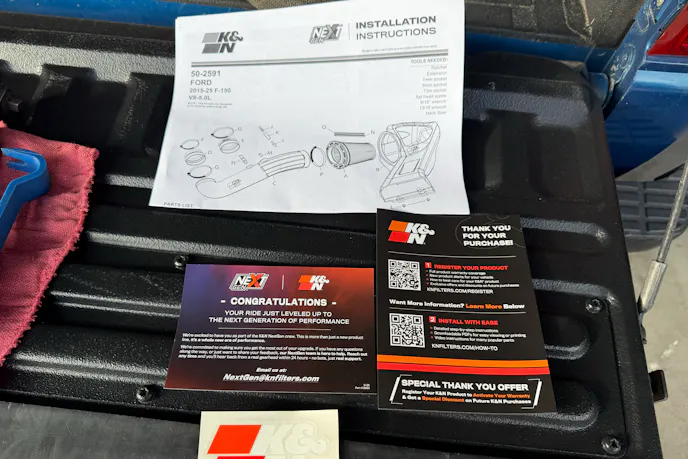
K&N estimates installation time at under 60 minutes, and that’s a realistic expectation for most enthusiasts with a basic set of hand tools. As outlined in the installation guide, the process begins with disconnecting the negative battery cable.
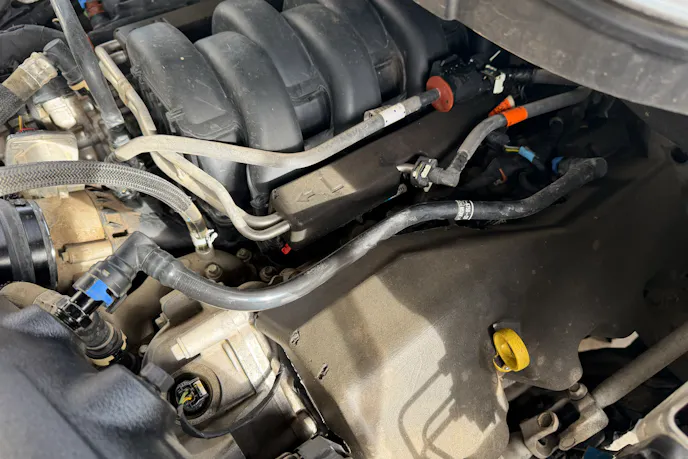
With the truck powered down, the factory intake system is removed in stages. The intake tube is loosened at both the throttle body and air filter housing, followed by disconnecting the vent and coolant lines. Depending on model year variations, this may include EVAP connections or crankcase vent lines. Once these are free, the intake tube can be pulled from the vehicle.
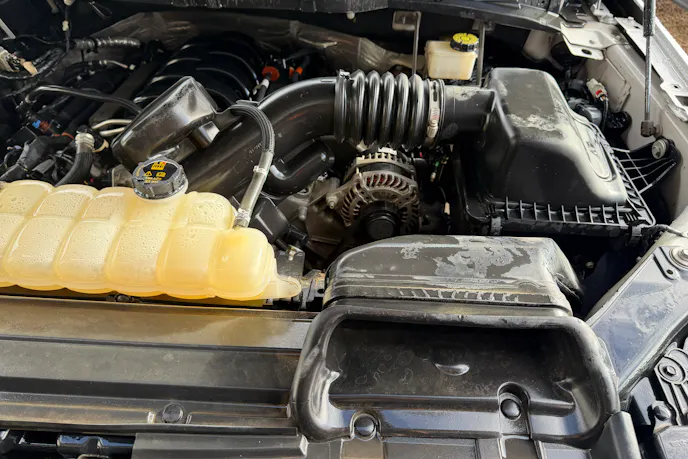
Next comes the factory airbox assembly. After removing the securing bolt and push pins, the entire housing and fresh air duct are lifted out. K&N recommends keeping the factory components, which is always a smart move for future reversibility.
Installing the new system is largely a reverse of removal, but there are a few key details worth highlighting. The K&N airbox drops into the factory location and reuses the original mounting point, ensuring proper alignment. However, K&N notes that certain trim levels—such as Lariat, King Ranch, and Platinum—may require minor trimming of the fresh air duct tabs to achieve a proper fit. This is due to slight variations in factory components, and the fix is simple with a basic cutting tool.
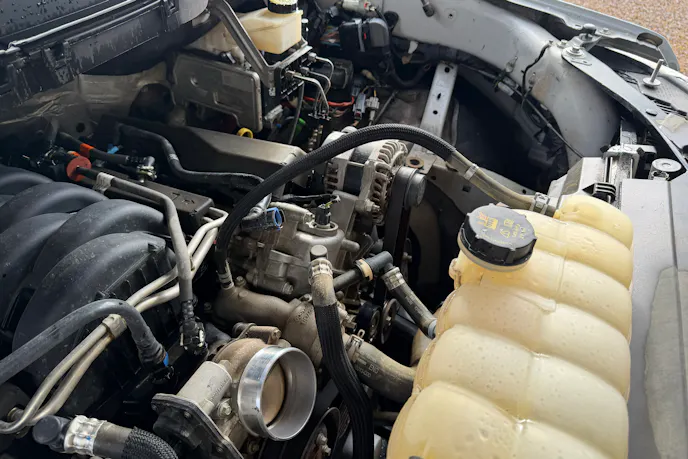
The intake tube assembly requires careful attention to the quick-connect fittings. Proper installation of the NPT fittings is critical to avoid cross-threading, and K&N advises tightening by hand before finishing with two full turns of a wrench. Once assembled, the tube is positioned between the throttle body and airbox, secured with clamps, and connected to the factory hoses.
Before wrapping up, the battery is reconnected, and the system is checked for proper alignment and tightness. Initial startup should be accompanied by a careful listen for air leaks or unusual noises. A short test drive confirms everything is functioning as intended, at which point the transformation becomes immediately apparent.
On The Road: Power, Sound, And Efficiency
The most noticeable change comes the moment you tip into the throttle. The 5.0L Coyote responds with a sharper, more immediate feel, particularly in the lower and mid-range rpm where the torque gains are most pronounced. That added 20.37 lb-ft at just over 2,100 rpm gives the truck a stronger, more confident pull in everyday driving situations, from stoplight launches to highway merges.
The horsepower increase higher in the rev range complements that low-end improvement, helping the engine carry power more effectively as rpm climbs. It’s not a radical transformation, but it’s a meaningful one—exactly what you want from a bolt-on upgrade.
Equally important is the sound. Under acceleration, the NextGen intake introduces a deeper, more aggressive induction note that gives the Coyote the voice it deserves. Yet at cruising speeds, the system remains composed, avoiding the constant drone that can make long drives tiring.
One of the more interesting real-world observations, however, came in the form of fuel economy. Over the course of our testing, we saw a consistent increase of 1–2 miles per gallon compared to the factory intake. While gains like this can vary depending on driving style and conditions, the improvement makes sense. By reducing restriction and improving airflow efficiency, the engine doesn’t have to work as hard to produce the same output. In steady-state driving, that efficiency can translate directly into better fuel economy.
Long-Term Value And Maintenance
Beyond performance, K&N’s system is designed with longevity in mind. The washable, reusable filter eliminates the need for regular replacements, and with service intervals of up to 100,000 miles under normal conditions, maintenance is minimal. For trucks that see off-road or dusty environments, more frequent inspection and cleaning may be required, but the process is straightforward using K&N’s Recharger kits.
The system is also backed by a Lifetime Limited Warranty and is designed to maintain the vehicle’s factory warranty, adding an extra layer of confidence for owners.
Final Thoughts
K&N’s NextGen intake system doesn’t try to reinvent the wheel—it simply makes it better. By improving airflow, refining thermal management, and simplifying installation, it delivers a well-rounded upgrade that enhances both performance and everyday usability.
For the 2021 F-150 5.0-liter, the gains are clear. Increased horsepower and torque, improved throttle response, a more engaging sound, and even a modest bump in fuel economy all combine to elevate the driving experience. Add in the long service intervals and reusable design, and the value proposition becomes even stronger.
Photos by: Mike Palmer
You might also like
This Brawny 1959 Chevy Apache 4x4 Has Ford Underpinnings And Cummins Diesel Power
This brawny 1959 Chevy Apache 4x4 has Ford F-250 DNA and a Cummins turbodiesel along with a mind-boggling collection of custom mods.