


Johnson Valley doesn’t lie. The desert has a way of exposing weaknesses quickly, especially when you’re chasing speed across sand washes and whooped-out trails. It was there, watching two-time King of the Hammers champion Loren Healy push a prototype Bronco to its limits, that the mission for Ford’s newest off-road build came into focus.
“We needed to bring this kind of high-speed adrenaline to the people who don’t have a Raptor budget,” said Ed Krenz, Bronco chief program engineer.
That idea—putting fun first without pushing price into rarified air—is what ultimately led to the 2027 Ford Bronco RTR, the second chapter in Ford’s motorsport-inspired collaboration with RTR Vehicles.
Democratizing Desert Speed
Developed alongside RTR Vehicles founder Vaughn Gittin Jr. and Healy, the Bronco RTR was conceived as a gateway to real high-speed off-road performance. The goal wasn’t to replace the Bronco Raptor, but to carve out a new space in the lineup—one that blends racing pedigree with everyday accessibility.
“We’ve taken the championship-winning expertise from RTR and baked it into a truck that stays within reach for the average enthusiast,” Krenz explained. “It’s about democratizing high-speed performance.”
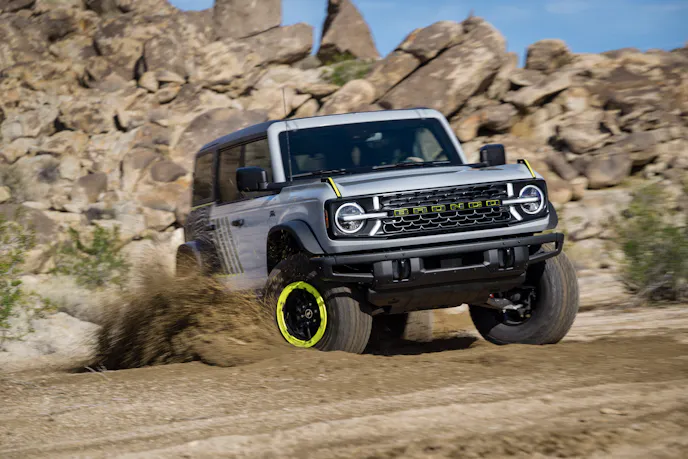
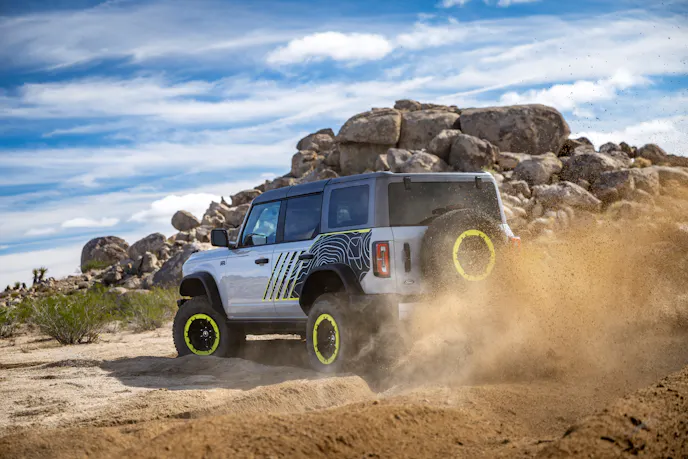
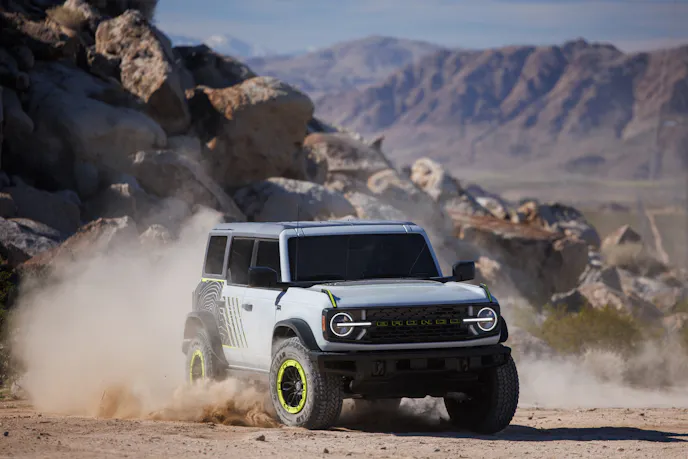
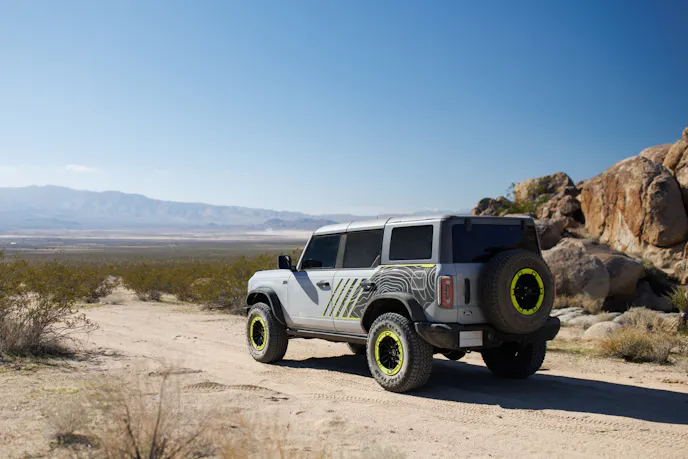
Drawing from Ford and RTR’s success at King of the Hammers, the Bronco RTR is tuned specifically for fast desert driving, a realm traditionally dominated by names like Stroppe and Raptor. A high-clearance suspension paired with standard 33-inch tires creates a combination Ford has never previously offered on a Bronco, immediately separating the RTR from its siblings.
That engineering comes alive the moment the tires hit dirt. The suspension encourages confidence, inviting drivers to stay on the throttle rather than tiptoe through rough terrain.
“You know it’s going to be an absolute blast to drive before you even get behind the wheel,” Healy said.
Finding The Sweet Spot
Healy points to Bronco’s racing heritage and the Raptor’s trailblazing role in high-speed off-roading as key inspirations. But he’s also clear about the realities of the market.
“Bronco has great racing heritage to take inspiration from, and Raptor has blazed a trail in high-speed off-roading that customers love,” Healy said. “But we know that some performance enthusiasts can’t necessarily afford a Bronco Raptor. That was our brief developing Bronco RTR: Find a sweet spot for high-speed off-road performance and make it a great value for thrill-seeking Bronco owners. It sits in a unique place in the Bronco lineup.”
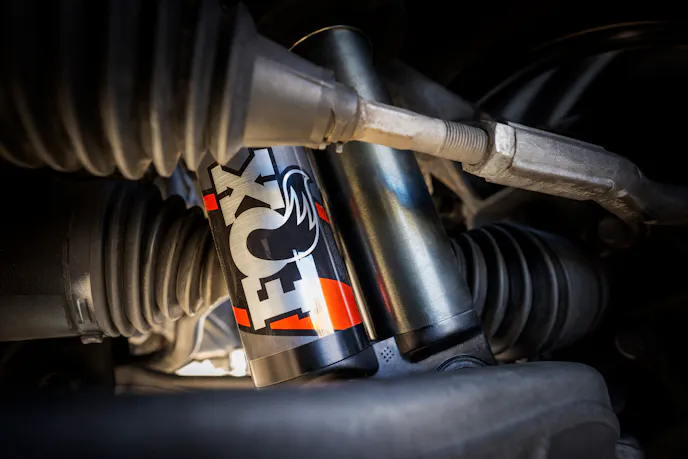
For buyers who want to push the platform even further, Ford made the Sasquatch package an upgrade path. When optioned, Bronco RTR comes standard with the HOSS 3.0 suspension featuring FOX Internal Bypass Dampers. Normally reserved for higher trims like Badlands and requiring multiple stacked options, Ford deliberately streamlined the process.
“We wanted to cut through the red tape and give RTR drivers the best damping we offer, right out of the gate,” Krenz said, “so they can handle the big hits without bottoming out.”
Built Light, Built To Dance
Testing in Johnson Valley ultimately validated another key decision: the four-door body paired with the 2.3-liter EcoBoost engine and 10-speed automatic transmission. While some might expect a larger engine, the choice was intentional.
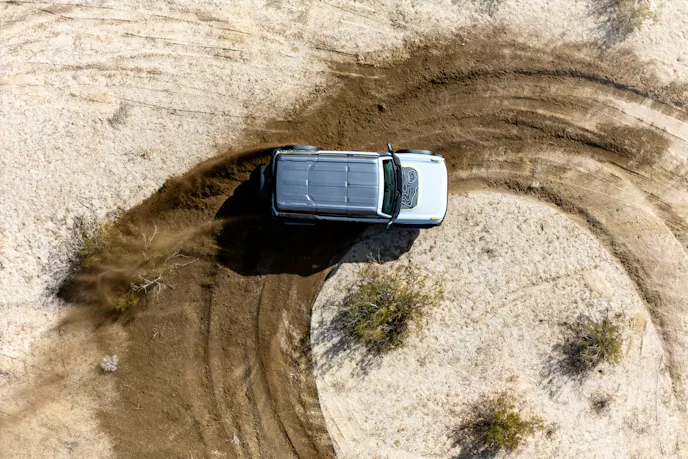
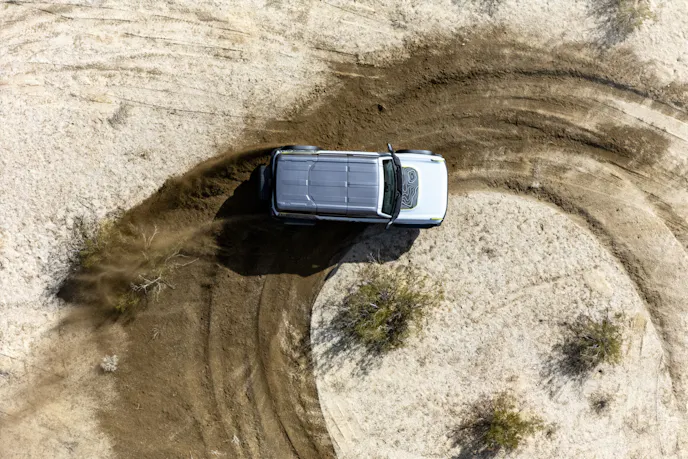
Weight matters in the desert. A lighter front end allows the Bronco RTR to feel more flickable in the dunes, skimming over sand rather than plowing through it. The result is a driving character that leans closer to a desert pre-runner than a rock crawler.
The turbocharged 2.3-liter EcoBoost is also primed for future upgrades. From the factory, it benefits from hardware and software pulled straight from Ford’s racing playbook. Engineers added the 1,000-watt cooling fan from the Bronco Raptor, along with a race-derived, software-operated anti-lag system. The payoff is instant thrust when blasting out of a soft sand wash, eliminating the wait for turbo spool when momentum matters most.
RTR Attitude, Bronco Function
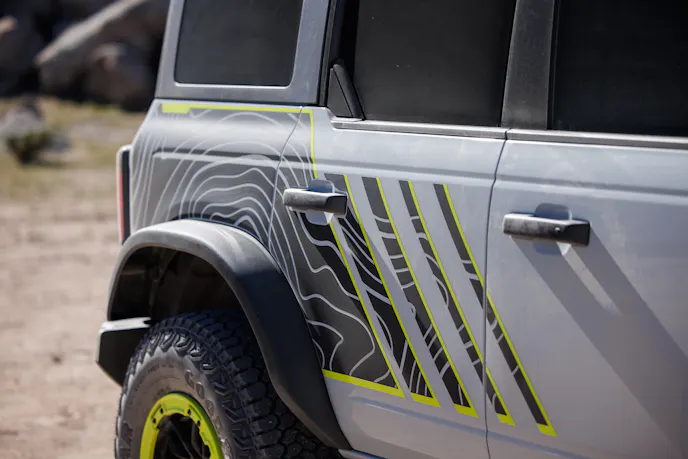
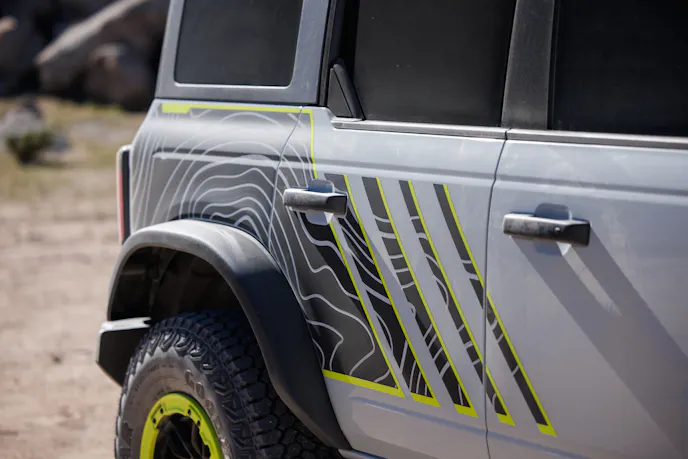
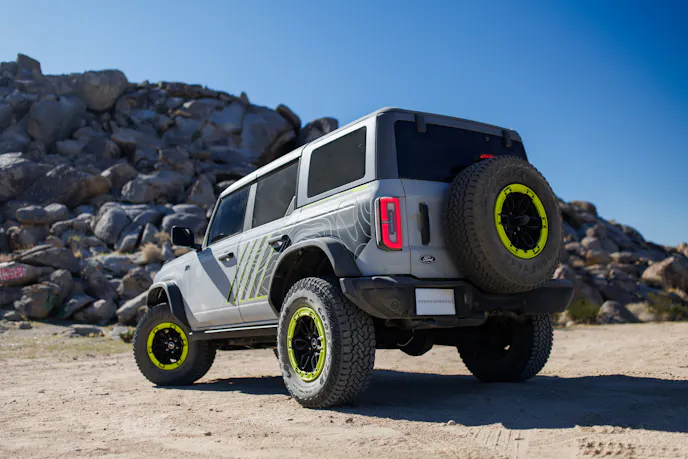
While performance was the priority, the Bronco RTR doesn’t shy away from style. Signature RTR touches blend with Bronco’s functional design to create a rig that’s as visually aggressive as it is capable.
“It’s bright and loud. It stands out,” Healy said, pointing to available Hyper Lime accents and bold graphics.
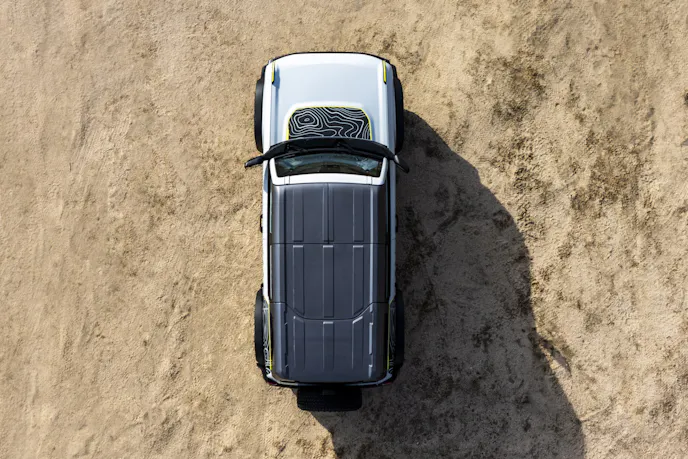
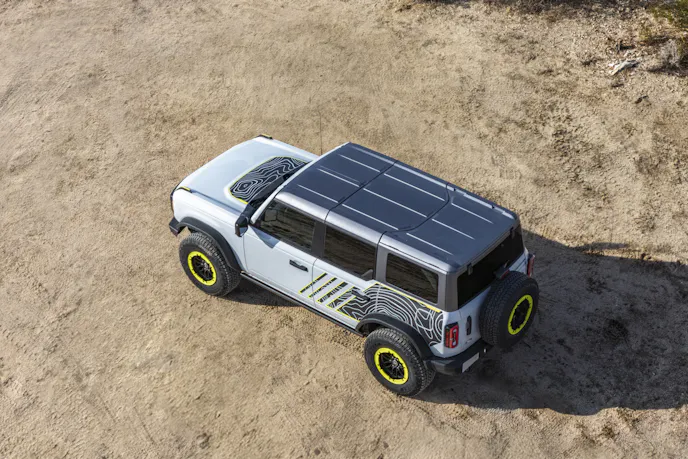
A new grille with RTR signature lighting leads the charge, joined by Bronco RTR-specific Evo 6 wheels and heritage-inspired wheel arches. Subtle details, combined with available Avalanche Gray paint, give the RTR a distinctive presence whether it’s parked at the trailhead or flying across open desert.
But for Healy, the Bronco RTR’s real statement goes deeper than aesthetics.
“There’s a pedigree to this vehicle. It’s from Johnson Valley—we developed it there, taking what Ford and RTR have learned taking King of the Hammers championships and putting it to work,” he said. “It’s the same approach Ford took developing the Bronco Raptor, but with that added RTR approach to performance and style.”
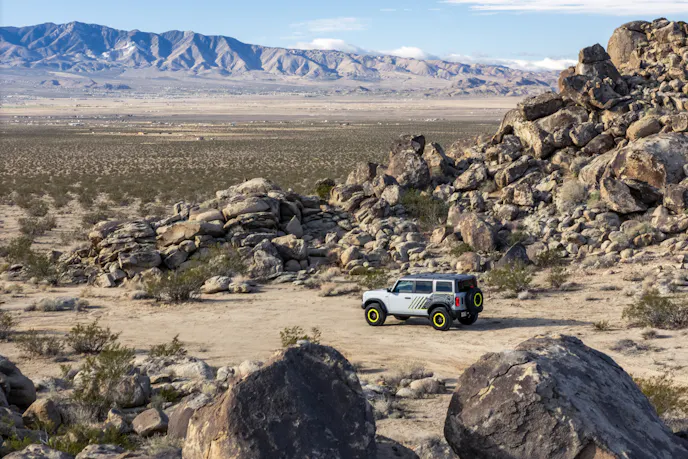
After enduring everything Johnson Valley could throw at it, the Bronco RTR earned its credibility the hard way.
“It’s a well-built vehicle,” Healy added. “We really did our homework to give people a vehicle they know will survive whatever they put it through. Because it survived everything we put it through in Johnson Valley.”
With the 2027 Bronco RTR, Ford isn’t just adding another trim level—it’s offering a new way into high-speed desert performance, one rooted in racing success and designed for enthusiasts who want maximum fun without crossing into Raptor territory.
You might also like
This 1990 Chevy 3500 Gets A 4WD Swap And Gains An LB7 Duramax
This 1990 Chevy 3500 wears decades of patina, but has been upgraded with 4WD and a Duramax turbodiesel engine.