

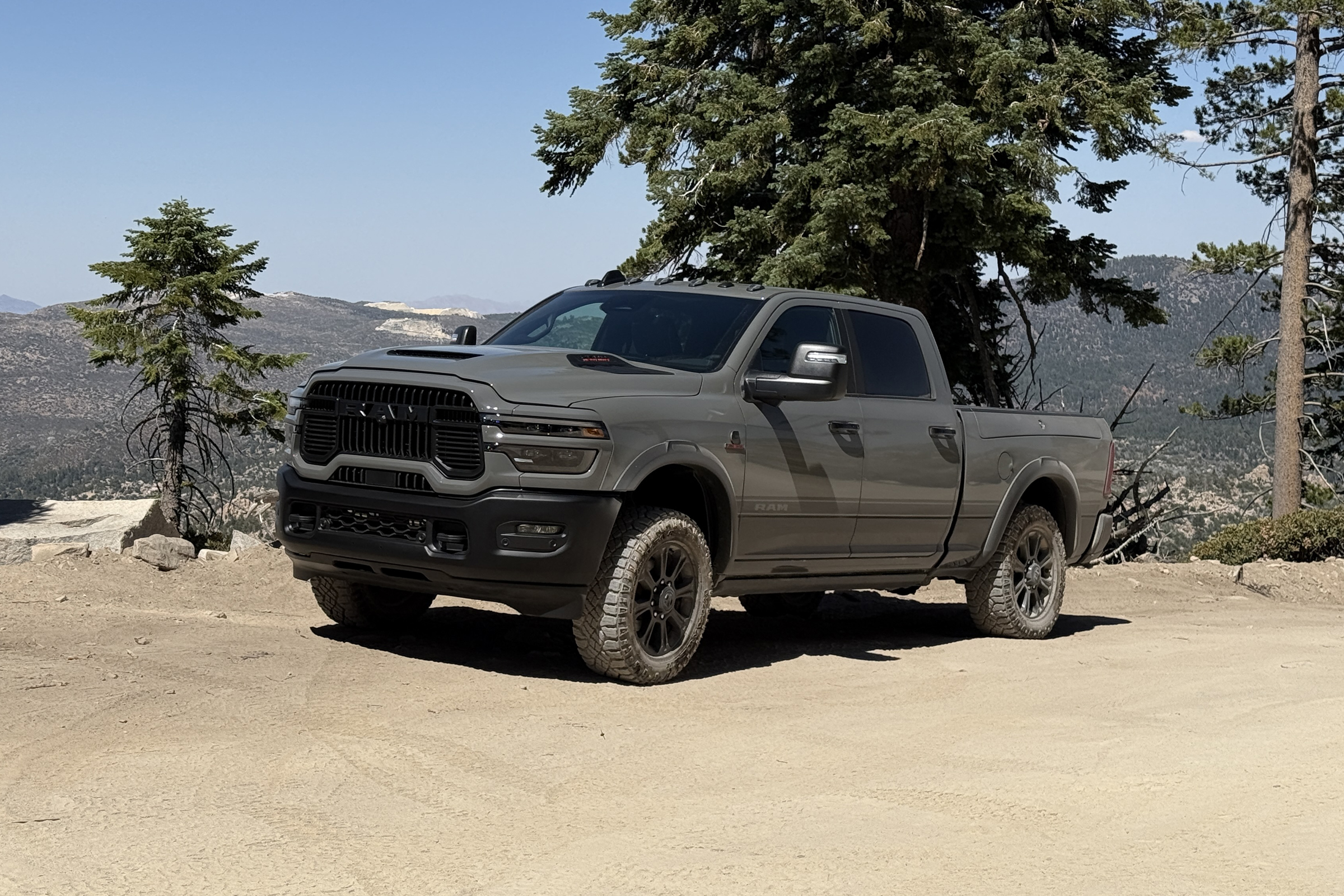
When Ram introduced the Heavy Duty Rebel for 2023, it answered a question truck buyers had been asking for years: What if you could get most of the off-road goodness of a Power Wagon without giving up the towing capability—or the Cummins diesel—that makes a three-quarter-ton truck so useful in the first place?
That was the premise when we first drove the Ram Heavy Duty Rebel shortly after its debut, and several years later the formula remains remarkably sound. What has changed is everything surrounding it. The Cummins is dramatically more powerful, the old six-speed automatic is gone, the interior has taken another technological leap forward, and our 2026 tester arrived wearing Ram’s limited-production Lunar Edition treatment.
Underneath all of that, though, is the same basic idea we liked in 2022: build an honest off-road-capable Ram 2500, leave the Power Wagon’s most extreme rock-crawling hardware on the shelf, and preserve enough traditional heavy-duty capability to actually use the truck as a truck.
After spending time with the 2026 version, that balancing act still makes the Rebel one of the most interesting trucks in Ram’s Heavy Duty lineup.
How The Heavy Duty Rebel Got Here
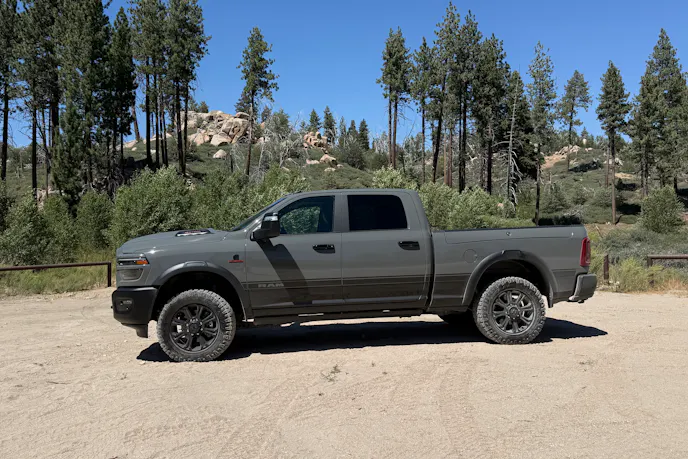
Ram unveiled the first 2500 Heavy Duty Rebel at the State Fair of Texas in late 2022 for the 2023 model year. It was positioned between the Laramie and Power Wagon and launched exclusively as a four-wheel-drive Crew Cab with the 6-foot, 4-inch bed. The original truck combined a unique off-road suspension, rear limited-slip differential with an electronic locker, Bilstein dampers, skidplates, 33-inch off-road tires and an available factory-installed 12,000-pound Warn Zeon-12 winch.
Most importantly, Rebel buyers could choose an engine Power Wagon customers, at the time, couldn’t: the 6.7-liter Cummins turbodiesel.
At launch, that Cummins produced 370 horsepower and 850 lb-ft of torque and was backed by Ram’s long-serving 68RFE six-speed automatic. The alternative was the 6.4-liter Hemi V-8, then rated at 410 horsepower and 429 lb-ft and connected to an eight-speed automatic. Maximum Rebel towing was 16,870 pounds, while maximum payload reached 3,140 pounds.
We came away from that original drive impressed. Off-road, the compliant suspension kept the truck surprisingly composed over dirt, rocks, loose climbs and uneven terrain. On pavement, the combination of Ram’s link-coil rear suspension and Bilstein dampers made the truck far more civilized than its solid axles, off-road tires and heavy-duty mission would suggest. The Cummins delivered effortless low-speed grunt, although its throttle could be almost comically sensitive in low range.
What’s Actually New For 2026?
Here’s where the model-year discussion gets slightly complicated. The 2026 Rebel itself is largely a continuation of the substantially refreshed 2025 Ram Heavy Duty. In other words, the important mechanical upgrades arrived one model year earlier, but they are what make today’s Rebel feel so different from the 2023 truck we originally drove.
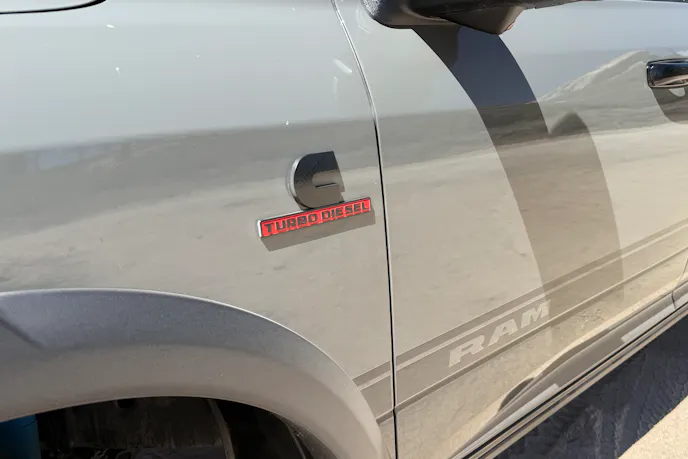
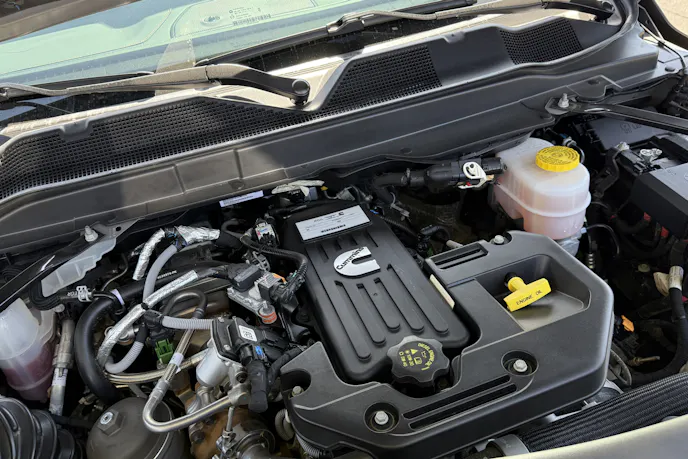
The headline change is the latest High-Output 6.7-liter Cummins engine. It makes 430 horsepower and 1,075 lb-ft of torque, giving today’s Rebel 60 more horsepower and a whopping 225 additional lb-ft compared with the 2023 model’s Cummins. Ram and Cummins reworked the engine extensively with a redesigned block and cylinder head, new heavy-duty pistons, a revised intake manifold and turbocharger, larger intake and exhaust valves, a higher-pressure fuel system and other changes aimed at improving durability, drivability, cold starting and NVH.
Even more important from behind the wheel is what sits behind the Cummins. The old 68RFE six-speed is history, replaced by the TorqueFlite HD eight-speed automatic. The transmission can automatically choose a second-gear start when the truck is unloaded, while the broader ratio spread allows Ram to use a 3.42 axle ratio without giving away the low-speed grunt expected of a heavy-duty diesel.
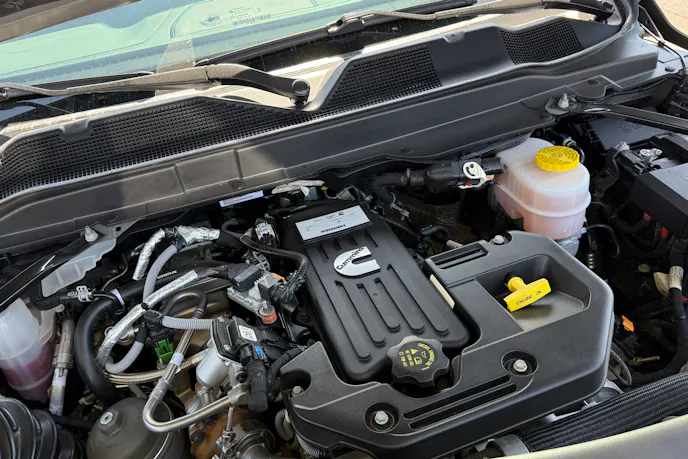
The new powertrain combination completely changes the personality of the Cummins-powered Rebel. The old diesel was never short on torque, but there were moments when its transmission reminded you that the basic architecture had been around for a very long time. Today’s truck makes noticeably better use of what the engine produces. There are more ratios to work with, the steps between gears are smaller, and the Cummins spends less time waiting for the transmission to figure out what comes next. Gear changes are so smooth when the truck is unladen that they are nearly imperceptible.
The gasoline 6.4-liter Hemi remains standard, though it is now rated at 405 horsepower and 429 lb-ft. Both engines use eight-speed automatics.
The 2025 refresh also brought redesigned grilles, standard LED headlights, updated lighting, new wheel designs, a faster electrical architecture, available 14.5-inch Uconnect infotainment, a 10.25-inch front-passenger display, dual wireless phone charging and available 2.4-kW onboard power. Adaptive cruise control and forward-collision warning also became standard, with additional driver-assistance systems available. All that carries into 2026.
For 2026 specifically, Ram has also added a 10-year/100,000-mile limited powertrain warranty for retail purchasers.
Our 2026 Rebel Wasn’t Exactly A Stripper
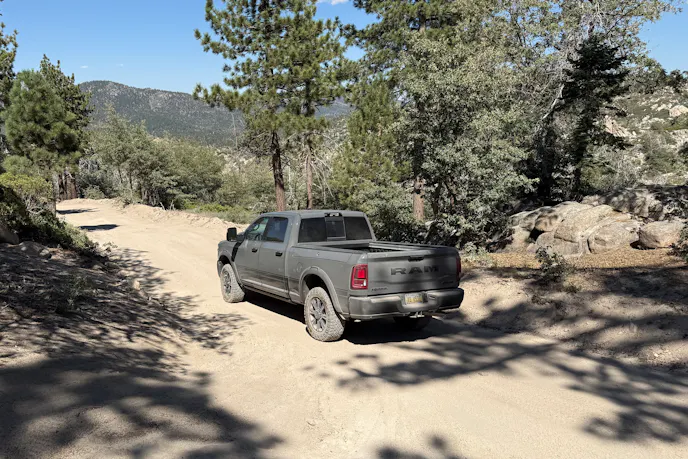
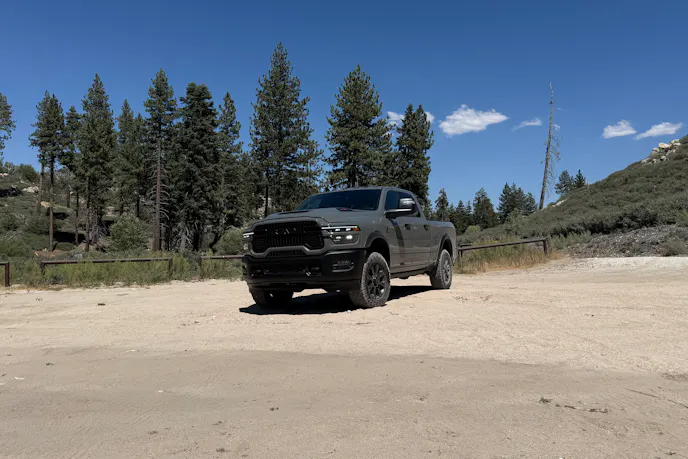
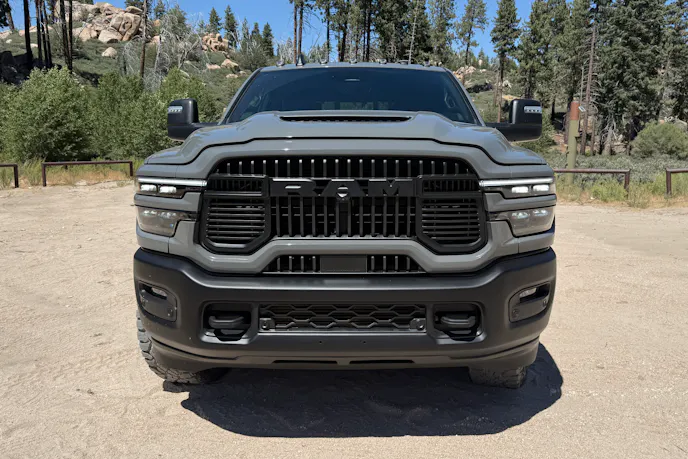
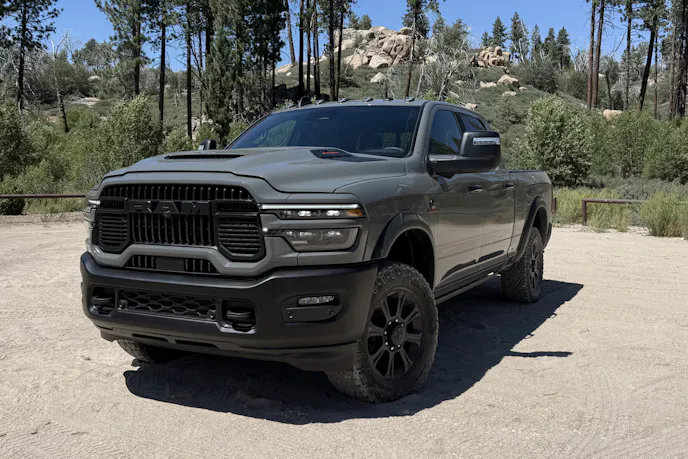
The truck we drove was a Ceramic Gray 2026 Ram 2500 Rebel Crew Cab 4×4 with the 6.7-liter High-Output Cummins, TorqueFlite HD eight-speed automatic and 3.42 axle ratio. Base MSRP was $69,755 before options and destination.
And there were plenty of options.
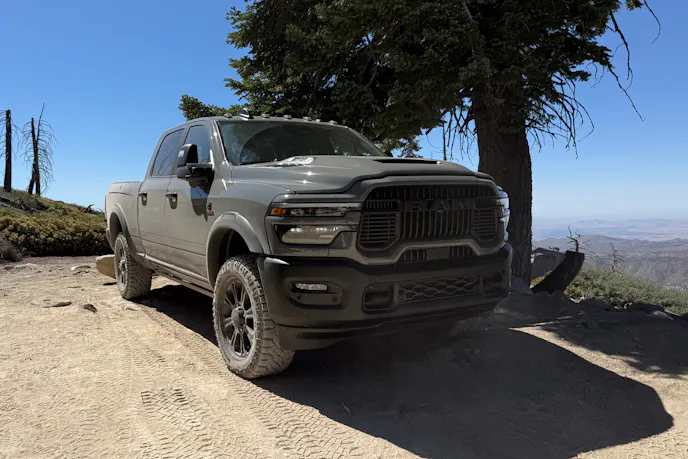
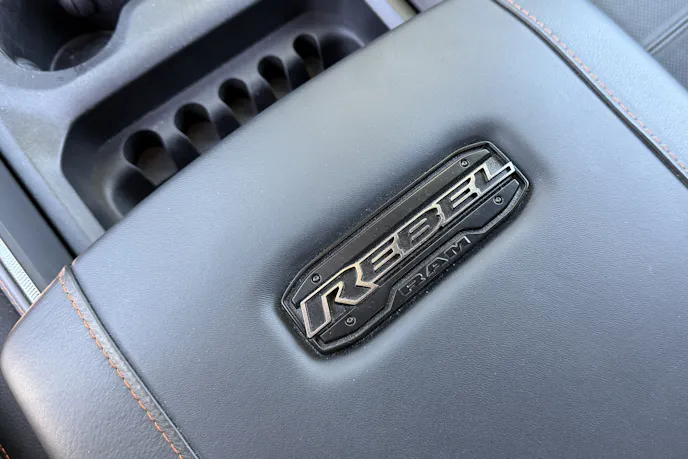
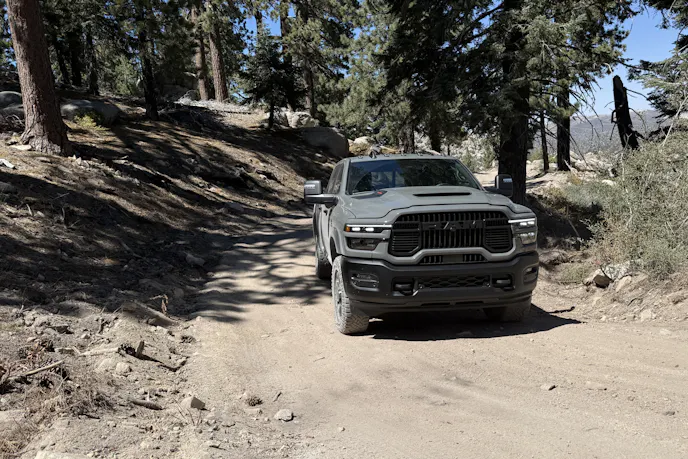
This particular truck was equipped with the $1,995 Lunar Edition, which added Natura seating with Axis inserts, Copperhead interior accent stitching, lockable console storage, the exclusive side stripe, accent-color door handles and special 20×8-inch RFX-finish aluminum wheels. While it’s mostly an appearance package, it suits the Rebel surprisingly well. The monochromatic gray and black treatment gives the truck a more purposeful look than some of the louder graphics packages available in the segment.
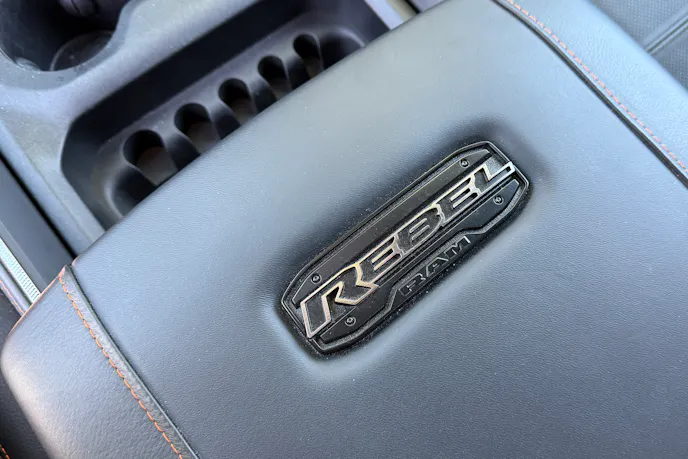
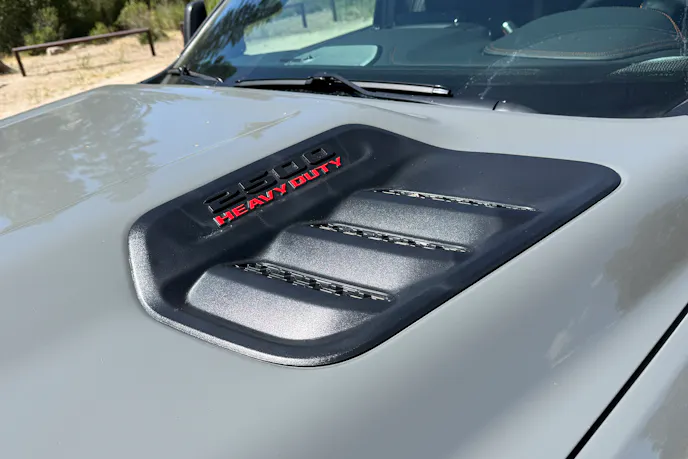
Our Rebel also carried the $6,545 Level 2 Equipment Group, bringing the large Uconnect display, front-passenger interactive screen, ventilated front seats, memory functions, power-folding and telescoping mirrors, LED bed lighting, sport performance hood, power-deployable running boards, 17-speaker Harman Kardon audio, spray-in bedliner and plenty more.
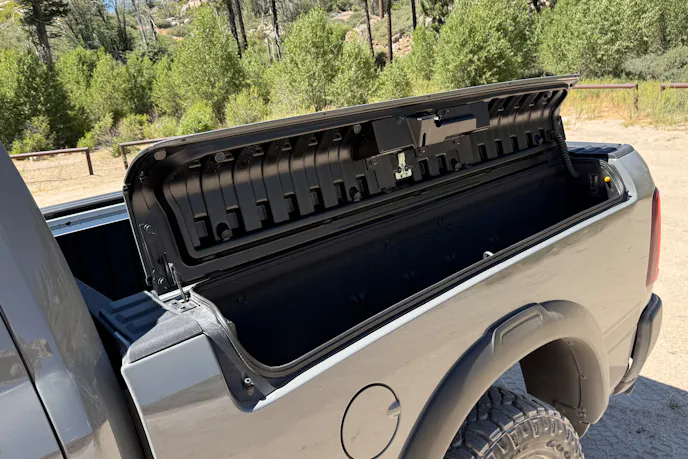
Then came the $12,995 Cummins, $1,705 automatic-leveling rear air suspension, $1,295 2.4-kW onboard power system, $1,295 RamBox cargo-management system, $1,595 Towing Technology Group, $1,995 Safety Group and a $1,195 sunroof. Add the $2,795 destination charge and the total landed at $103,165.
Welcome to the six-figure off-road three-quarter-ton era.
The Cummins Is Finally Paired With The Transmission It Deserves
If there is one change that defines the modern Rebel, it’s the new diesel powertrain.
The 1,075 lb-ft number grabs the headline, but the eight-speed automatic deserves almost equal billing. There’s an immediacy to the truck now that the original version didn’t quite have. The Cummins doesn’t need to rev or make a scene; you lean into the throttle and an enormous amount of truck simply begins moving with very little apparent effort.
That sensation was present in the 850-lb-ft version too, but the newer combination is smoother about it. The additional gears make the power delivery feel less industrial and more polished without stripping away the Cummins’ trademark low-rpm personality.
Ram rates the 2026 Cummins-powered Rebel for as much as 19,890 pounds of towing and approximately 3,300 pounds of payload, depending on configuration. Those are model maximums rather than the capacity of every Rebel; options, passengers and equipment all eat into a specific truck’s available payload. Our diesel tester carried an 11,040-pound GVWR.
The gasoline Rebel can reach 17,130 pounds of towing and 3,320 pounds of payload when properly configured.
Still One Of The Better-Riding Heavy-Duty Trucks
One of our strongest impressions from that original Heavy Duty Rebel was just how composed the truck felt on pavement. That hasn’t changed.
Ram’s link-coil rear suspension continues to be a major advantage when the truck is empty, and the optional automatic-leveling rear air suspension fitted to our tester takes another layer of harshness out of the experience. This is still a solid-axle three-quarter-ton truck with load-range-E off-road tires, so nobody is going to mistake it for a half-ton. But compared with the bucking, hopping behavior traditionally associated with unloaded heavy-duty pickups, the Rebel remains remarkably civilized.
The Bilstein gas-charged monotube dampers deserve some credit as well. They provide enough control to keep the big body from floating around without beating occupants over broken pavement. The truck feels substantial rather than clumsy.
Its size never disappears, however. At roughly 239 inches long with a 149-inch wheelbase, this is not something you toss casually into a compact parking spot. Steering is deliberate, and those large all-terrain tires aren’t interested in pretending they’re low-profile performance rubber.
The impressive part is how little punishment it asks you to endure in exchange for being an actual heavy-duty truck.
Rebel Hardware Still Means Business Off-Road
The Rebel doesn’t get every toy in Ram’s off-road cupboard, but it gets the ones most owners are likely to use.
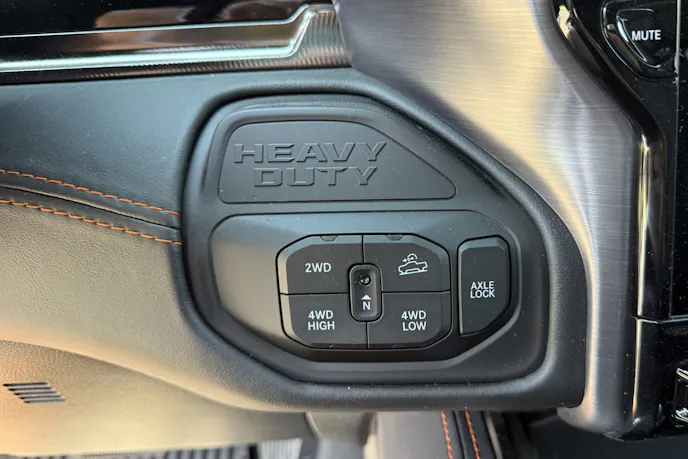
Bilstein monotube shocks are standard, along with skidplates protecting the fuel tank and transfer case. At the rear is an electronic locking differential that functions as a passive anti-spin differential when the locker isn’t engaged. An electric shift-on-the-fly transfer case handles four-wheel-drive duty.
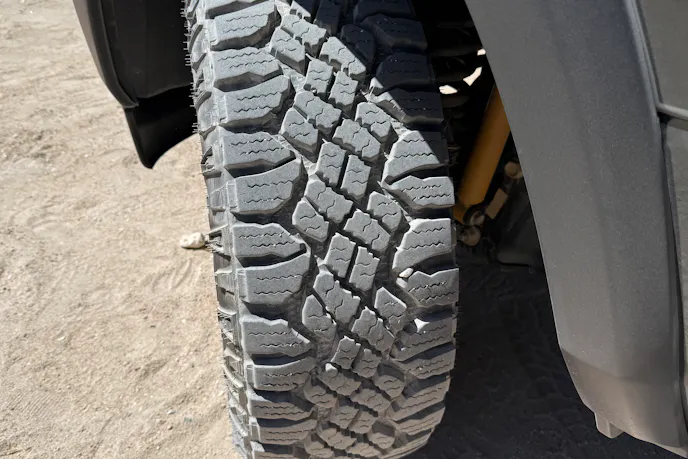
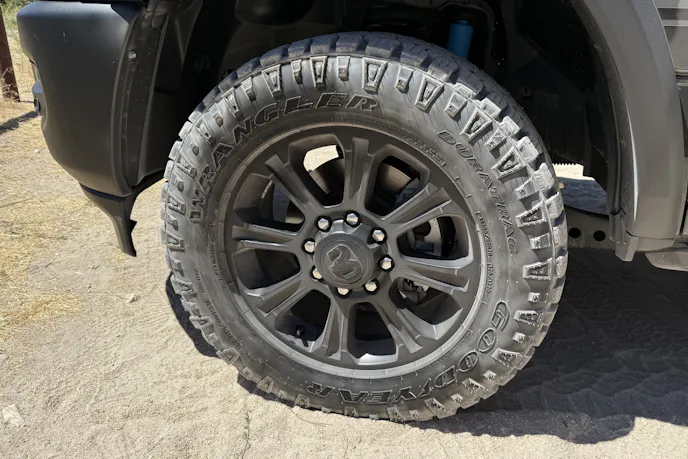
The biggest complaint about Ram’s Heavy Duty Rebel involves its tires. Our Lunar truck’s 20-inch wheels are wrapped in LT285/60R20 Goodyear Wrangler Duratrac off-road tires, a roughly 33.5-inch package that Ram describes as 34 inches. While we still contend that the truck would be better suited to a 35-inch-tall tire, it’s really the road noise the gets us down. With less than 2,000 miles on the odometer, these Goodyear tires had a howl that was audible over the Cummins engine. Maybe it’s a testament to how quiet Ram has made these trucks, but it still comes across as a miss.
Ram’s published 2026 specification data puts the Rebel at roughly 26 to 29 degrees of approach angle, about 26 degrees of departure angle and approximately 22 degrees of breakover, depending on equipment and the measurement convention being used. Minimum running clearance remains better than 13 inches.
Those numbers also illustrate the biggest unavoidable limitation: this is a very large truck.
Ground clearance is excellent, and the rear locker can make surprisingly easy work of loose climbs, but wheelbase and overall width matter when trails tighten up. The Rebel is happiest on forest roads, desert trails, snow, mud, rough two-track and moderately technical terrain where its massive torque and generous clearance can work for it rather than its dimensions working against it.
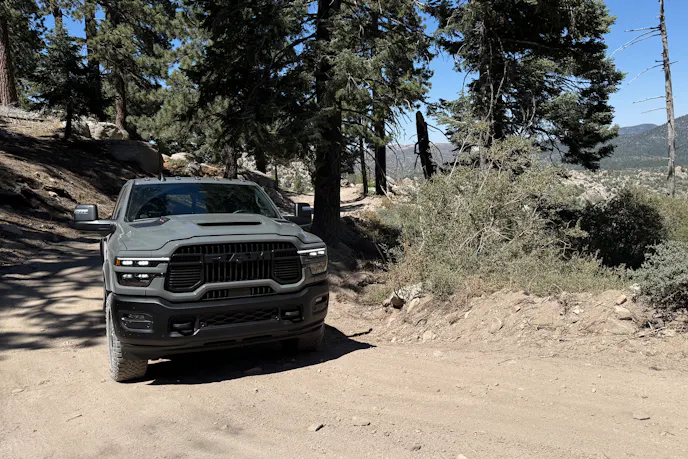
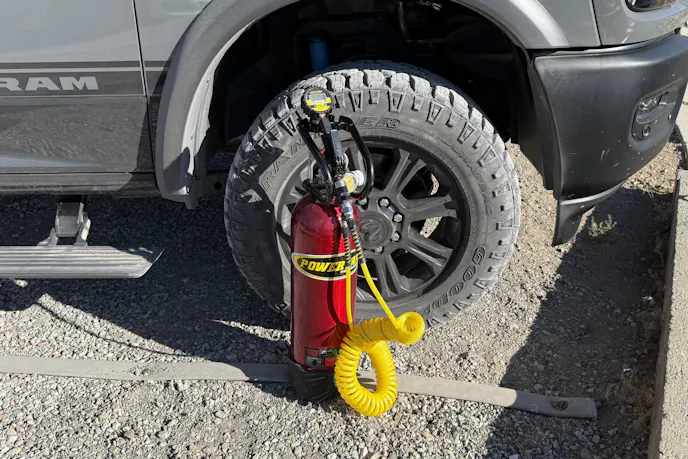
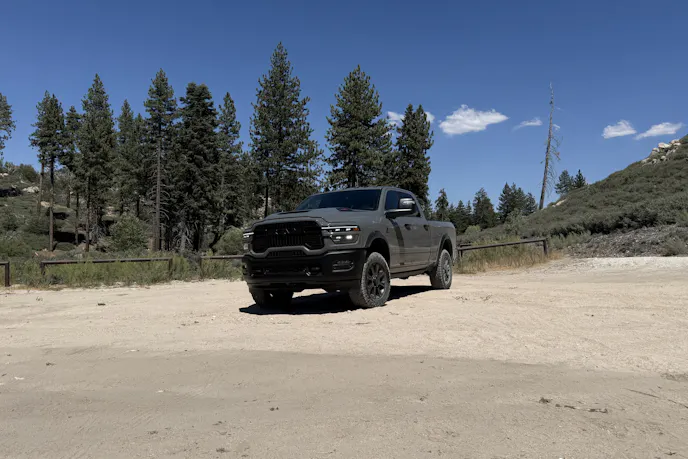
Mud and snow driving didn’t present itself during our late summer drive. However, there were plenty of forest roads in need of exploring. With tire pressure reduced to a reasonable level the Heavy Duty Rebel makes easy work of even the roughest roads. Sure, you’re not getting anywhere at TRX speeds, but with throttle moderation we easily completed many hours of backcountry travel in comfort.
Rebel Versus Power Wagon: Similar Mission, Different Priorities
The easiest mistake to make is assuming the Rebel is simply a Power Wagon with different badges.
The Power Wagon is still the more serious off-road tool. For 2026 it gets a factory two-inch lift, Articulink front suspension, front and rear electronic locking differentials and an electronic front sway-bar disconnect. Those features allow considerably more front suspension articulation when crawling over staggered rocks and deep terrain. Its 33-inch Goodyear all-terrain tires ride on 17-inch wheels, providing more sidewall than the Rebel’s 20-inch setup.
So which one should you buy?
If your weekends involve crawling boulder fields and deliberately searching for situations that require both axle lockers and maximum suspension articulation, get the Power Wagon.
If your weekends involve towing a large toy hauler, enclosed car trailer, boat or equipment trailer to someplace where the pavement eventually ends, the Rebel is probably the smarter tool.
For years the other easy dividing line was the engine. Want a Cummins? Buy the Rebel. That distinction is finally disappearing. Ram has announced that the 2027 Power Wagon will be offered with the same 430-horsepower, 1,075-lb-ft High-Output Cummins for the first time, with 2027 trucks beginning to arrive in the second half of 2026.
That doesn’t make the Rebel redundant. If anything, it forces the truck’s real advantage into sharper focus: Rebel was never just about putting a diesel in an off-road Ram. It’s about preserving heavy-duty capacity while adding enough trail hardware to comfortably venture beyond where a conventional 2500 should go.
The Rebel’s Sweet Spot Still Makes Sense
When we first drove the Heavy Duty Rebel, we called it the closest thing available to the Cummins-powered Power Wagon people had been requesting for years.
Four years later, that description isn’t quite sufficient anymore.
The 2026 Rebel has evolved into something more distinct. The High-Output Cummins and eight-speed transmission have given it substantially more muscle and refinement. Ram’s updated electronics and displays have modernized an already excellent cabin. The Lunar treatment on our tester gives it a bit of exclusivity without turning the truck into a rolling billboard. And underneath everything are the same Bilstein dampers, rear locker, skidplates and compliant rear suspension that made the original truck work.
It also costs $103,165 as tested, so none of this capability comes cheaply.
Still, the Rebel’s appeal is easier to understand from behind the wheel than it is on a comparison chart. It doesn’t chase the Power Wagon into the most extreme terrain, and it doesn’t need to. Instead, it gives up just enough hardcore off-road hardware to become a much more useful heavy-duty truck.
That was the genius of the original Rebel.
You might also like
This Brawny 1959 Chevy Apache 4x4 Has Ford Underpinnings And Cummins Diesel Power
This brawny 1959 Chevy Apache 4x4 has Ford F-250 DNA and a Cummins turbodiesel along with a mind-boggling collection of custom mods.