


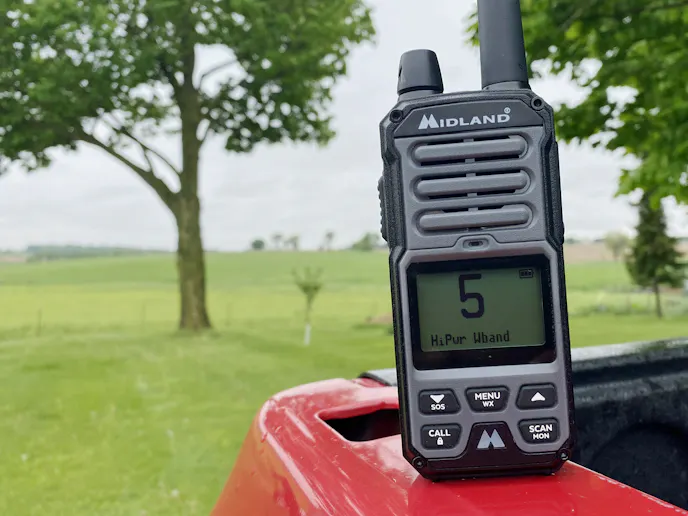
Midland Radio has introduced its all-new, GXT67 Pro handheld radio. Midland is no stranger to GMRS radio, but its GXT67 Pro is a big deal for the company. Why? Well, it’s Midland’s first-ever 5-watt, repeater-compatible handheld radio. It also boasts an IP67 rating and a slew of other features that make it ideal for off-road use. When Midland offered to send us a GXT67 Pro to test ahead of its official launch, we took the company up on the offer and spent several weeks assessing the radio.
About Midland Radio
Kansas City, Missouri-based Midland Radio has a history that dates back to 1959. The company is known as the first CB radio manufacturer in the U.S. It has also been involved in GMRS radios for over 25 years. Midland’s GMRS product line is one of the largest in the U.S. and includes a variety of handheld and mobile radios. Its product line includes a variety of mobile radios and a wide assortment of handheld radios. Additionally, Midland offers GMRS antennas, very cool Ammo Can Base Stations, and much more. Furthermore, the company has been a supporter of off-roading nationwide.
What Is GMRS?
If you’re not familiar with GMRS, here are the basics. GMRS (General Mobile Radio Service) radio is one of several standalone radio services available in the U.S. Recently it has become popular in the off-road world. There are 30 total GMRS channels. Channels 1-7 are limited to a maximum effective radiated power (ERP) of 5 watts. Channels 8-14 are limited to a maximum of 1/2-watt ERP (the FCC only allows handheld radios to transmit on these channels). Finally, channels 15-22, and the eight repeater channels, can have a maximum ERP of 50 watts. Check out our detailed overview of GMRS radio from the off-road perspective. The story contains a vast amount of GMRS info, including how easy and inexpensive it is to acquire the license that’s required to transmit on a GMRS radio.
To off-road you need a 4×4. To use GMRS you need a radio. Handheld GMRS radios like Midland’s GXT67 Pro are commonly referred to as “handy talkies” or “HTs.” HTs typically have an ERP of 2-5 watts. There are also vehicle-mounted 12-volt “mobile” GMRS radios that can have an ERP of up to the 50-watt limit. High-power, vehicle-mounted mobile radios are great, but HTs are handy because they can be used to communicate inside and outside of a 4×4.
Midland GXT67 Pro Has An IP67 Rating
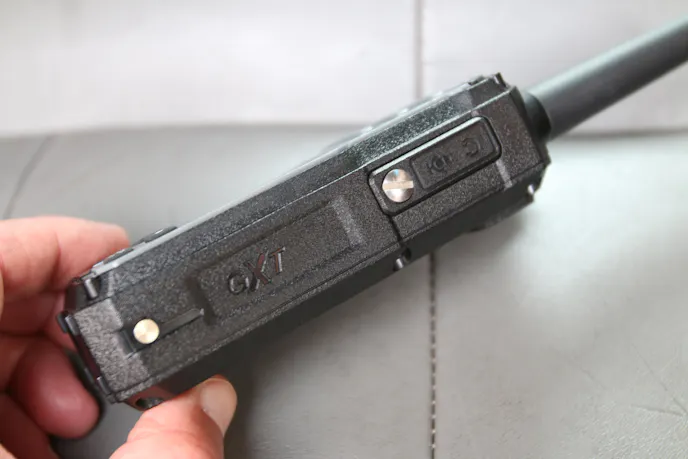
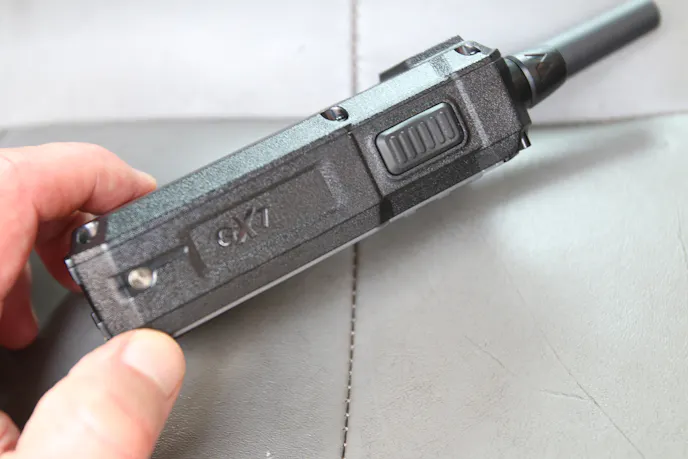
Dust, water, dirt, and mud are all part of off-roading. This is why the Midland GXT67 Pro’s IP67 rating is important. IP stands for Ingress Protection, the number 6 means its dust-tight, and the 7 means it is waterproof when immersed in up to 1 meter of water for 30 minutes. This rating will help ensure communication in normal or adverse wheeling conditions. We’ve had experience with a non-IP-rated GMRS radio failing while on a trail ride after it got wet during a rainstorm. This left us out of the communication loop with other wheelers in our group. We also have a fairly expensive non-IP-rated GMRS radio that has an LCD screen permeated with dust. It also has a wonky on/off/volume knob due to dust and water damage. Thus, the IP67 rating of the GXT67 Pro is invaluable for consistent and reliable communication.
30 GMRS Channels, Including Repeater Compatibility
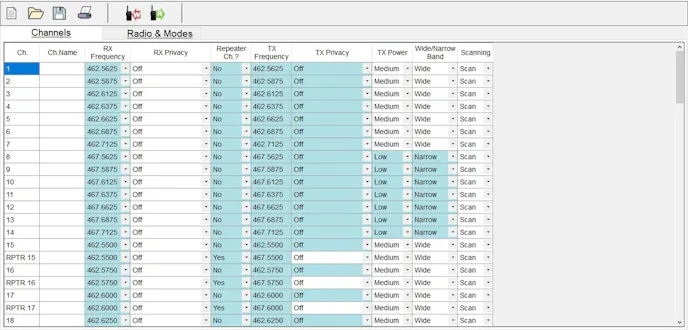
All 30 GMRS channels are supported by the Midland GXT67 Pro 5-watt radio. Midland also programmed the radio with 28 preset “privacy code” channels that can be used when you want to filter out other radio traffic. Additionally, 49 additional channels can be programmed via free software that’s available on the Midland website. This allows you to save programming info to a channel and even give the channel a custom name if you wish. We’ll have more info on the programming software for the GXT67 Pro in an upcoming story.
The 30 GMRS channels include the eight repeater channels. What is a repeater? Well, a GMRS repeater accepts an audio transmission, amplifies it, and retransmits it. The result can be a vast increase in communication range. More information regarding repeaters can be found in this GMRS Radio overview.
Features Galore
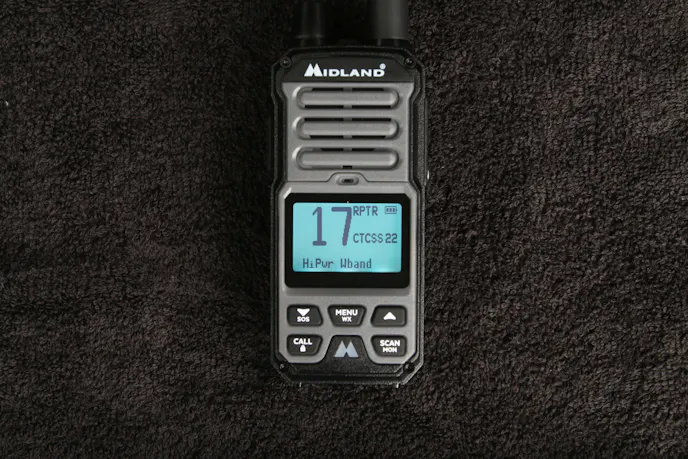
In addition to the items already mentioned, the GXT67 Pro is loaded with additional features. There are 38 CTCSS and 104 DCS privacy codes and the radio allows for split tones, which are necessary for some repeaters. There’s a keypad lock feature, high/medium/low power settings, scan mode, and a roger beep. Additionally, the radio offers 10 selectable call alert tones, NOAA weather channels with alert and auto scan, and a vibrate call alert. Furthermore, there’s an accessory jack, microphone active noise cancellation, and four VOX levels. Also notable are the group and direct call features, and wideband/narrowband capability on channels 1-7, 15-22, and the repeater channels.
The Radio Can Be Charged While In Use
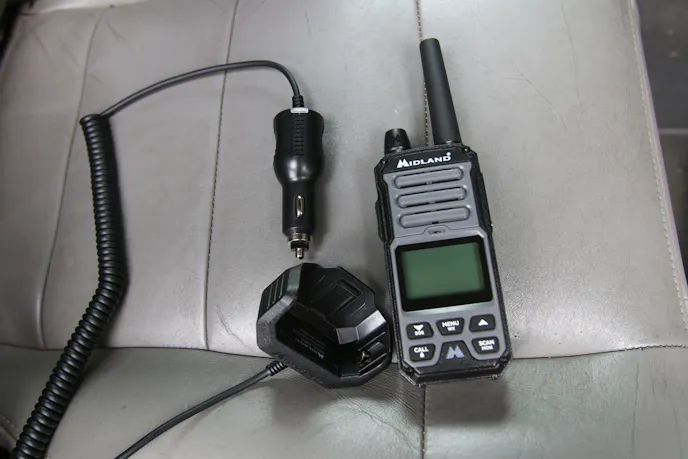
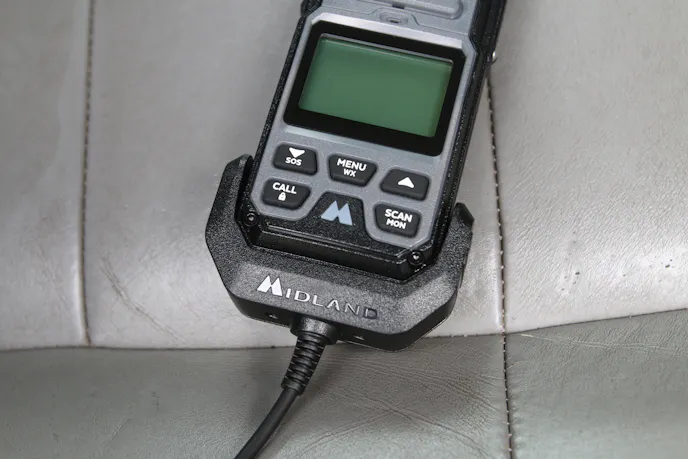
The GXT67 Pro is powered by a “4-hour rapid charge” internal 7.4V, 2,400 mAh battery. Midland says the radio has 6-hour battery life (average operating cycle: 5 percent RX at full volume, 5 percent TX at high power, and 90 percent standby). It can be charged while the radio is in use, though recharge time will be longer. The battery is charged one of two ways. First is via a desktop charger that draws power from either a wall adapter or a USB-C socket. The other option is a vehicle power adapter with a 12V DC plug. The vehicle power adapter snaps on the end of the radio.

In The Box
The GXT67 Pro comes in a zippered soft-shell carry case. In addition to the radio, the case contains a belt clip, desktop charger, AC wall adapter, 6-foot USB-C charging cable, snap-on DC vehicle adapter, and owner’s manual.
Minimal Learning Curve
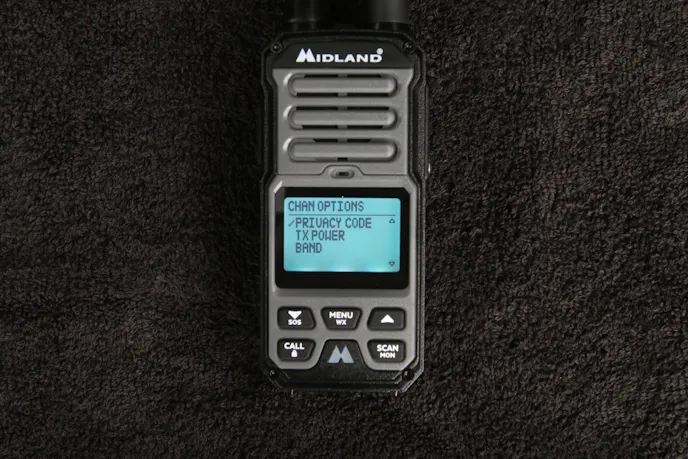
The learning curve on the radio was minimal for us. In no time we had the radio unboxed, powered up, a channel selected, and we were chatting it up with another GMRS user. The menu of the GXT67 Pro is super easy to navigate. In less than two minutes we had the radio configured for our local repeater channel. Even with all the radio’s features, Midland kept things super simple from an operating perspective.
Test Results
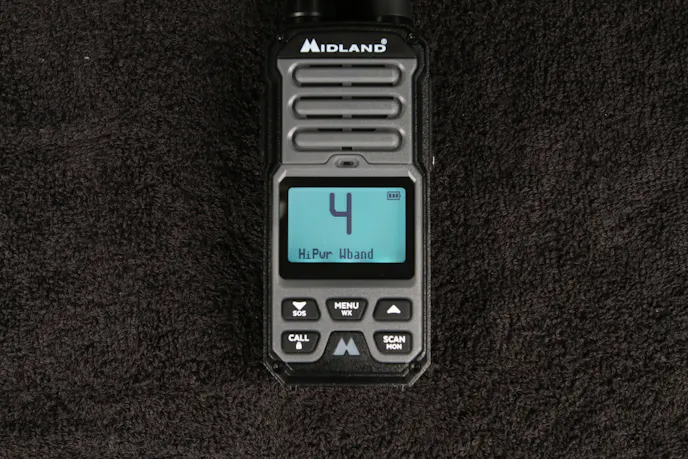
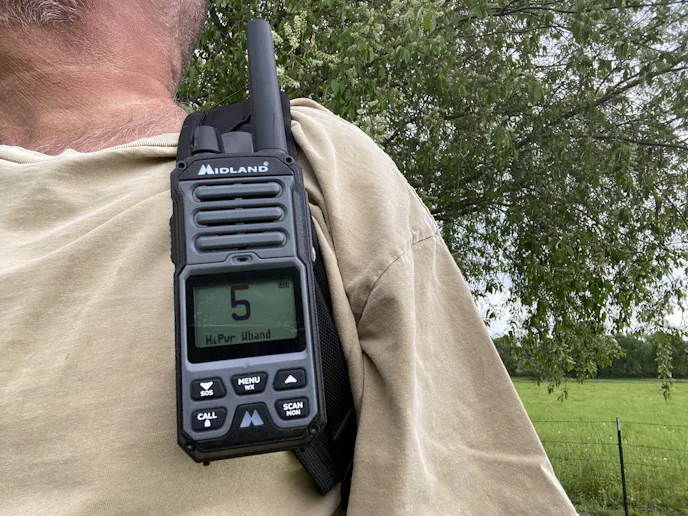
Over the last few weeks, we’ve used the GXT67 Pro a lot. It has been our go-to radio during a trip from Tennessee to Illinois, as well as for general communication. We’ve used the radio to talk directly to other radios, as well as to communicate through repeaters. Signal reports have been good, the speaker’s volume and clarity are good, and it has the audio horsepower to be heard inside a noisy 4×4. We like the large LCD screen and the amount of information it provides. We also think Midland did a great job dialing in the resistance of the volume knob. It has enough resistance to ensure that the volume isn’t easily changed when moving about, without requiring a lot of effort to turn. It’s a small thing, but a welcome detail.
We also need to note that scan mode is faster than some of our other GMRS radios. And, the GXT67 Pro has the ability to skip channels during scan mode. Both of these features are welcome.
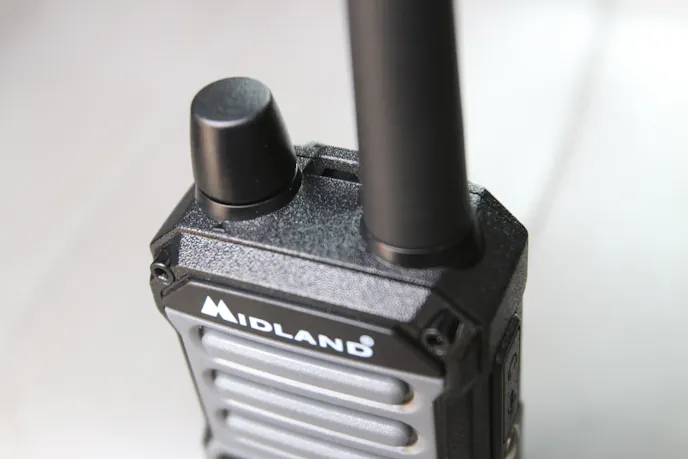
The GXT67 Pro’s antenna is fixed to the radio (non-removable). We’re impressed at the performance of the fixed antenna. It’s also short and mounted rock-solid to the radio. Translation: less chance of antenna or antenna base damage.
The Bottom Line
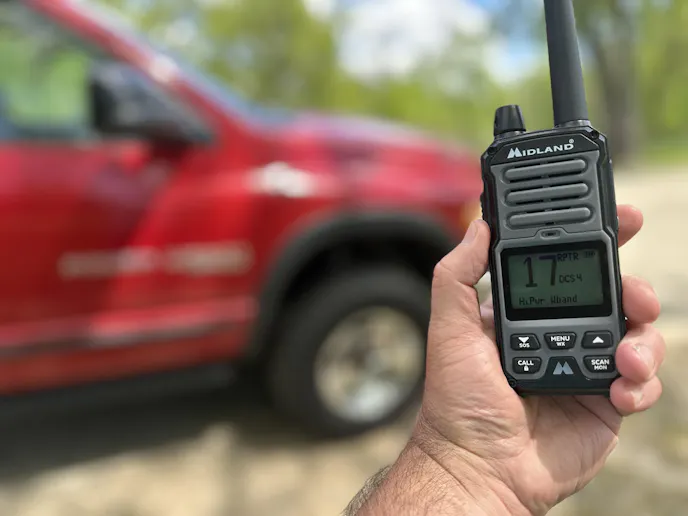
There’s a lot to like about the Midland GXT67 Pro GMRS radio. It’s a radio that’s loaded with features, it’s easy to use, it has s quality feel, and it has the rugged design necessary for the rigors of off-roading. The GXT67 Pro is available now on Midland’s website for $199.99.
You might also like
This 1990 Chevy 3500 Gets A 4WD Swap And Gains An LB7 Duramax
This 1990 Chevy 3500 wears decades of patina, but has been upgraded with 4WD and a Duramax turbodiesel engine.