

The modern off-road truck has evolved far beyond its roots. What was once a simple platform for rugged terrain has become a rolling ecosystem of electronics, accessories, and performance upgrades. From high-output fuel systems and electric cooling fans to light bars, onboard air, and navigation gear, today’s builds demand serious electrical support.
That’s exactly where the factory charging system starts to show its limits—and where Powermaster Performance’s new small-frame HPR alternator steps in.
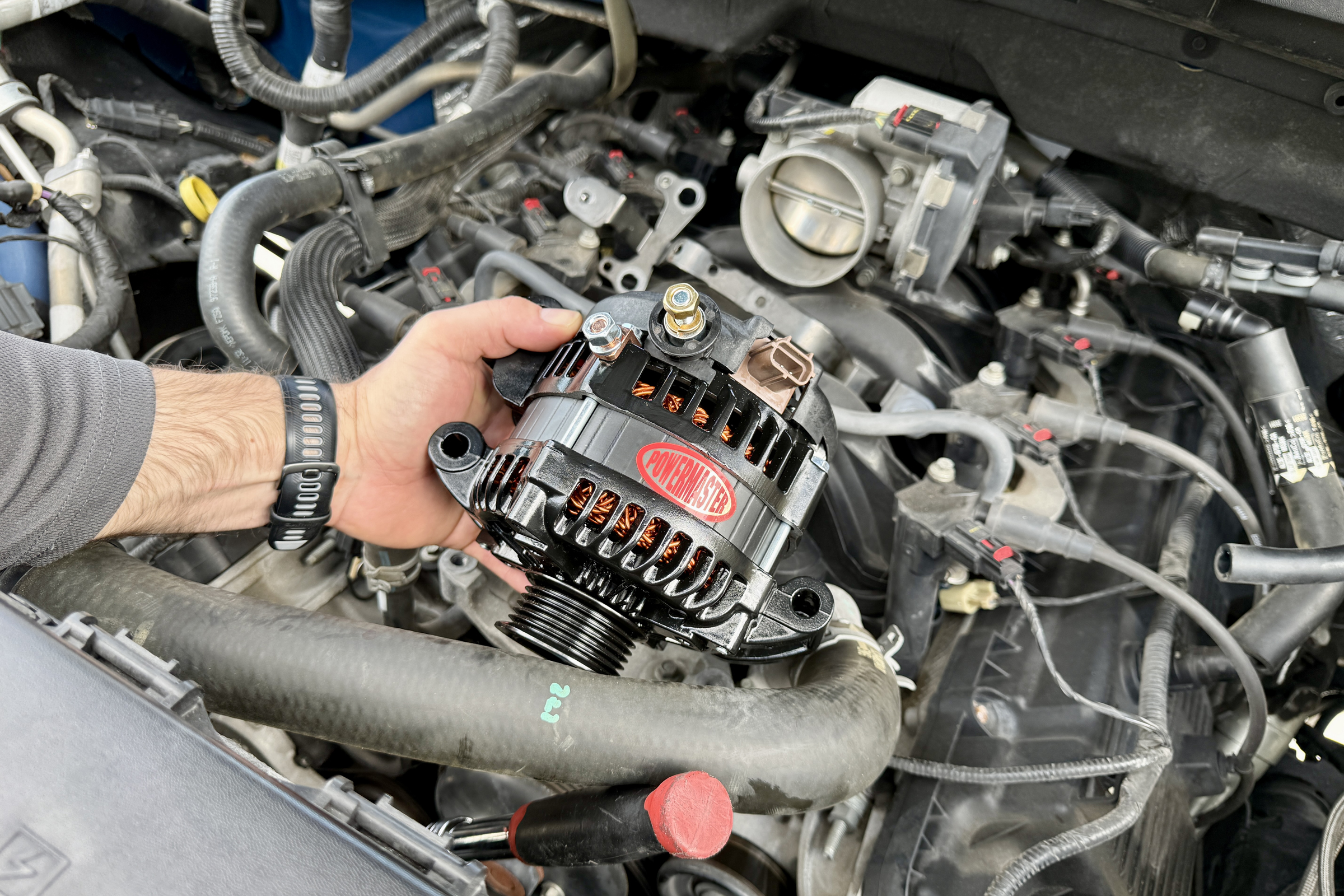
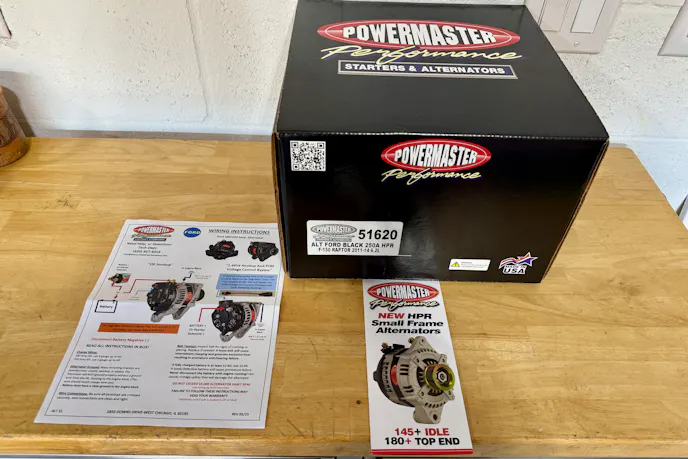
We installed Powermaster’s 250-amp HPR alternator, part number 51620, on a 2012 Ford F-150 Raptor equipped with Ford’s 6.2-liter V8. The goal was simple: increase charging capacity, improve idle performance, and eliminate voltage inconsistencies that can creep in once accessories start stacking up.
Powermaster Performance: A Legacy of Solving Electrical Problems
Powermaster Performance has been in the business of building high-quality starters and alternators for decades, and that experience shows in both design and execution. Based in West Chicago, Illinois, the company has long focused on the enthusiast and racing markets, where reliability and output are critical.
Unlike mass-production electrical components designed to meet a cost target, Powermaster products are engineered with performance in mind. That means tighter tolerances, higher-quality materials, and designs that prioritize output where it’s actually needed—not just on paper.
Over the years, Powermaster has expanded its lineup to include everything from OE-style replacements to extreme-output units capable of supporting race cars and heavily modified street machines. The HPR series represents the latest evolution of that philosophy, aimed squarely at modern vehicles with high electrical demands.
Understanding HPR: More Than Just A Bigger Number
At first glance, a 250-amp alternator sounds like a simple upgrade—more amperage equals more power. But that’s only part of the story.
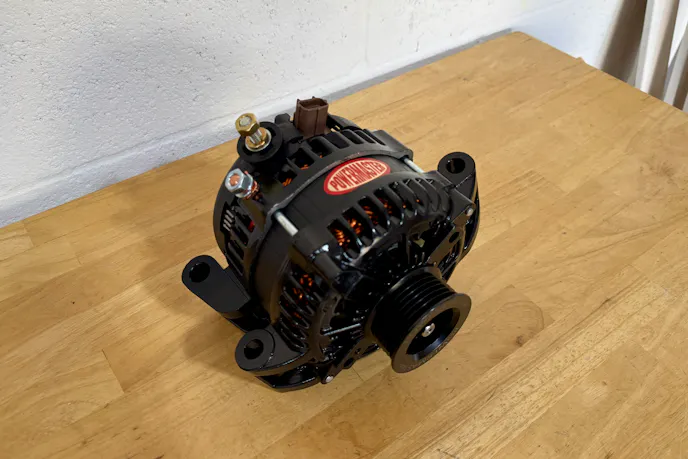
HPR stands for Hairpin Replacement, referring to the stator winding design inside the alternator. Traditional alternators use round wire windings, while hairpin designs use rectangular conductors that allow for greater efficiency and current flow. The result is improved output across the entire RPM range.
What makes the HPR series stand out is its focus on usable power, particularly at idle. Many high-output alternators advertise big peak numbers, but those figures often occur at higher engine speeds—conditions that don’t reflect how trucks are actually used.
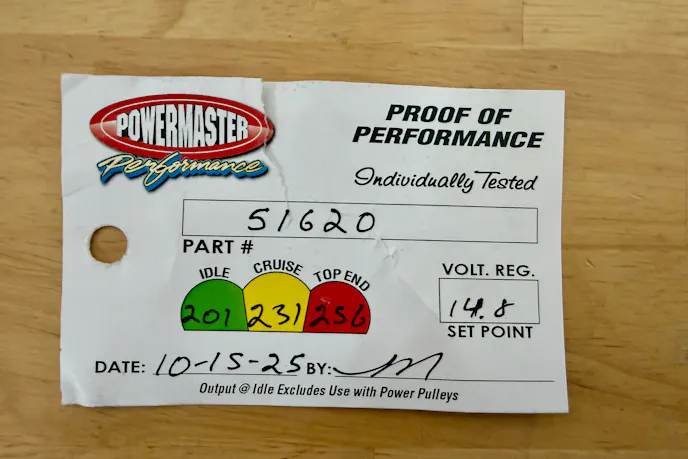
The large-frame HPR alternators are engineered to deliver strong output right where it counts. The included documentation highlights idle output exceeding 201 amps, climbing to 236 amps at cruising speeds, and pushing past 250 amps at higher RPM—all while maintaining a compact footprint that fits factory mounting locations.
That emphasis on low-speed performance is what separates the HPR line from conventional upgrades. It’s not just about making more power—it’s about making it when you need it most.
Why the Raptor Platform Demands More
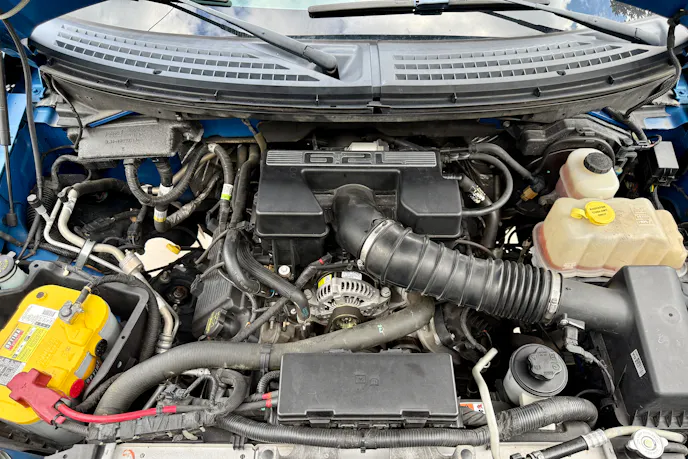
Ford’s first-generation SVT Raptor is a purpose-built off-road machine, but it was never designed with today’s accessory-heavy builds in mind. Even in stock form, the truck relies on a number of electrical systems that draw significant current.
Once you start modifying the platform, those demands increase rapidly. High-output electric fans, auxiliary lighting, upgraded audio systems, onboard compressors, and performance fuel components all pull from the same electrical system. At idle—where many off-road trucks spend a surprising amount of time—that demand can exceed what the factory alternator comfortably supplies.
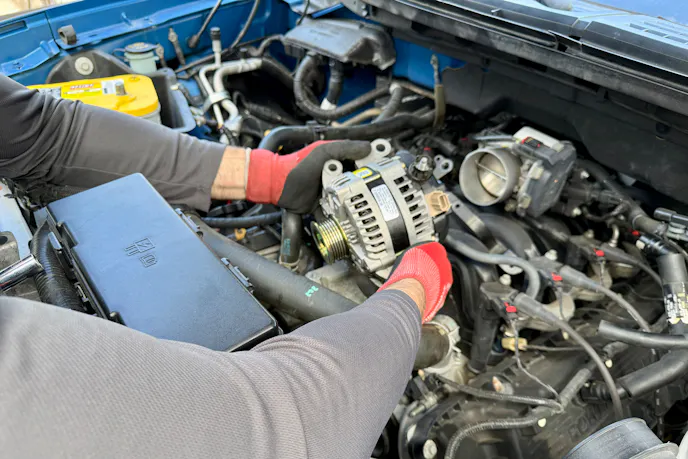
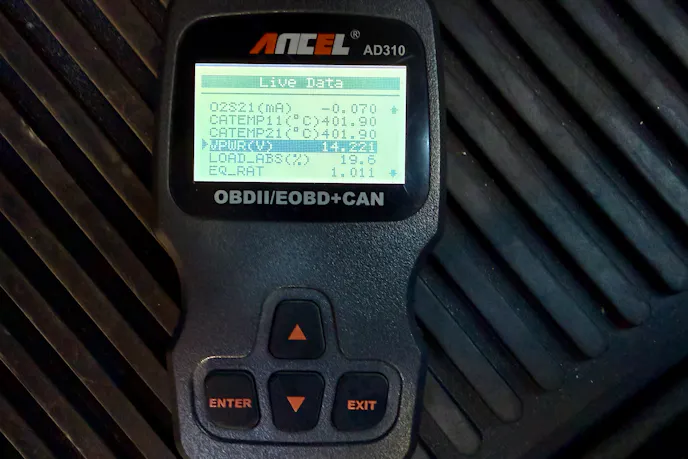
Before the upgrade, voltage readings at idle typically hovered in the high 13-volt range. That’s within an acceptable window, but it leaves little margin when additional loads are introduced. After installing the Powermaster unit, OBD2 data taken during cold-start idle conditions showed a noticeable improvement in voltage stability and consistency. Even a simple plug-in voltmeter reflected stronger output compared to the stock alternator, though OBD2 data remains the more accurate measurement.
This improvement isn’t just about numbers—it directly impacts how the truck performs. Stable voltage ensures that electronic components operate as intended, reduces strain on the battery, and helps prevent the kind of intermittent issues that can be difficult to diagnose in complex builds.
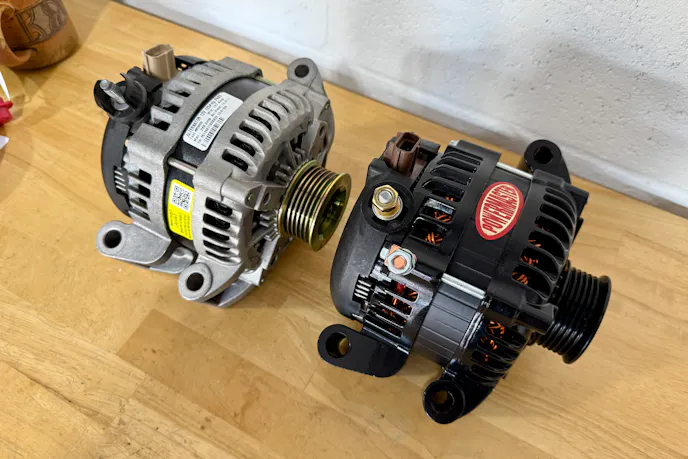
Installation: OE Simplicity With Added Flexibility
One of the standout features of the Powermaster HPR alternator is how easily it integrates into the factory system. On our 2012 Raptor, the unit bolted directly into place using the original mounting points, with no modifications required.
Fit and finish are immediately noticeable. The black powder-coated housing gives the alternator a clean, durable appearance that complements the engine bay without drawing unnecessary attention. More importantly, everything lines up exactly as it should—something that can’t always be said for aftermarket components.
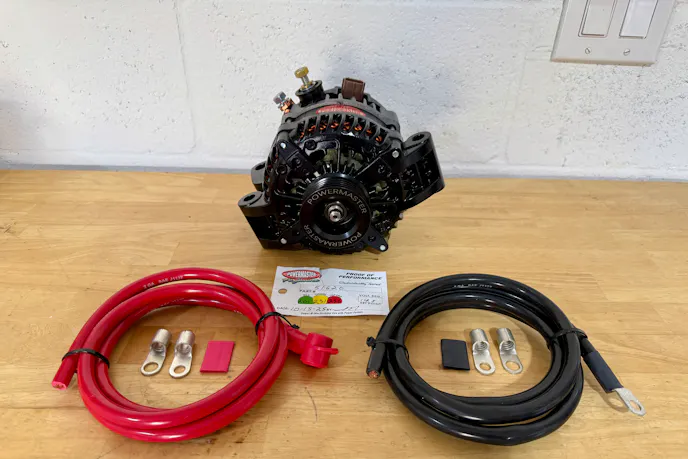
Powermaster includes an upgraded power cable with the alternator and recommends a 2-gauge charge wire to handle the increased output. In our case, the factory wiring already met that requirement and featured dual fusible links, so we retained the original cable.
One key upgrade over the OE alternator is the addition of a dedicated ground stud. The factory unit relies solely on its mounting points for grounding, but the HPR alternator provides the option to run a direct ground wire. We took advantage of that feature, running a supplemental ground to the battery using the side post on an Optima YellowTop. For anyone planning a similar setup, a 44-inch cable provides the correct length for clean routing.
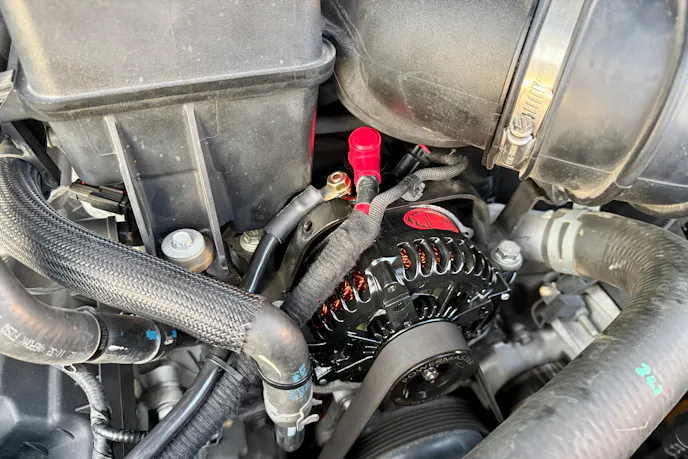
Clearance with the factory intake box is tight, and careful attention is required when routing the power and ground leads. We found that clocking the wires into a specific position was necessary to avoid interference, but once properly aligned, everything fit securely without issue.
Real-World Output: Where The HPR Delivers
Every Powermaster HPR alternator includes a dyno test tag, and the numbers tell a compelling story. Our unit produced over 200 amps at idle, climbed into the 230-amp range at cruising speeds, and reached 256 amps at higher RPM.
Those figures represent a significant increase over the factory alternator, but the real benefit is how that power is delivered. Instead of struggling to keep up at idle, the HPR alternator provides a surplus of current, allowing the system to operate without relying on the battery as a buffer.
In practical terms, that means electric fans maintain consistent speed, lighting remains bright, and voltage stays steady even under heavy load. For off-road applications, where extended idling and low-speed operation are common, that reliability is invaluable.
It also adds a layer of future-proofing. As more accessories are added, the charging system has the capacity to support them without requiring further upgrades.
The Bottom Line: A Smart Upgrade For Serious Builds
Upgrading an alternator might not be the most glamorous modification, but it’s one of the most important—especially on a vehicle like the Ford Raptor. As electrical demands continue to grow, the charging system becomes a critical component in overall performance and reliability.
Powermaster’s 250-amp HPR alternator delivers exactly what modern builds require: strong output at idle, OE-level fitment, and the flexibility to support additional upgrades. It addresses the shortcomings of the factory system without introducing complexity, making it an ideal solution for enthusiasts who expect more from their vehicles.
For our 2012 Raptor, the upgrade provided immediate, measurable benefits. Voltage stability improved, system performance became more consistent, and the truck gained the electrical headroom needed to support future modifications.
In the end, that’s what a well-designed upgrade should do—solve a problem you already have while preparing you for the ones you haven’t encountered yet.
You might also like
Chevy Goes Big Again: New Gen 6 5.7L And 6.6L V8s Transform The 2027 Silverado
The 2027 Chevy Silverado debuts new Gen 6 5.7L and 6.6L V8 engines with more power, advanced technology, and classic Small Block DNA.