
Suspension systems are often judged by how well they absorb the terrain beneath them, but what happens at the very end of suspension travel is just as critical as everything leading up to it. Whether you’re hammering through desert whoops, towing a heavy load, or crawling over rocks, the moment a suspension bottoms out can be the difference between control and chaos. That’s where jounce control comes into play—and why modern solutions like the SPC Performance Jounce Shock are redefining what happens when suspension travel runs out.
The Problem With Traditional Bottom-Out Control
Every suspension system needs a way to prevent metal-to-metal contact at full compression. Historically, that job has fallen to bump stops—simple components designed to limit travel and protect the chassis. While effective in the most basic sense, traditional bump stops come with compromises that become more apparent as vehicle demands increase.
Rubber bump stops, the most common solution, rely on material stiffness to resist compression. Because they are typically short in length, they must be extremely firm to prevent bottoming. The result is a sharp spike in force when they engage, often felt as a harsh jolt through the chassis. This abrupt energy transfer not only unsettles the vehicle but also increases stress on suspension components and occupants alike.
Polyurethane and progressive bump stops attempt to soften that engagement slightly, but they still operate within the same fundamental limitation: they are passive components with no damping capability. They absorb energy, but they do not control it.
At the higher end of the spectrum, hydraulic bump stops—commonly found in race applications—introduce fluid damping to slow suspension compression. These systems offer excellent performance but come with added complexity, cost, and packaging requirements that make them impractical for many street-driven or dual-purpose vehicles.
Enter The Jounce Shock
The jounce shock represents a fundamental shift in how bottom-out events are managed. Rather than acting as a simple cushion, it functions as a secondary shock absorber that engages only during the final portion of suspension travel.
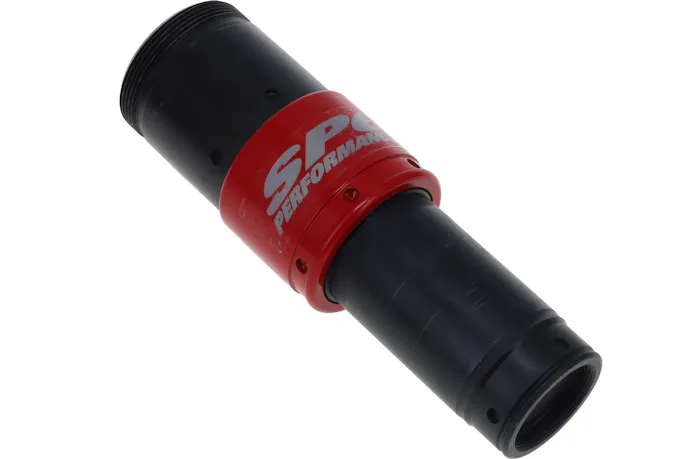
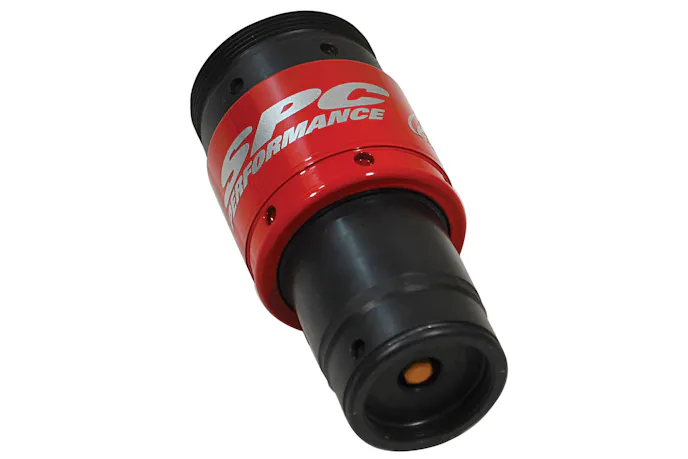
The SPC Performance Jounce Shock is a patented example of this concept, designed to maximize suspension capacity by adding both compression damping and controlled rebound to an existing suspension system.
Unlike conventional bump stops, the SPC unit is nitrogen-charged and oil-damped. As the suspension compresses deeply, the shaft of the jounce shock is driven into its body, compressing a sealed volume of nitrogen gas. Because the gas is contained within a closed cylinder, pressure rises rapidly as it is compressed, producing an exponential increase in force.
This behavior mimics an air spring, delivering a smooth and progressive resistance rather than a sudden spike. Instead of slamming into a hard stop, the suspension is gradually slowed, controlled, and stabilized.
Progressive Control, Not Just Cushioning
What sets a jounce shock apart is its ability to manage energy, not just absorb it. Traditional bump stops act only in compression, offering no rebound control. In contrast, the SPC Jounce Shock provides both compression damping and controlled rebound.
This dual-action control has a profound effect on vehicle dynamics. Bottom-out events become controlled and predictable, reducing instability and improving handling at all speeds. The added damping also helps keep the tires in contact with the terrain, which is especially critical in off-road environments where traction can change instantly.
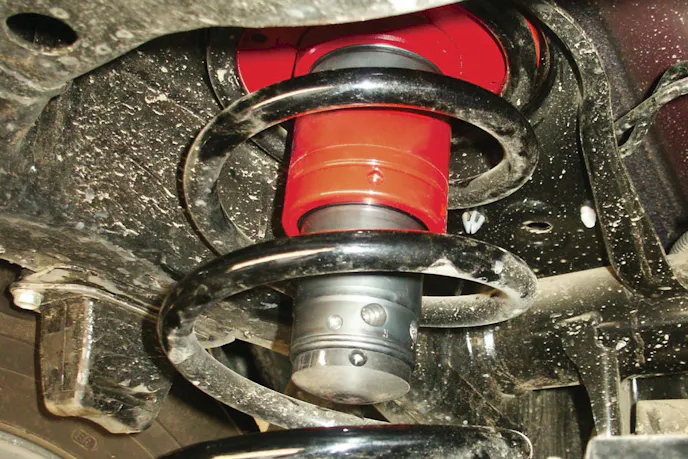
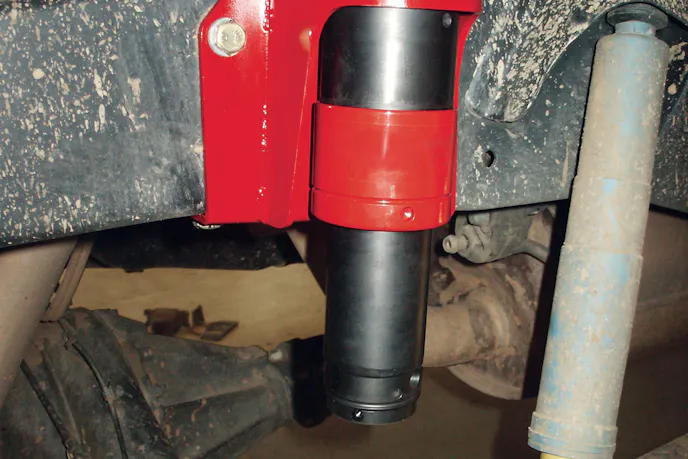
Another key advantage is that jounce shocks do not interfere with normal ride quality. Properly installed systems are designed so they do not engage at ride height, meaning everyday driving characteristics remain unchanged. Only when the suspension is pushed deeper into its travel—such as under heavy loads or aggressive off-road use—does the system come into play.
Reducing Harshness And Increasing Capacity
One of the most noticeable benefits of a jounce shock is the reduction in NVH—noise, vibration, and harshness. Because the engagement is spread over a longer travel range and controlled hydraulically, the sharp impacts associated with traditional bump stops are largely eliminated.
This smoother energy management translates into tangible gains in both comfort and durability. By reducing the peak forces transmitted through the suspension, jounce shocks help minimize wear on components and decrease driver fatigue over long distances or rough terrain.
More importantly, they effectively increase the usable capacity of the suspension system. SPC describes this as “doubling suspension capacity,” a reflection of the system’s ability to handle greater loads and more extreme conditions without bottoming out.
This makes them particularly valuable for vehicles that operate across a wide range of conditions, from daily driving to towing and off-road use.
Where The SPC Jounce Shock Stands Out
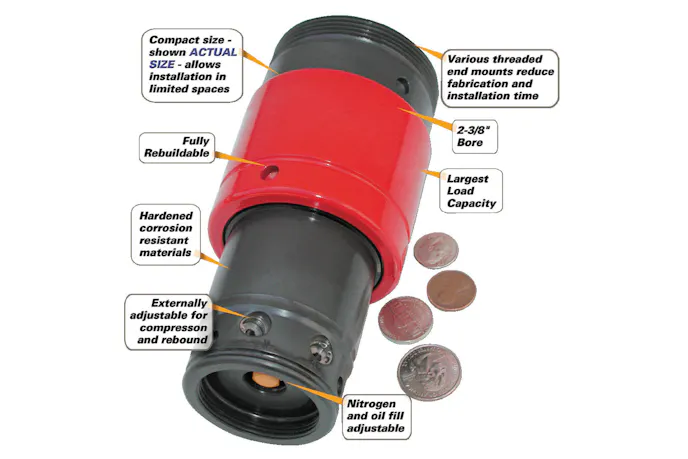
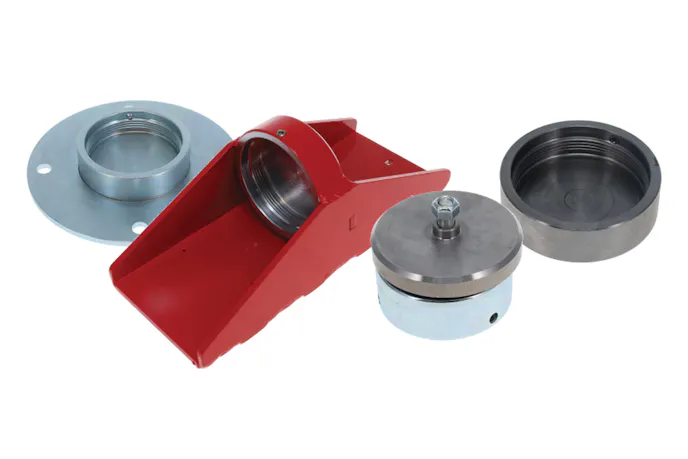
While the concept of a bump shock is not entirely new, SPC’s execution strikes a balance between performance, simplicity, and accessibility. The compact design allows for installation in tight packaging scenarios, with options like the 6-inch base unit suited for various motion ratios and the longer 9-inch version optimized for direct 1:1 setups.
Unlike full-scale hydraulic bump stops that often require extensive fabrication and maintenance, the SPC system offers a more straightforward solution that is both tunable and rebuildable. The internal nitrogen pressure can be adjusted to fine-tune engagement characteristics, allowing users to tailor the system to their specific vehicle and application.
This flexibility makes the SPC Jounce Shock a versatile upgrade across multiple use cases. Off-road enthusiasts benefit from improved control over large impacts and rough terrain. Tow rigs gain additional load support and stability under heavy payloads. Even street-driven vehicles see improvements in composure during extreme suspension events.
The Evolution Of Suspension Control
As vehicle performance continues to advance, so too must the systems that support it. The traditional bump stop, while still functional, represents an older approach to a complex problem. Modern driving demands—whether in the dirt, on the highway, or under load—require solutions that can manage energy dynamically rather than simply resist it.
The SPC Performance Jounce Shock embodies that evolution. By combining the progressive characteristics of an air spring with the control of a shock absorber, it transforms one of the harshest moments in suspension travel into a controlled, predictable event.
You might also like
This Blacked-Out, 8.3-liter Dodge Viper V10-powered, 1984 Jeep J10 Is Straight Wicked
This 1984 Jeep J10 has a 506 ci V10, a killer suspension, and it's been back-halved. But that's not the half of it.