

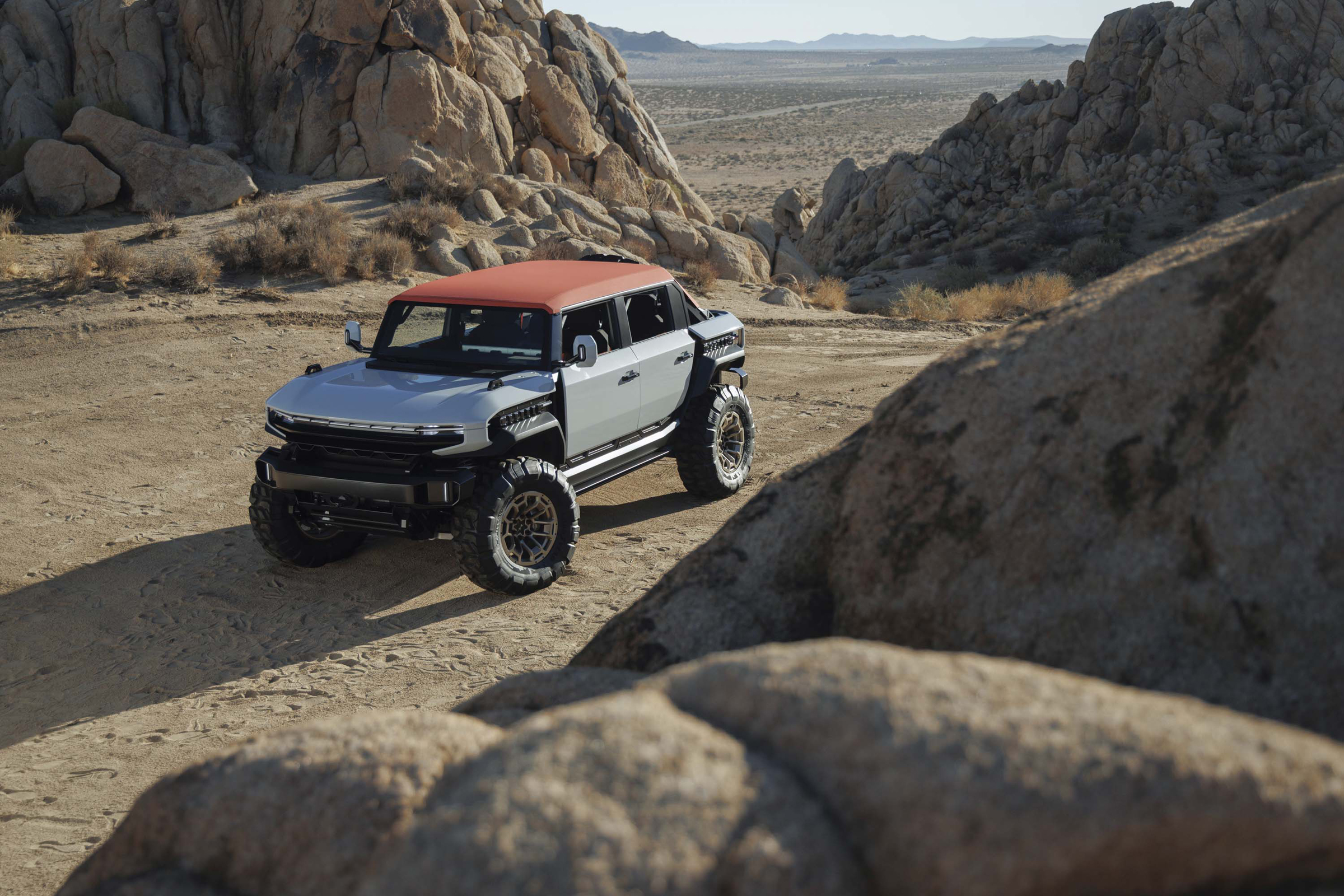
General Motors chose Southern California for more than sunshine when it officially opened its new advanced design studio in Pasadena. It chose a place where car culture, aerospace, art, architecture, fabrication, and rugged terrain all collide. To mark the occasion, it pulled the cover off two highly reconfigurable mid-size electric off-road concepts: the GMC HUMMER X SUV and GMC HUMMER X Truck.
GM is quick to point out that neither concept is intended for production. These are not showroom-bound trim packages or thinly veiled future model previews. Instead, the HUMMER X SUV and Truck are rolling design studies, built to explore how modular manufacturing, EV packaging, connected trail tech, recyclable materials, and hardcore off-road geometry might come together in the next generation of adventure vehicles.
The important part is that GM did not treat these as soft lifestyle EVs wearing knobby tires for the photo shoot. The HUMMER X concepts are envisioned as capable rock crawlers, built around serious stance, real tire, wheel, suspension, and underbody hardware, and a design philosophy that puts exploration ahead of polish.

Pasadena Becomes GM’s West Coast Idea Factory
GM’s new Pasadena studio spans 148,000 square feet across three buildings and gives the company a fully integrated Southern California design campus. The facility is equipped for full-size clay modeling, fabrication, and immersive digital collaboration, and it is home to roughly 100 team members across design, sculpting, fabrication, and artisan disciplines.
The studio’s job is not to crank out today’s production sheetmetal. Its mission is conceptual design work, the kind of far-forward thinking meant to drive ideation across GM and explore what mobility could become 10 or 20 years from now.
“Southern California isn’t just a place where we work, it’s a place of unfiltered inspiration. Film, art, architecture, aerospace, technology and the remarkably diverse topography create an unparalleled canvas of experiences that drives an incredibly unique vehicle culture,” said Bryan Nesbitt, VP of Global Design, GM. “These sources of inspiration influence how our designers see the world to envision what mobility could offer 10 or 20 years into the future, exploring new designs, technology and experiences for GM customers.”
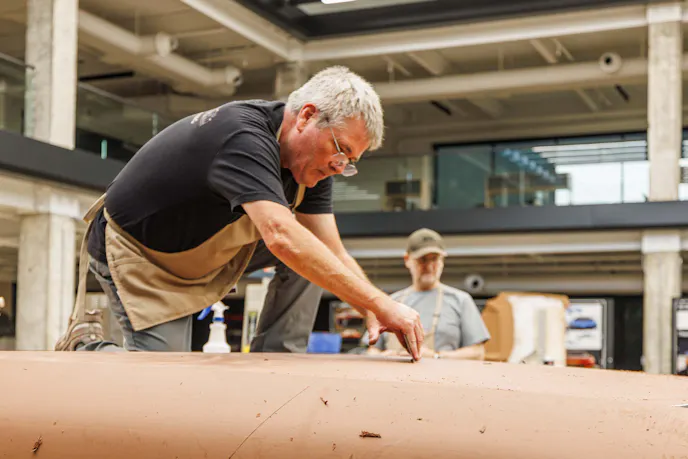
That California influence runs deeper than this new building. Harley Earl, GM’s first design director, was born and raised in Hollywood, got his start building custom cars for movie stars, and later pioneered the use of clay modeling in automotive design. That same clay-modeling tradition remains central to the industry today, even as digital tools and immersive design systems continue to evolve around it.
GM established its first permanent advanced design presence in Southern California in the 1980s. Over the decades, its Los Angeles-area studios contributed to experimental Corvettes, Camaros, and autonomous concept studies such as the Cadillac Halo portfolio. Pasadena now becomes the next chapter in that lineage and joins GM’s global Advanced Design network, which also includes studios in Detroit, the United Kingdom, and Shanghai.
The Courage To Get Lost
The HUMMER X concepts were created around a deceptively simple adventure-first idea.
“Every great concept starts with a belief. Ours was this: the courage to get lost leads us to new discoveries,” said Brian Smith, outgoing GM Advanced Design Pasadena studio director. “The team rallied around a working mantra of ‘Take nothing but pictures, leave nothing but footprints,’ and let that philosophy guide every decision. That’s not just a tagline – it’s the design brief.”
That line explains a lot about the HUMMER X. These concepts are not merely smaller HUMMER EVs. They are a rethink of what a mid-size electric trail vehicle could be if it were developed around modularity, shared adventure, and lower-impact exploration from the beginning.
The HUMMER X program was born from collaboration between GM Advanced Engineering, Advanced Manufacturing, and the Advanced Design Pasadena studio. GM describes the concepts as a testbed for new technologies, new aesthetics, and new ways to build community around adventure, with sustainability woven into the project rather than added afterward.
The team organized the concepts around four pillars: reconfigurability, capability, community, and sustainability.
FLEX FAB Gives HUMMER A New Shape
The most important manufacturing idea behind HUMMER X is FLEX FAB, a flexible manufacturing approach GM describes as similar to 3D printing, but for metal. Instead of relying on specialized stamping tools, FLEX FAB is envisioned to allow fast, small-batch, on-demand production from the same machines.
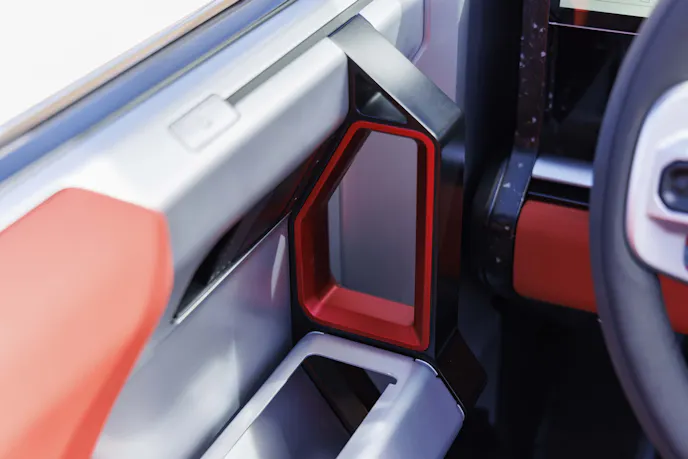
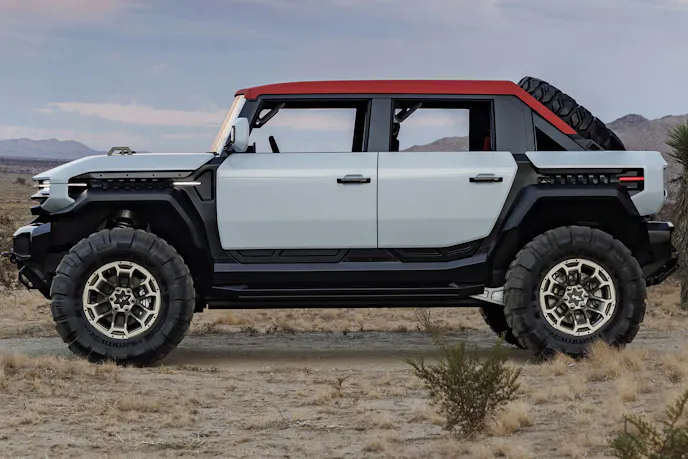
That matters because it opens the door to multiple body configurations without the enormous tooling burden normally associated with traditional stamped-metal vehicle programs. On the HUMMER X concepts, that flexibility shows up visually in a clean, flat-topped silhouette, radiused edges, laser-welded seams, and visible precision bolts.
The result is a different kind of HUMMER look. It is still squared-off and unmistakably rugged, but less brutish than the current production HUMMER EV. The forms are cleaner, flatter, more modular, and more honest. The visible fasteners and laser-welded seams do not try to hide how the vehicle is made. They make the manufacturing method part of the design language.
Both the SUV and Truck concepts use a 57-percent FLEX FAB percentage, underscoring how central the process is to the design study.
Built Around Real Off-Road Proportions
Where the production HUMMER EV has earned its “supertruck” identity through sheer scale and outrageous output, HUMMER X moves the idea into a more trail-friendly mid-size footprint.
The HUMMER X SUV rides on a 116-inch wheelbase and measures 188.3 inches long, 72.9 inches tall, and 80 inches wide. For off-roaders, the more important numbers are underneath and at the bumpers: a 44.0-degree approach angle, 46.0-degree departure angle, 30.9-degree breakover angle, and 13.2 inches of ground clearance. Those are serious rock-crawling numbers, especially paired with 37-inch tire diameter.
The SUV concept runs Goodyear tires sized 315/75R18 on 18-inch aluminum wheels with accent inserts. The tire’s outside diameter is listed at 37 inches, giving the SUV the more aggressive trail setup of the two concepts.
The HUMMER X Truck stretches the formula. Its wheelbase grows to 130.7 inches, with an overall length of 207.3 inches. Height is listed at 73.0 inches, while width remains 80 inches. The longer wheelbase changes the trail geometry, as expected, with a 41.5-degree approach angle, 29.7-degree departure angle, 24.9-degree breakover angle, and 12.5 inches of ground clearance.
The Truck concept wears Goodyear street tires sized 305/55R22 on 22-inch aluminum wheels with accent inserts. Outside diameter is listed at 35 inches. That makes the Truck feel more like the street/trail expression of the idea, while the SUV leans harder into crawling with its 18-inch wheels, taller 37-inch rubber, and stronger departure and breakover numbers.
EV Packaging With A Rock-Crawler Mindset
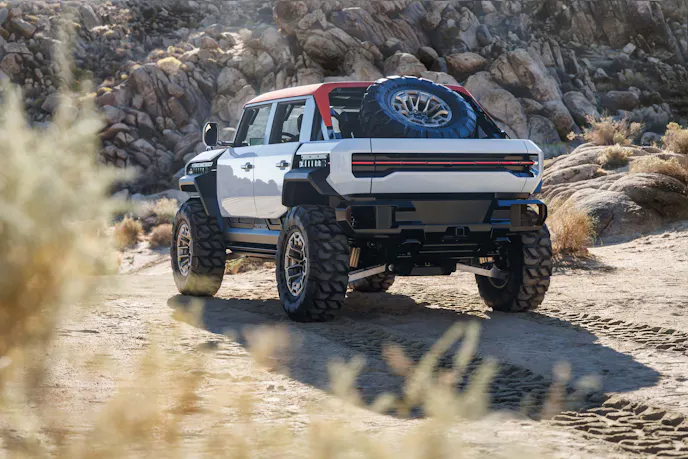
GM says the HUMMER X concept redefines what a mid-size EV can do off-road. While the company has not released output, battery, range, motor, or drivetrain specifications for these concepts, it does call out several trail-relevant ingredients: a low center of gravity, extreme on-demand acceleration, 35- to 37-inch Goodyear tires, beadlock wheels, Multimatic shocks, removable fender flares, and serious underbody protection.
That list speaks directly to how off-road EVs differ from traditional internal-combustion 4x4s. The low-mounted battery mass can help stability on steep climbs, sidehills, and technical terrain. Instant torque delivery can be a major advantage when carefully metered. At the same time, EVs need real protection underneath, because rock damage to battery structures and high-voltage components is not something any trail driver wants to gamble with.
The removable fender flares also fit the builder mindset. They suggest a vehicle designed to be reconfigured, repaired, or adapted depending on tire package, terrain, or owner preference. For anyone who has cut flares, cracked plastic on boulders, or swapped body protection after a hard trail weekend, that detail makes sense.
The Multimatic shocks are another key piece. GM does not detail the damper specification, but the supplier name alone carries weight in performance and off-road circles. Combined with large-diameter Goodyears, aggressive clearances, and underbody protection, the chassis concept reads less like a design-school fantasy and more like a serious off-road study.
A Cockpit That Changes With The Trail
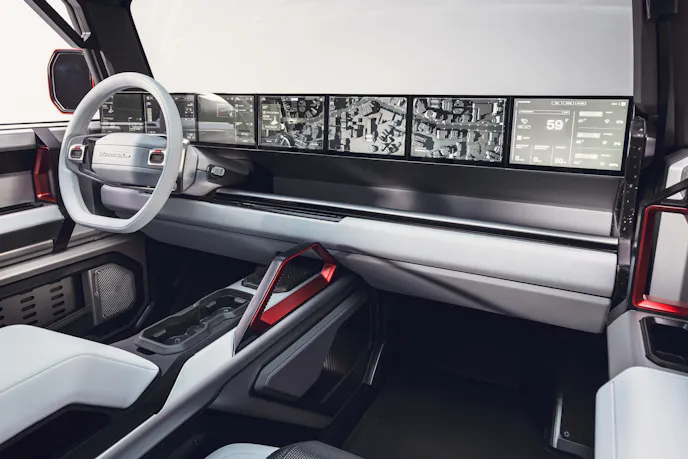
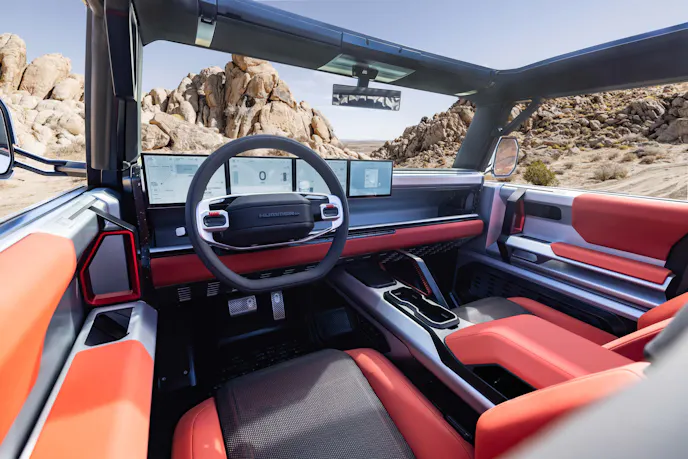
The HUMMER X interior follows the same reconfigurable thinking as the exterior. GM describes stackable displays that allow drivers to tailor their digital experience depending on whether they are rock crawling, trail running, or cruising the highway.
That is more than a styling exercise. Modern off-roaders increasingly rely on tire-pressure data, pitch and roll displays, trail mapping, camera views, battery state, range prediction, suspension data, and navigation overlays. A configurable display stack could allow the vehicle to prioritize the information that matters most in the moment instead of forcing the same screen layout for every use case.
In a crawling scenario, that might mean camera views, wheel placement, pitch, roll, and drivetrain status. On a fast desert trail, the driver may want speed, suspension, terrain mapping, battery temperature, and range. On the highway home, the interface can return to conventional navigation, media, and efficiency information.
HUMMER HUB And The Scout Drone
GM designed HUMMER X around what it calls the “builder maker,” the kind of owner who does not simply buy a vehicle and leave it alone. This imagined customer modifies, builds, shares, and participates in a community of people who understand the vehicle as a platform.
To support that idea, the Pasadena team conceptualized HUMMER HUB, a suite of connected apps designed to link drivers and vehicles before, during, and after each trip.
The concept’s most futuristic trail tool is a scout drone. GM envisions the drone flying ahead on the trail, feeding real-time terrain data back to the vehicle, then returning and docking itself when not in use. Every difficult trail eventually creates the same question: what is over the next ledge, around the next switchback, or beyond the next washout?
Sustainability Without Softening The Machine
The HUMMER name has never been associated with subtlety, but HUMMER X tries to apply sustainability in a way that does not erase the vehicle’s off-road purpose.
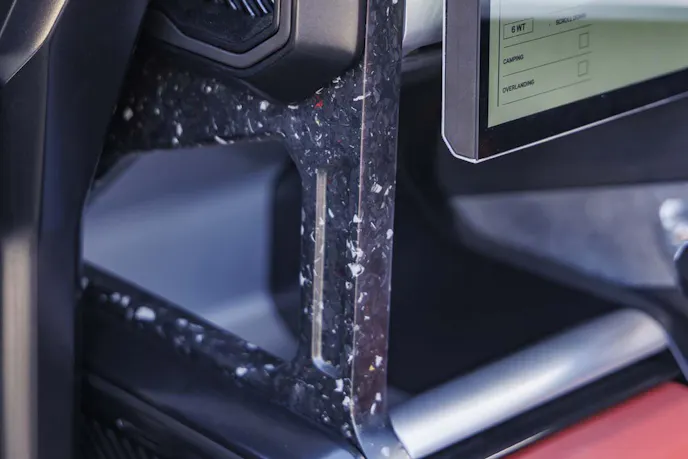
GM says every material choice was made with intention. The concept explores mono-materials, replacing adhesives with snap fits and mechanical fasteners. The idea is simple: use single-material parts where possible, make components easier to separate, and improve the potential for recycling.
Seatbacks, headrest backs, and instrument panel ends are made from recycled car fascias. Parts are designed for easy disassembly so customers could swap, share, and recirculate components as part of the community experience. In other words, GM is using the concept to explore a circular economy around customization, repair, and reuse.
That idea connects directly to the “builder maker” audience. Off-roaders already swap parts, repair damage, upgrade components, and trade take-offs. HUMMER X imagines that behavior as part of the design brief from day one.
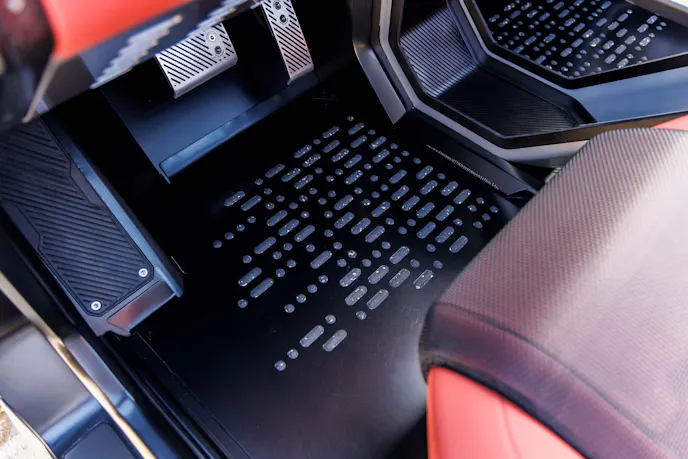
The team also hid a few Easter eggs in the concepts. The mantra “Take nothing but pictures, leave nothing but footprints” is imprinted in Morse code on the floor, while the tire treads spell out “the courage to get lost leads to new discoveries.”
HUMMER X SUV Technical Data
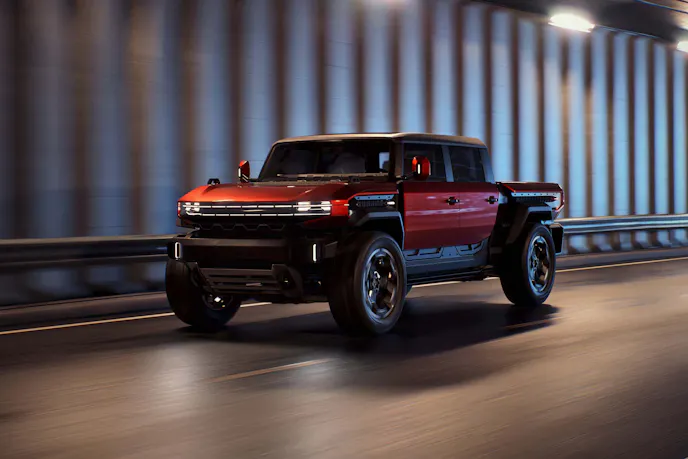
The HUMMER X SUV is the more compact and more aggressive trail configuration of the two concepts. Its 116-inch wheelbase gives it the shorter footprint serious off-roaders tend to appreciate when breakover angle and maneuverability matter. Overall length is 188.3 inches, height is 72.9 inches, and width is 80 inches.
The SUV’s trail geometry is the strongest of the pair. Approach angle is 44 degrees, departure angle is 46 degrees, and breakover angle is 30.9 degrees. Ground clearance is listed at 13.2 inches. FLEX FAB content is listed at 57 percent.
Tires are Goodyear 315/75R18 rock tires mounted on 18-inch aluminum wheels with accent inserts. Outside diameter is 37 inches, giving the SUV concept the kind of sidewall and contact patch off-roaders want for rocks, ledges, and aired-down trail work.
HUMMER X Truck Technical Data
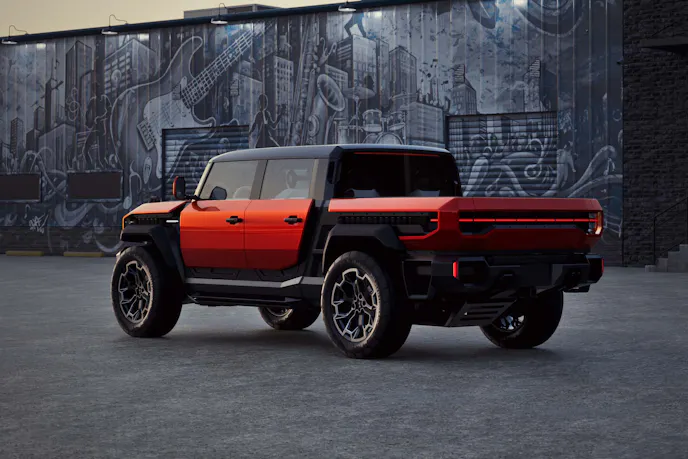
The HUMMER X Truck takes the same design language and stretches it into a pickup configuration. Wheelbase is 130.7 inches, overall length is 207.3 inches, height is 73.0 inches, and width is 80 inches.
Its geometry reflects the longer truck layout. Approach angle is 41.5 degrees, departure angle is 29.7 degrees, and breakover angle is 24.9 degrees. Ground clearance is 12.5 inches. Like the SUV, FLEX FAB content is listed at 57 percent.
The Truck concept runs Goodyear 305/55R22 street tires on 22-inch aluminum wheels with accent inserts. Outside diameter is 35 inches. Compared with the SUV, the Truck’s tire and wheel package reads as a more road-biased setup, though still far beyond what most conventional midsize pickups offer in factory-style concept form.
A Smaller HUMMER With A Bigger Idea
The HUMMER X SUV and Truck concepts arrive at an interesting moment. The production GMC HUMMER EV lineup has already established the idea of an electric off-road supertruck, but those vehicles are large, heavy, and expensive. HUMMER X asks a different question: what happens if the same attitude is reimagined in a smaller, more configurable, more community-driven package?
The answer is a pair of concepts that look less like traditional auto-show sculpture and more like trail hardware from a near-future builder’s garage. FLEX FAB gives them a modular look. The tire packages give them real off-road credibility. The drone and HUMMER HUB ideas point toward connected adventure. The recycled materials, mechanical fasteners, mono-material thinking, and disassembly strategy show GM trying to reconcile customization with sustainability.
For now, the HUMMER X SUV and HUMMER X Truck are not headed to dealers. That may frustrate enthusiasts who would like to see a smaller electric HUMMER built for serious trail work. But as concept vehicles, they do exactly what GM’s new Pasadena studio was built to do: stretch the idea of what comes next.
You might also like
Pinned In Pennsylvania: Full Send At The 2026 Summer 4-Wheel Jamboree
The 2026 Summer 4-Wheel Jamboree rolled into Bloomsburg, Pennsylvania, bringing with it almost 2,000 4x4s and lots of off-road action.