
For years, the future of the full-size pickup powertrain seemed relatively easy to predict. Engines would get smaller, turbochargers would become more common, electrification would creep into more applications, and naturally aspirated V8s would gradually become the exception rather than the rule.
Apparently, nobody bothered to tell General Motors.
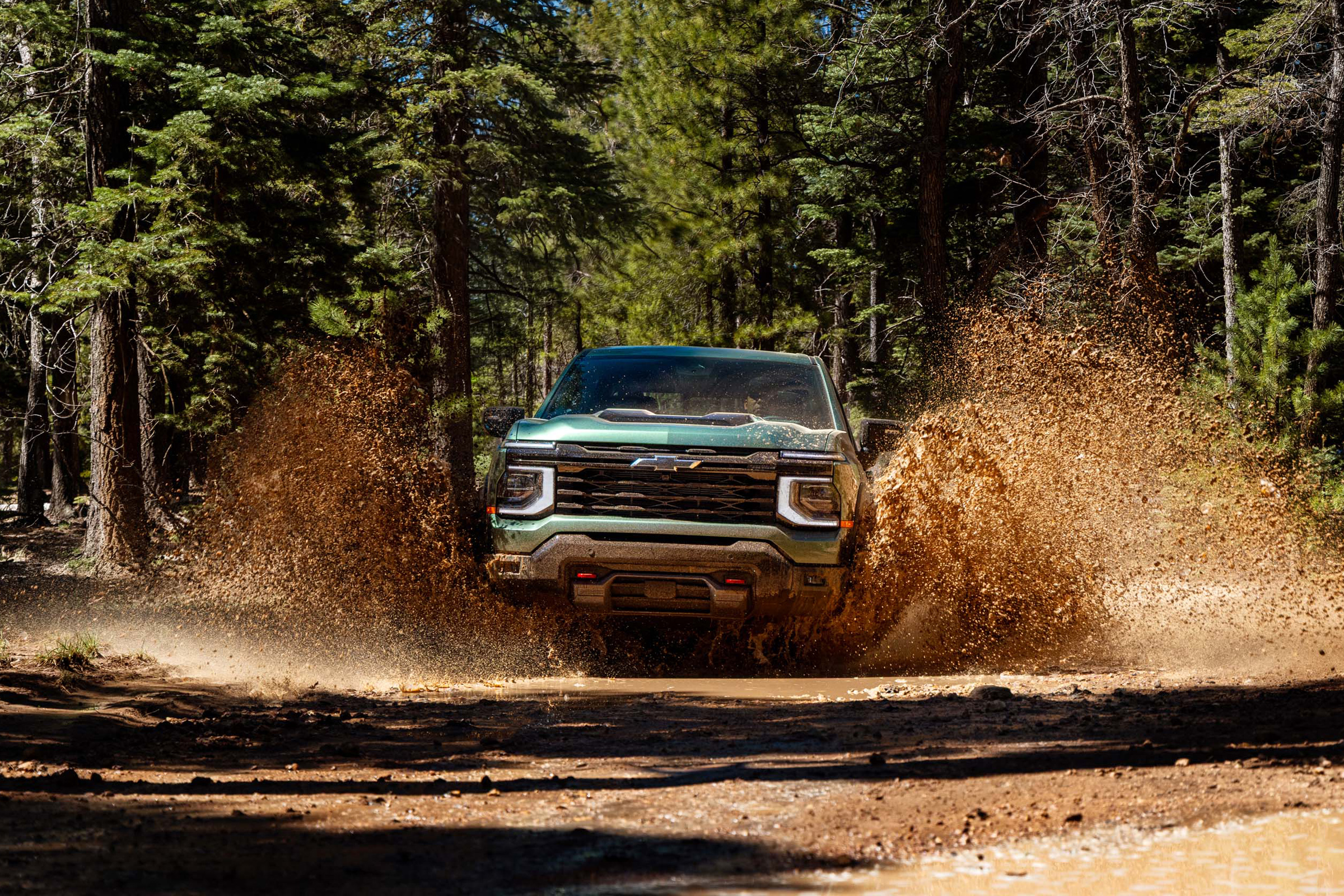
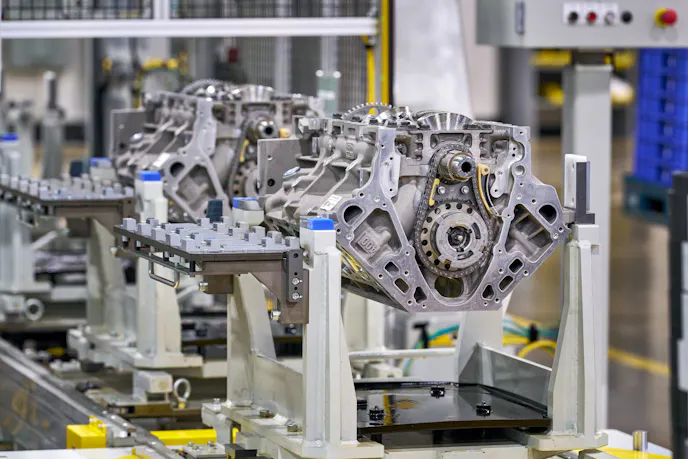
The completely redesigned 2027 Chevrolet Silverado 1500 isn’t simply retaining the Small Block V8. Chevrolet is introducing an entirely new sixth generation of the architecture, increasing displacement in both truck V8s and resurrecting two of the most recognizable displacement numbers in Chevrolet history: 350 and 400 cubic inches.
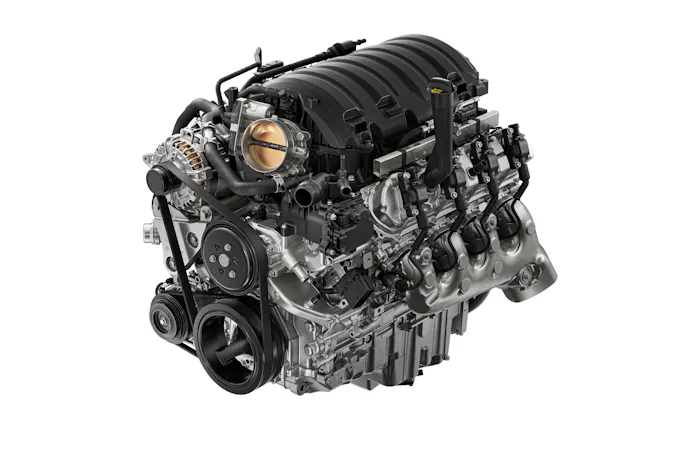
The new L76 5.7-liter V8 produces 402 horsepower and 428 lb-ft of torque, while the larger L78 6.6-liter delivers 481 horsepower and 501 lb-ft. Chevrolet says that makes the 6.6-liter the most powerful naturally aspirated V8 currently offered in the light-duty pickup segment.
And while nostalgia certainly makes 350 and 400 look good on paper, these engines are far more interesting than a pair of heritage displacement badges.
Gen 6 Small Block Goes Back To 350 And 400 Cubic Inches
The L76 replaces the current 5.3-liter L84, while the L78 takes over for the 6.2-liter L87. The outgoing engines produce 355 horsepower and 383 lb-ft and 420 horsepower and 460 lb-ft, respectively. That means the 5.7-liter picks up 47 horsepower and 45 lb-ft, while the 6.6-liter gains 61 horsepower and 41 lb-ft.
Both remain fundamentally recognizable as Chevrolet Small Blocks. In fact, GM retained the 4.40-inch bore-center spacing that has been a defining dimension of the architecture since the original Small Block arrived in 1955.
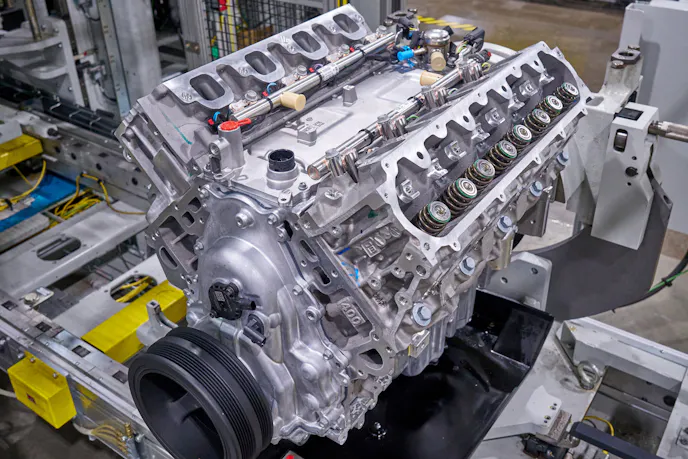
Where the Gen 6 engines depart from their predecessors is displacement. GM increased stroke by 6 mm, moving the smaller engine from 5.3 to 5.7 liters and the larger from 6.2 to 6.6 liters. Those changes bring the classic 350- and 400-cubic-inch displacements back into the Small Block family.
That’s an interesting engineering decision in an era when most manufacturers are leaning heavily on boost to generate additional output. GM certainly knows how to build turbocharged engines, but for its premium Silverado gasoline powerplants it has instead found additional performance the old-fashioned way: more cubic inches, combined with modern combustion and airflow technology.
Stroke isn’t the entire story. Compression ratios have increased, throttle diameters are larger, and both engines receive new intake manifolds with tuned runners designed to take advantage of the increased airflow.
As our colleagues at LSX Magazine pointed out, these aren’t simply familiar LT engines with new badges. The combination of displacement, airflow, fueling and lubrication changes makes Gen 6 a meaningful evolution of GM’s pushrod V8 architecture.
Two Fuel Systems Are Better Than One
One of the biggest technical changes is something owners may never notice from behind the wheel.
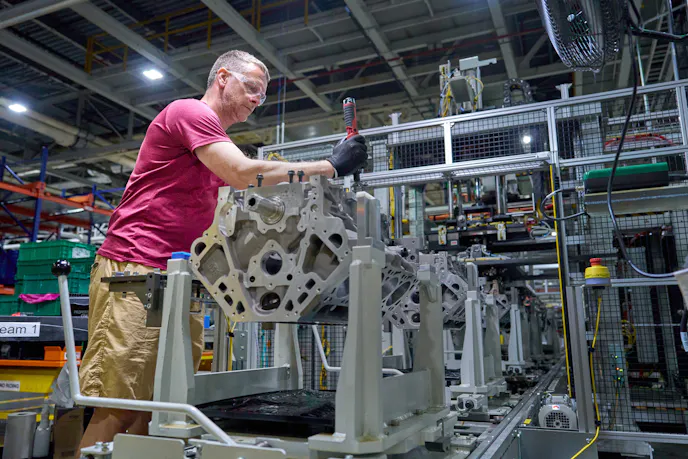
Both Gen 6 truck V8s employ a dual-fuel system incorporating direct injection and port fuel injection. Instead of committing exclusively to one method, the engine management system can use the fueling strategy best suited to a particular operating condition, expanding the windows in which GM can optimize power, efficiency and emissions.
That technology is joined by a substantially revised lubrication system. The Gen 6 engines use a continuously variable oil pump, an engine-mounted oil cooler and redesigned oil-feed locations intended to maintain more consistent oil pressure.
Those aren’t necessarily the features that sell trucks from a showroom floor, but they’re precisely the sort of engineering changes that make this generation more interesting than its displacement figures suggest.
“These new V8 engines advance GM’s legendary Small Block architecture with greater capability, more advanced technology and the strength of GM’s manufacturing footprint behind them,” said Tom Bishop, chief engineer for Small Block engines. “They’re engineered to provide truck customers the confidence and performance they expect from a GM V8.”
GM isn’t relying solely on computer simulation to prove that point. By the time the next-generation trucks reach dealers, development teams expect to have accumulated more than 1.5 million miles of real-world road validation.
The 5.7-Liter Might Be The Real Workhorse
It’s easy for the 481-horsepower L78 to steal the headlines, but the 5.7-liter L76 has an intriguing ace up its sleeve.
When properly configured, a 2027 Silverado 1500 powered by the 402-horsepower 5.7-liter can tow as much as 13,700 pounds. Interestingly, the published maximum for the 6.6-liter is 9,700 pounds. Payload ratings tell a similar story, topping out at 2,170 pounds with the 5.7-liter versus 1,510 pounds with the 6.6. Those numbers are configuration-dependent rather than a simple measure of engine capability, but they make clear that Chevrolet has positioned the L76 squarely at serious light-duty truck work.
Every Silverado engine will now be paired with a 10-speed automatic transmission. Chevrolet will also offer a new 34-gallon fuel tank with the 5.7- and 6.6-liter V8s.
There’s another notable distinction here. The new truck V8s aren’t isolated developments. They join the 6.7-liter LS6 developed for the 2027 Corvette Stingray, Grand Sport and Grand Sport X, giving GM a new Gen 6 Small Block family spanning 350, 400 and 409 cubic inches.
TurboMax Gets A Serious Upgrade, Too
The V8s may receive most of the attention, but Chevrolet hasn’t ignored its entry-level TurboMax.
The enhanced 2.7-liter turbocharged four-cylinder jumps to 350 horsepower and 455 lb-ft, increases of 40 horsepower and 25 lb-ft. Changes include a new turbocharger, upgraded fuel-injection system, redesigned pistons and improved active thermal management. More importantly, the TurboMax finally trades its eight-speed automatic for the 10-speed transmission used throughout the rest of the Silverado powertrain lineup.
Maximum towing capacity is 9,400 pounds, while maximum payload reaches 2,340 pounds.
That means the smallest engine in the 2027 Silverado produces more torque than the new 5.7-liter V8, although the manner in which the two deliver it will obviously be quite different.
The 3.0-Liter Duramax Isn’t Going Anywhere
Diesel buyers aren’t being forgotten either.
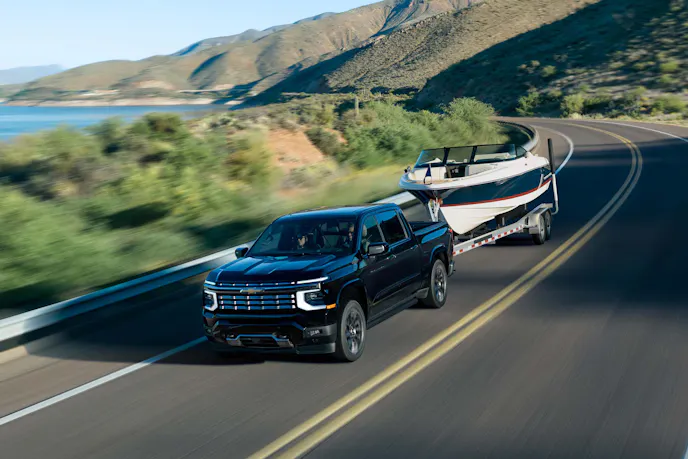
The 3.0-liter inline-six LZ0 Duramax continues with 305 horsepower and 495 lb-ft. Rather than chasing additional peak output, GM’s changes focus on refinement and durability, including revised DEF level indicators along with targeted piston, turbo-vane, next-generation NOx-sensor, sealing and injector corrosion-protection improvements.
With the new 34-gallon tank, GM says a properly configured Duramax-powered truck can exceed 900 miles of highway range.
Maximum Silverado towing capacity with the 3.0-liter is listed at 12,000 pounds, with payload reaching 1,870 pounds.
Taken together, that creates an unusually diverse engine menu: a 350-horsepower turbo four, a 402-horsepower 350-cubic-inch V8, a 481-horsepower 400-cubic-inch V8 and a 495-lb-ft inline-six diesel.
And Something Is Brewing In Silverado HD
Here’s where things become even more interesting.
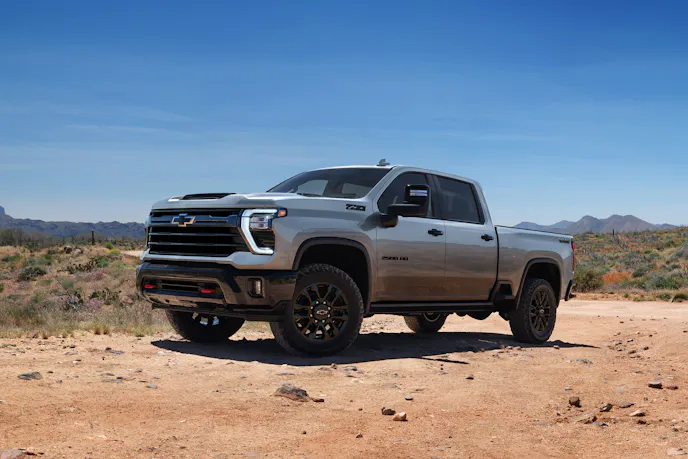
The Gen 6 L78’s 6.6-liter displacement shouldn’t be confused with Chevrolet’s current 6.6-liter gasoline Heavy Duty engine. The Silverado HD currently uses the L8T gasoline V8, rated at 401 horsepower and 464 lb-ft, while the L5P Duramax produces 470 horsepower and 975 lb-ft.
However, multiple reports indicate changes are coming to both.
GM Authority reports that 2027 Silverado HD and Sierra HD order information identifies a new L8S gasoline V8 and L6P Duramax. The L8S reportedly retains 6.6 liters and effectively replaces or evolves the current L8T, while the L6P replaces the L5P Duramax. GM has not yet officially released displacement or output figures for either engine.
That last distinction is important because rumors have circulated about a much larger Duramax, sometimes called the “Megamax,” reportedly displacing 8.3 liters. We have discussed that engine separately, but there is currently no confirmation that the new L6P is an 8.3-liter engine.
What does appear increasingly solid is that GM’s powertrain overhaul won’t stop with the half-ton.
The Rest Of The 2027 Silverado Is New, Too
Of course, these engines are arriving inside an equally significant redesign.
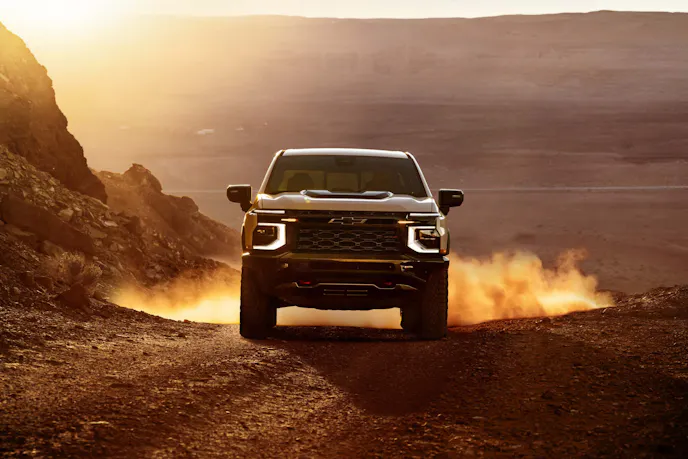
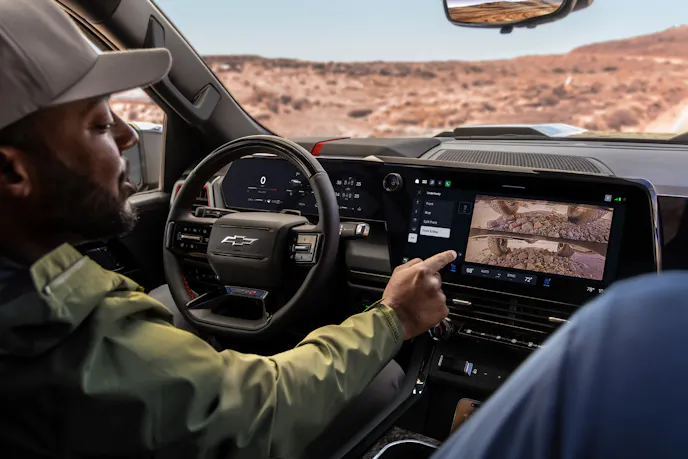
The next-generation Silverado gets completely new exterior styling, including a stronger front fascia, new LED lighting and more pronounced wheel-opening and rocker treatments. Inside, every Silverado receives a 16.3-inch center display and 12.2-inch driver information display as standard equipment. ZR2 and High Country models add an 11.5-inch passenger display; combined with the head-up display and rear-camera mirror, Chevrolet says those models provide more than 60 inches of digital displays.
The lineup has also been simplified to seven trims: Work Truck, Custom, Custom Trail Boss, Silverado, Trail Boss, ZR2 and High Country. The old LT name effectively gives way to the Silverado trim, while LTZ and RST disappear from the lineup.
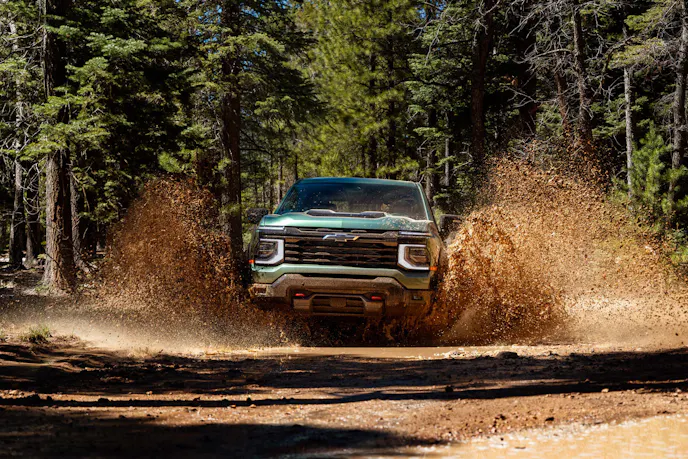
Off-road buyers get some particularly substantial changes. Trail Boss moves to 34-inch mud-terrain tires with its 2-inch factory lift, while ZR2 steps up to 35-inch mud-terrains, front and rear electronic locking differentials, Multimatic DSSV dampers and jounce dampers. The ZR2 Bison continues the AEV partnership with dedicated bumpers, rocker protection, beadlock-capable 18-inch wheels and extensive underbody protection.
Super Cruise with trailering capability expands as well, becoming standard on High Country and ZR2 and available on Silverado and Trail Boss.
A Different Kind Of Engine Downsizing
Perhaps the most fascinating part of Chevrolet’s 2027 powertrain strategy is that it doesn’t follow one technological path.
There’s a highly boosted four-cylinder for buyers who want strong torque from a small package. There’s an inline-six diesel capable of traveling extraordinary distances between fuel stops. And then there are two naturally aspirated pushrod V8s that have actually gotten larger.
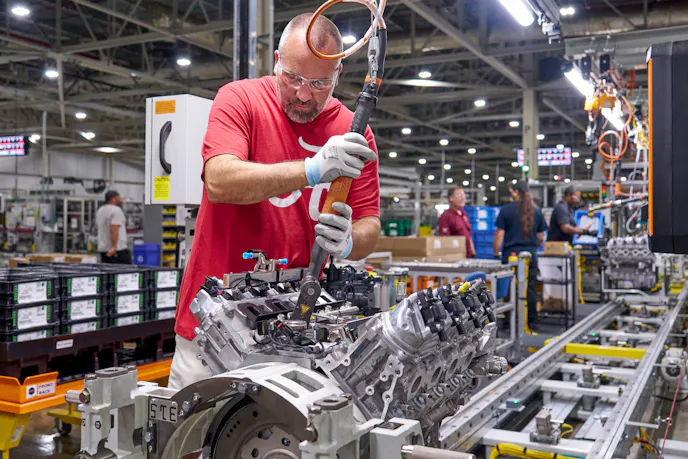
Seventy-one years after Chevrolet’s first Small Block appeared, GM is still building around the same 4.40-inch bore spacing. GM says initial L76 and L78 production will take place at Flint Engine Operations, with additional capacity planned for Tonawanda, New York, and St. Catharines, Ontario. The investment is substantial: GM says its broader U.S. manufacturing program includes $888 million for Tonawanda to support sixth-generation V8 production, while another C$691 million is going into St. Catharines.
For all the technology surrounding the redesigned 2027 Silverado, its biggest statement may therefore be one of the simplest: The Small Block isn’t going anywhere.
You might also like
2027 Jeep Wrangler JL-2A Takes The Rubicon Back To 1945
The 2027 Jeep Wrangler JL-2A honors the original CJ-2A with retro styling, Rubicon capability, and unique heritage details.