
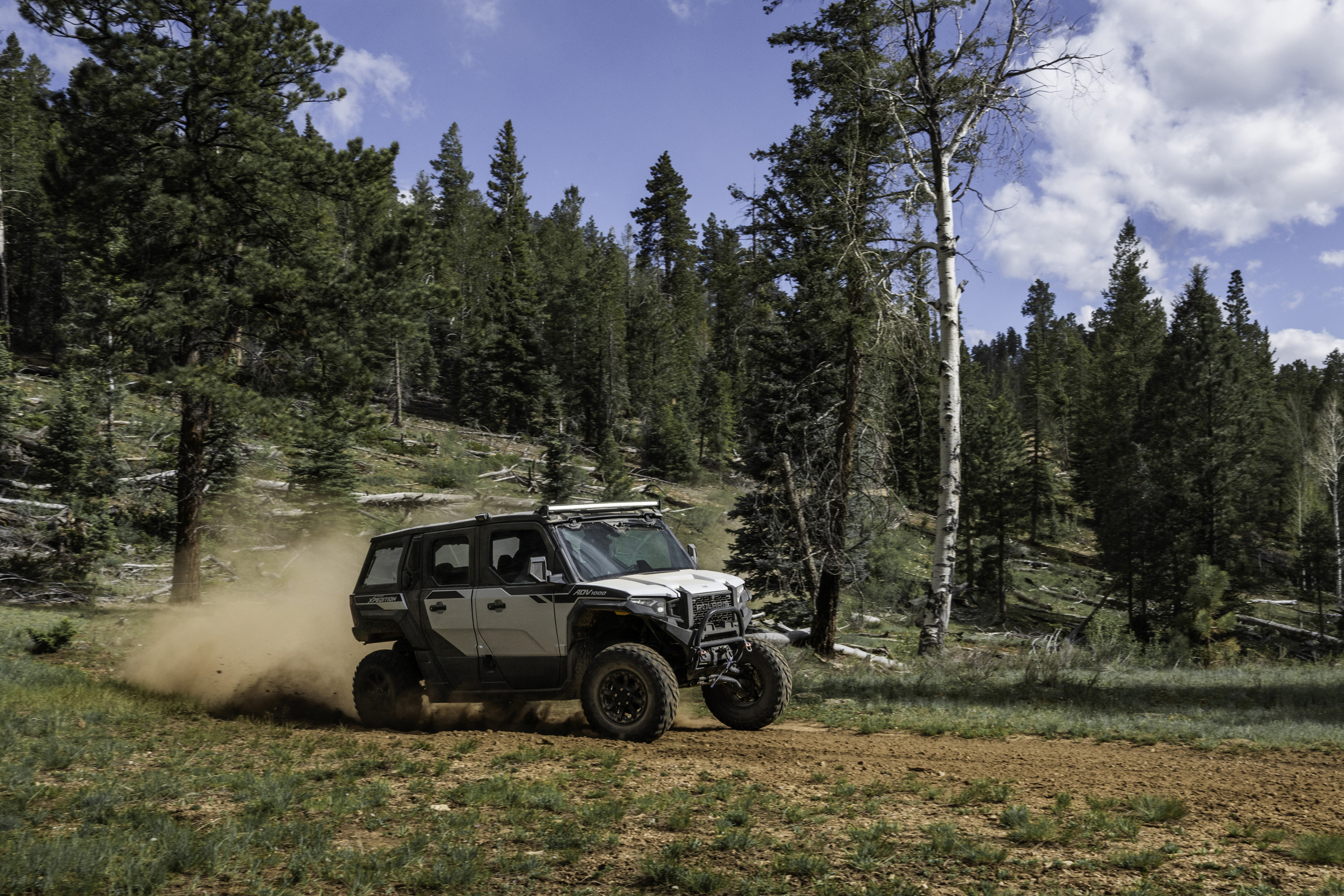
When Polaris introduced the XPEDITION for the 2024 model year, the company set out to blur the increasingly thin line between a recreational side-by-side and a full-size overlanding vehicle. The resulting machine combined the trail performance expected from a Polaris sport UTV with an enclosed cab, available heating and air conditioning, substantial cargo capacity and enough fuel range to spend entire days exploring beyond the trailhead.
For 2027, Polaris is addressing one of the compromises that has traditionally accompanied that combination of capability and comfort: powertrain noise. The updated Polaris XPEDITION introduces NUMATIX Controlled CVT, an entirely new pneumatic continuously variable transmission designed and developed in-house by Polaris.
Described as the industry’s first pneumatic CVT, NUMATIX regulates the drive clutch with air pressure while continuously adjusting transmission behavior to match driver input and terrain. Polaris says the system can reduce engine speed enough to make the XPEDITION’s cabin up to 40 percent quieter without giving up the acceleration, low-speed control or belt-driven simplicity riders expect from a conventional CVT.
Evolving The Adventure Side-By-Side
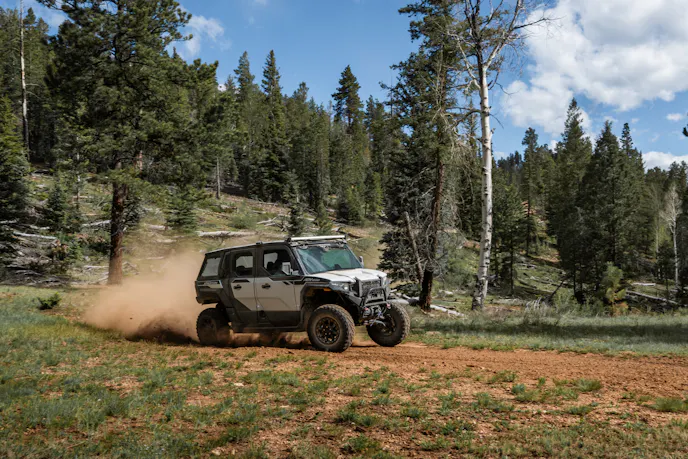
The XPEDITION was introduced in May 2023 as a new kind of “adventure side-by-side,” positioned between Polaris’ traditional recreational machines and the growing world of overland travel. Rather than focusing exclusively on driving performance or utility work, Polaris designed the platform to carry passengers, equipment and camping gear deep into the backcountry while providing a level of weather protection uncommon in the sport side-by-side segment.
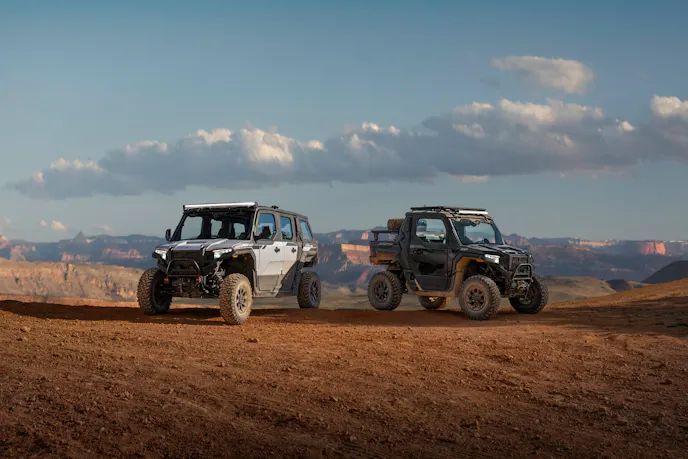
From the beginning, the XPEDITION was offered in two basic body configurations. The XP used a conventional dumping cargo box, while the ADV incorporated an enclosed rear cargo area intended to protect equipment from weather and trail debris. Both were available in two- and five-passenger layouts.
The original platform paired a 114-horsepower ProStar 1000 Gen 2 engine with a claimed range exceeding 200 miles. It also offered up to 15 inches of suspension travel, 14 inches of ground clearance, a 2,000-pound towing capacity and a 600-pound cargo-box rating. NorthStar models added a fully enclosed cab with power windows, a tip-out glass windshield and integrated heating and air conditioning.
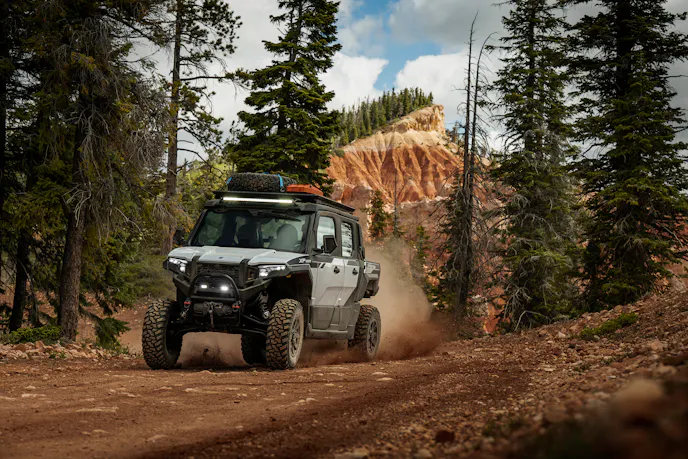
Those features helped establish the XPEDITION as one of the most road-trip-oriented machines in the side-by-side market. However, enclosing the cab also made noises that might go unnoticed in an open UTV considerably more apparent. Engine speed, clutch operation and belt noise become much more noticeable when occupants are surrounded by doors, glass, insulation and a roof.
NUMATIX was developed to address that issue without simply adding more sound-deadening material or isolating the powertrain from the chassis.
A Pneumatically Controlled Drive Clutch
A conventional side-by-side CVT uses a primary drive clutch and secondary driven clutch connected by a belt. As engine speed rises, centrifugal force causes the primary clutch to close, pushing the belt outward and altering the effective drive ratio. The secondary clutch responds by allowing the belt to move inward, continuously changing the ratio between the engine and transmission.
The system is mechanically simple and highly effective, but its behavior is largely governed by clutch weights, springs, helix geometry and engine speed. Maintaining a particular amount of belt squeeze or torque multiplication often requires elevated engine rpm, even when the vehicle does not need maximum power.
NUMATIX changes that relationship by using air pressure to regulate the drive clutch. Rather than relying exclusively on centrifugal force and fixed mechanical calibration, the system can actively manage clutch behavior based on what the driver is requesting and what the vehicle is encountering.
Polaris says NUMATIX evaluates rider inputs and terrain conditions as frequently as 200 times per second. That allows the system to continually adjust clutch operation, belt grip and engine speed in real time.
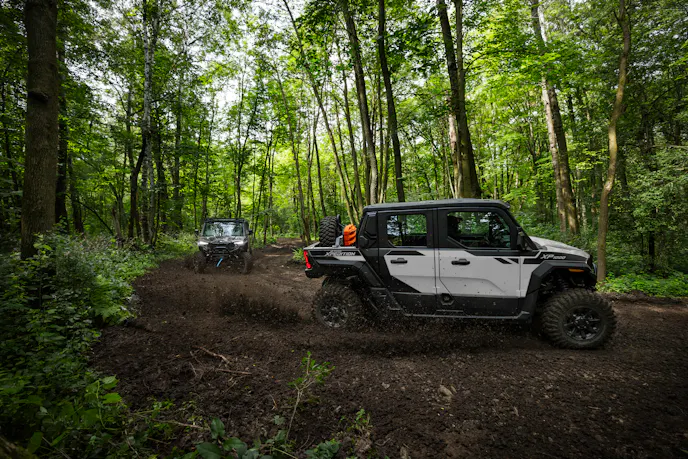
During light-load cruising, NUMATIX can select a taller effective ratio and reduce engine rpm, cutting noise inside the enclosed cab. When the driver presses the accelerator or the vehicle encounters a steep grade, heavy load or technical obstacle, the system can quickly increase belt clamping force and change the ratio to deliver the required torque.
The result, according to Polaris, is a ride that is up to 40 percent quieter while preserving the responsive acceleration and terrain capability associated with a traditional CVT.
More Than A Noise-Reduction System
Although reduced cabin noise is NUMATIX’s most immediately noticeable benefit, Polaris says the system also improves several areas of drivability.
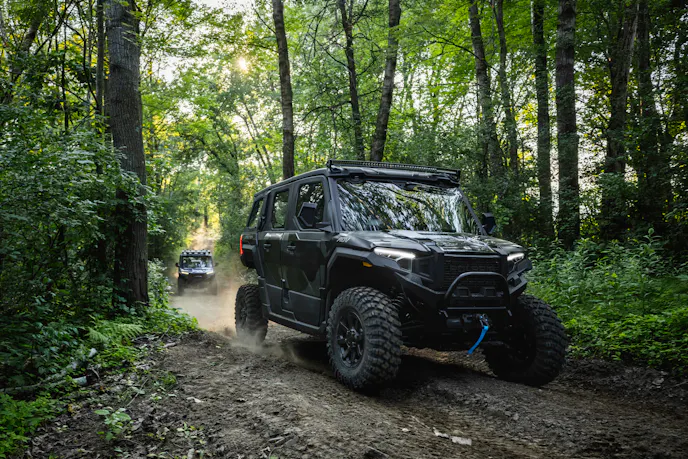
Because clutch engagement and belt grip can be actively controlled, NUMATIX is designed to provide more consistent power delivery during rock crawling, steep climbs, towing and hauling. Maintaining appropriate belt pressure under load can reduce unnecessary belt slip and heat, potentially improving both driver confidence and belt durability during demanding use.
The system also changes the way the XPEDITION behaves in low range. Traditional CVT-equipped vehicles can require elevated engine speed to maintain momentum or belt engagement, particularly while plowing snow, performing property maintenance or navigating slow technical terrain. NUMATIX allows the engine and clutch to operate more independently, helping the vehicle retain low-speed torque while reducing noise and the need to shift repeatedly between high and low ranges.
That characteristic could be particularly valuable in an enclosed machine. Low-speed work is often where occupants spend the most time listening to the engine operate at a relatively high and constant speed. Lowering those rpm levels should make long trail days and repetitive utility tasks noticeably less tiring.
Three Reinvented Drive Modes
The active nature of NUMATIX also allows Polaris to redefine the XPEDITION’s selectable drive modes.
Comfort Mode prioritizes smoother engagement, lower engine speed and quieter operation. It is intended for relaxed trail cruising, extended backcountry travel and situations in which refinement matters more than immediate throttle response.
Standard Mode balances quiet operation with the responsive behavior expected from a recreational side-by-side. It serves as the general-purpose calibration for changing terrain and everyday use.
Sport Mode sharpens throttle response and allows the powertrain to deliver more aggressive performance when the driver wants to move quickly or attack difficult terrain. Rather than merely changing throttle mapping, the modes can influence how the pneumatic clutch responds, giving each setting a more substantial effect on the vehicle’s overall character.
That flexibility is particularly appropriate for the XPEDITION. Unlike a dedicated desert or rock-crawling machine, it may spend one portion of a trip covering smooth forest roads before transitioning into slow technical terrain, steep grades or deep mud. The ability to alter powertrain behavior without replacing clutch components allows the same vehicle to adapt more effectively to each environment.
Onboard Air Comes Standard
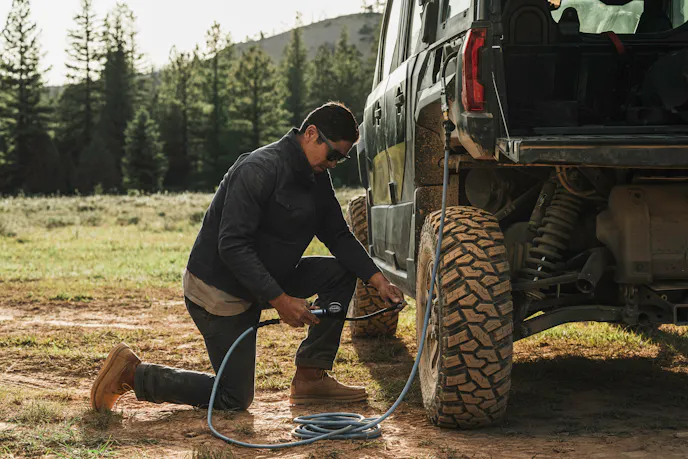
Because NUMATIX already requires a source of compressed air, Polaris has extended the system’s usefulness beyond the transmission. The 2027 XPEDITION includes an integrated onboard air system with an auxiliary port, giving owners access to compressed air without installing a separate compressor.
The system can be used to adjust tire pressures at the trailhead, reinflate tires after running reduced pressure on rocks or sand, clear dirt and debris from equipment, and operate compatible pneumatic accessories.
Polaris has also developed purpose-built accessories around the system. A durable 25-foot air-hose kit allows users to reach each tire and perform trailside inflation. A portable four-gallon pressurized water tank mounts in the vehicle’s cargo bed and uses the onboard air supply to provide pressurized water for washing equipment, cleaning muddy boots or handling campsite chores.
It is an unusually practical secondary benefit of the transmission hardware. Onboard air is already a common aftermarket addition to Jeeps, trucks and overland vehicles, and integrating it at the factory reinforces the XPEDITION’s position as a machine intended for extended travel rather than short recreational loops.
Improved Shifting For 2027
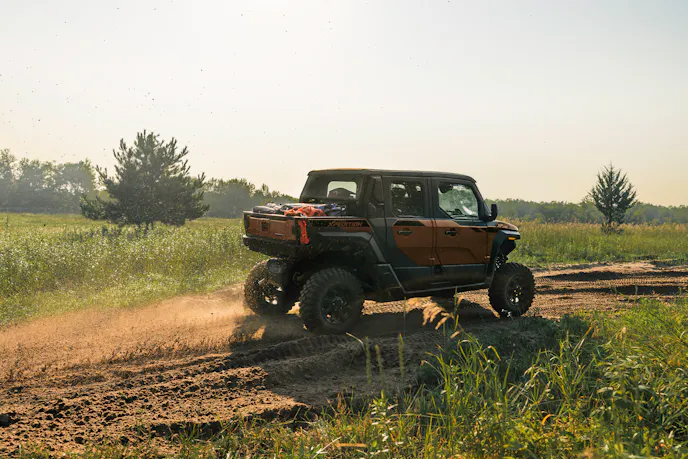
Along with NUMATIX, Polaris has revised the XPEDITION’s shifting system for 2027. The company says the updated mechanism makes shifting easier and smoother, complementing the pneumatic clutch’s more refined engagement characteristics.
The change may appear minor compared with an entirely new transmission-control system, but shift quality can have an outsized effect on the perceived refinement of a premium side-by-side. Moving between park, reverse, neutral, low and high range is a frequent part of technical driving, maneuvering trailers and performing utility work. Reducing lever effort and improving engagement should help the XPEDITION feel more polished during everyday use.
Comfort Without Giving Up Capability
NUMATIX represents an important change in the way Polaris approaches CVT performance. Side-by-side transmission development has traditionally centered on clutch calibration, belt cooling and durability. Polaris is now adding active control to that equation, using pneumatic pressure and high-speed electronic inputs to make the transmission respond more precisely to both the driver and the terrain.
For the XPEDITION, the technology addresses a legitimate challenge. An enclosed cab with HVAC makes year-round travel more comfortable, but it also raises expectations for noise, vibration and overall refinement. Simply producing more power would do little to improve the experience of spending eight or 10 hours inside the vehicle. Reducing cruising rpm while retaining immediate access to torque could make a far greater difference.
At the same time, Polaris has not turned the XPEDITION into a soft touring machine. NUMATIX is intended to improve belt grip, clutch engagement and low-speed control during the same demanding situations the platform was originally built to handle.
The 2027 Polaris XPEDITION XP and ADV will be offered exclusively in NorthStar trim, with both two- and five-passenger configurations available. Pricing begins at $40,499 in the United States, and shipments to Polaris dealers are scheduled to begin in August 2026.
The original XPEDITION expanded the definition of a sport side-by-side by combining backcountry capability with an enclosed, climate-controlled cabin. For 2027, NUMATIX moves that formula forward by targeting something that horsepower and suspension travel alone cannot fix.
You might also like
2027 Jeep Wrangler JL-2A Takes The Rubicon Back To 1945
The 2027 Jeep Wrangler JL-2A honors the original CJ-2A with retro styling, Rubicon capability, and unique heritage details.