
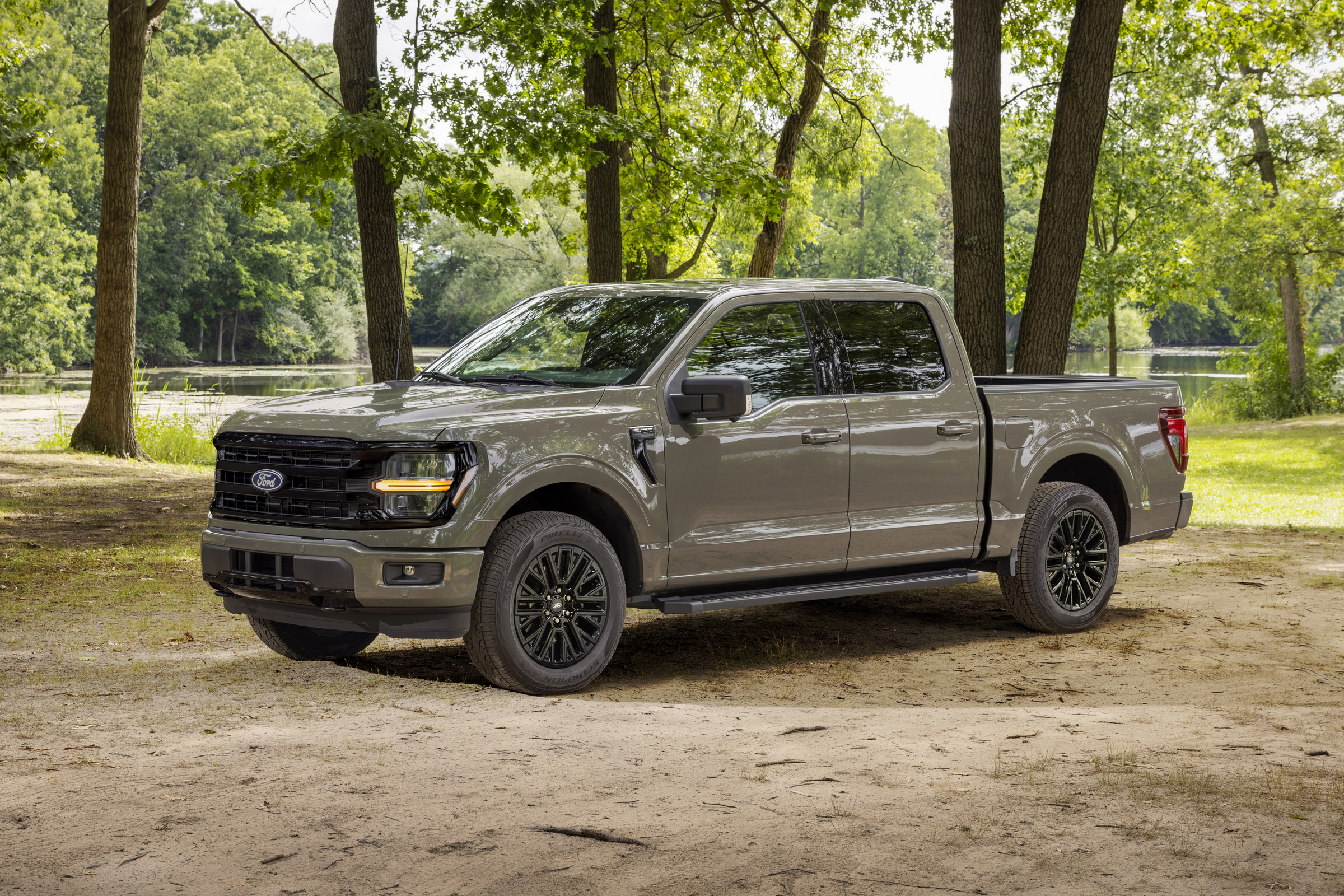
Ford isn’t reinventing the F-150 for 2027. Instead, America’s long-running truck sales leader is getting the sort of targeted mid-cycle changes that can matter more to actual owners than another wholesale redesign. There’s a revised engine lineup, a new towing-focused application for BlueCruise, fresh styling on several trims, and an effort to put genuine off-road hardware within reach of buyers who don’t necessarily need every luxury feature piled on top of it.
For enthusiasts, however, two changes stand above the rest. Ford is retiring the familiar 2.7-liter EcoBoost V6 as the F-150’s entry-level engine and replacing it with a new 3.0-liter EcoBoost. At the same time, Tremor and Raptor are both getting new “Low” equipment groups that strip away comfort and convenience equipment while retaining the hardware that makes each truck interesting in the dirt.
In other words, Ford appears to be putting more emphasis on capability and less on forcing capability buyers into increasingly expensive luxury content.
Goodbye 2.7L EcoBoost, Hello 3.0L
Perhaps the biggest mechanical news for 2027 is found at the bottom of the F-150 engine ladder.
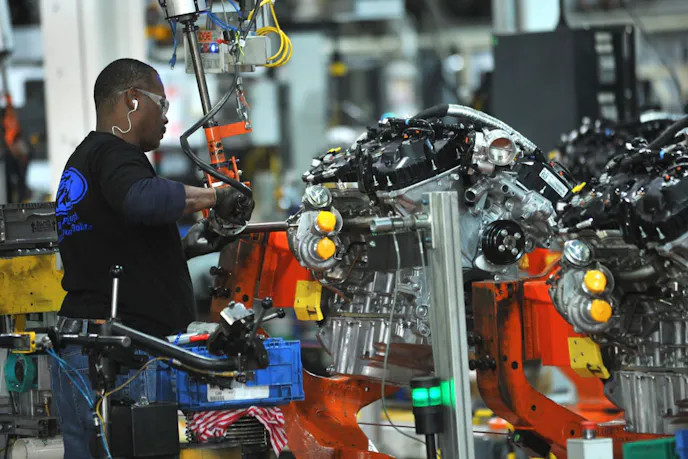
The 2.7-liter EcoBoost V6 is out. In its place is a new 3.0-liter EcoBoost V6 that becomes the standard F-150 engine. Ford says the new engine shares its core architecture with the outgoing 2.7-liter, but the additional displacement is intended to improve the way the engine delivers its output rather than simply chase a larger headline number.
According to Ford, the 2.7- and 3.0-liter engines share the same “peak capability,” but the new engine produces roughly 10 to 11 percent more torque in the portion of the operating range where normal driving occurs. Ford describes the result as reaching its “peak pulling power” sooner and delivering a more effortless driving experience.
That distinction is important. Peak horsepower and torque figures tell only part of an engine’s story, especially in a pickup. Additional torque lower in the rev range can be considerably more noticeable while accelerating a loaded truck, merging into traffic, climbing a grade, or pulling a trailer than a modest increase in output near redline.
The new 3.0-liter is rated to tow as much as 8,400 pounds in a properly equipped Regular Cab, 6.5-foot-box, 4×2 configuration. Maximum payload is listed at 1,755 pounds in the same basic configuration, though both figures naturally vary with equipment and vehicle configuration.
The Rest Of The 2027 F-150 Engine Room
Above the new 3.0-liter, Ford retains the familiar 3.5-liter EcoBoost, 3.5-liter PowerBoost hybrid, and 5.0-liter naturally aspirated V8.
The standard 3.5-liter EcoBoost produces 500 lb-ft of torque and, when properly configured, gives the F-150 a maximum tow rating of 13,500 pounds. Achieving that maximum requires a 4×4 SuperCrew with the 6.5-foot bed, Tow/Haul Package, and optional Max Tow Axle.
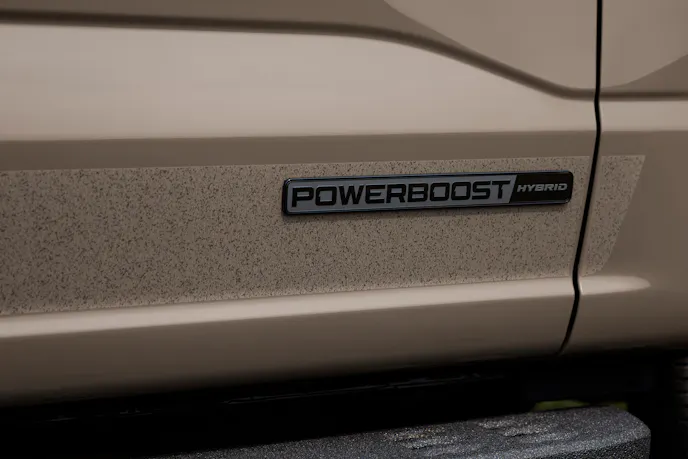
PowerBoost remains the torque heavyweight among the engines listed in Ford’s announcement, producing 570 lb-ft and retaining available 2.4-kW and 7.2-kW Pro Power Onboard capability. The latter remains one of the F-150 hybrid’s defining features, effectively turning the truck into a mobile power source for tools, campsites, or emergency use.
Meanwhile, fans of naturally aspirated displacement get some welcome news. The 5.0-liter V8 returns to King Ranch and Platinum for the first time since 2023. Rated at 400 horsepower and 410 lb-ft of torque on premium fuel, the V8 will consequently be available from XL all the way through Platinum.
2027 F-150 Tremor Low: Keep The Dirt Hardware
The engine changes are significant, but Ford’s strategy with the 2027 Tremor might be even more appealing to off-road enthusiasts.
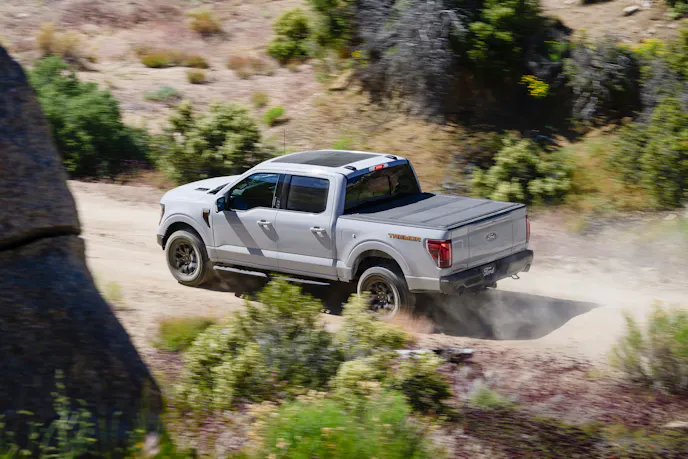
A new Tremor Low equipment group is intended to lower the cost of entry without gutting the capability that makes Tremor worthwhile. Ford specifically says the package retains the truck’s off-road hardware and capability while removing equipment that doesn’t contribute to getting farther down a trail.
The biggest change is the starting point. Tremor Low is STX-based and receives an STX steering wheel. Dual-zone climate control gives way to manual air conditioning, heated front seats disappear, and the eight-speaker B&O sound system is replaced by a six-speaker audio system.
Ford also removes the off-road running boards and replaces the power-sliding rear window with fixed rear glass.
For a buyer interested primarily in what Tremor can do rather than how lavishly equipped it is, that’s an intriguing trade.
Heated seats and premium audio are pleasant things to have, but neither adds traction. And depending on how seriously the truck is going to be used off pavement, deleting running boards may actually be preferable to hanging another component below the body.
Raptor Low Applies The Same Formula At Much Higher Speed
Ford is taking essentially the same approach with the F-150 Raptor, and the idea arguably makes even more sense here.
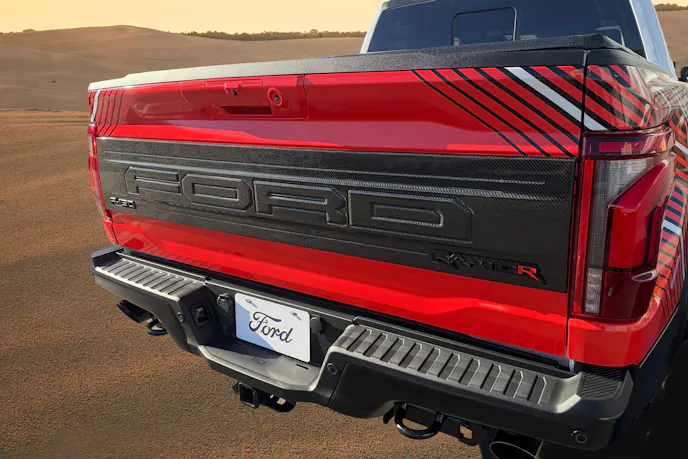
The new Raptor Low equipment group keeps what Ford describes as the “high performance off-road hardware and capability that define the Raptor,” while eliminating a surprisingly long list of comfort, convenience, and technology features.
Gone is the head-up display. The fog lamps disappear. So does the 2-kW Pro Power Onboard system, Mobile Office package, power passenger seat, and under-seat storage.
The power-adjustable steering column is exchanged for a manual tilt column, while the 14-speaker B&O audio system gets replaced by a still-respectable eight-speaker setup.
The truck has evolved enormously since the original SVT Raptor arrived, becoming not just an exceptionally capable high-speed off-road pickup but also an increasingly sophisticated, and expensive, one. Raptor Low effectively asks buyers which half of that equation they actually care about.
If the answer is suspension, chassis capability, performance, and the ability to hammer through terrain at speeds that would make an ordinary pickup deeply unhappy, sacrificing a head-up display and 14-speaker stereo probably isn’t much of a hardship.
BlueCruise Learns How To Tow
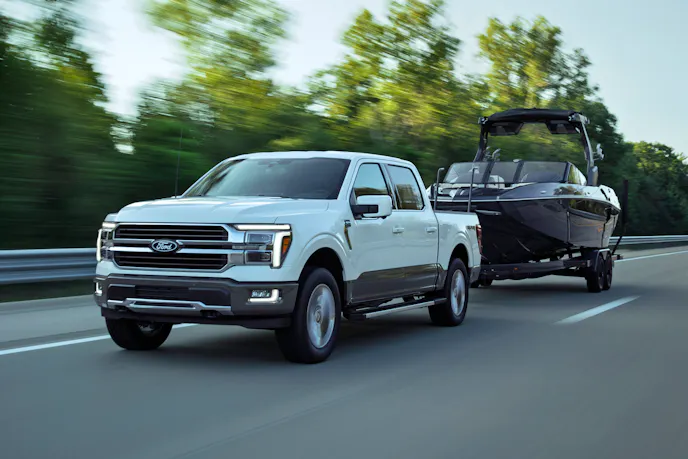
The 2027 F-150 also becomes the first Ford to offer BlueCruise with Towing.
Ford says more than 75 percent of F-150 customers use their trucks to tow, making trailer compatibility an obvious next step for its hands-free highway driving technology. BlueCruise with Towing allows hands-free, eyes-on driving while pulling a compatible boat, camper, or trailer on more than 130,000 miles of pre-qualified divided highways Ford calls Blue Zones.
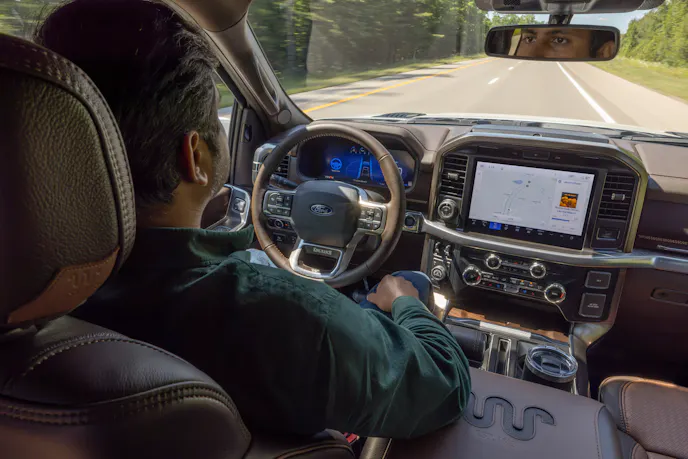
Ford says it tested the system over thousands of miles of U.S. roads and extensively in its Dynamic Driving Simulator, using different trailer combinations and operating conditions.
There are, understandably, limitations. Trailer type, dimensions, and weight can affect availability, and Ford notes that not every BlueCruise function operates while towing. The driver remains responsible for trailer attachment, loading, configuration, and monitoring the vehicle and surrounding environment.
More noteworthy is how broadly Ford plans to offer it. BlueCruise-equipped trucks from XLT and Tremor through Lariat, King Ranch, and Platinum can access BlueCruise with Towing. Owners who already have an active BlueCruise subscription won’t be charged an additional fee specifically for towing functionality.
A Familiar Face Gets Tweaked
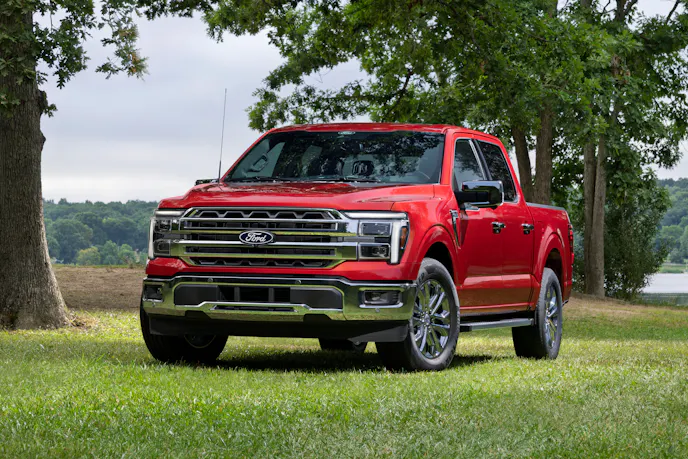
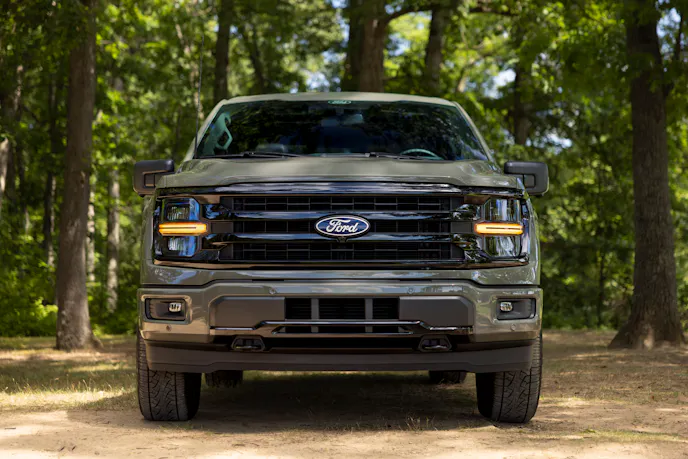
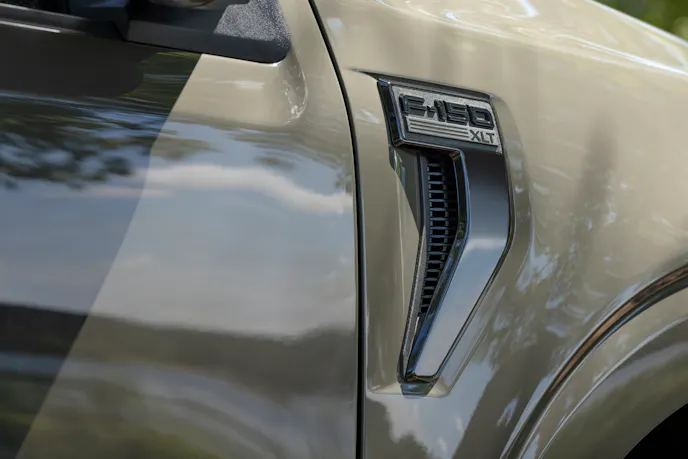
Visually, the 2027 update is evolutionary. XLT, Lariat, King Ranch, and Platinum receive redesigned grilles along with new wheel designs. Ford says customer feedback called for a more modern interpretation of the F-150’s familiar appearance rather than a radical styling departure.
There’s also a new F-150 Carhartt package, extending the Ford-Carhartt relationship to the light-duty truck line.
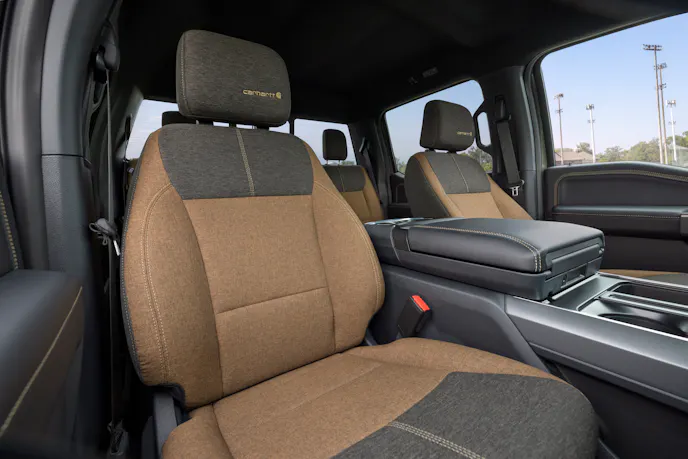
Available on 4×4 XLT Crew Cab models, the package adds unique 20-inch wheels, Carhartt-branded fender vents and badging, rocker and tailgate graphics, signature headlamps, a cowl hood, modified grille, dual exhaust, off-road running boards, and a Carhartt-branded spray-in bedliner.
Inside are two-tone Carhartt-themed seat covers along with revised door trim, center-console and steering-wheel treatments with accent stitching, plus Carhartt all-weather floor mats. The package costs $4,195, putting the F-150 Carhartt’s starting MSRP at $62,660 before destination and delivery.
The 2027 F-150 Is About What’s Underneath
Taken individually, none of these changes completely transforms the F-150. Together, however, they reveal an interesting direction for Ford’s best-known pickup.
The new 3.0-liter EcoBoost is particularly noteworthy. Instead of simply increasing a peak-output number for the spec sheet, Ford is emphasizing additional torque in the engine speeds owners are likely to use every day. Replacing the 2.7-liter with a larger-displacement base engine also raises the mechanical floor of the F-150 lineup.
Tremor Low and Raptor Low attack the opposite end of the equation. Rather than adding equipment and pushing transaction prices upward, Ford is deliberately taking equipment away, and importantly, it’s removing the luxury and convenience pieces instead of the expensive mechanical hardware enthusiasts actually want.
For a tech-savvy off-road buyer, that could make the “Low” versions two of the most interesting F-150 configurations for 2027. Remember, nobody ever got unstuck because their truck had a power-adjustable steering column.
You might also like
Pinned In Pennsylvania: Full Send At The 2026 Summer 4-Wheel Jamboree
The 2026 Summer 4-Wheel Jamboree rolled into Bloomsburg, Pennsylvania, bringing with it almost 2,000 4x4s and lots of off-road action.