
If you’ve ever dreamed of exploring the Australian Outback, you already know that communication gear isn’t just a convenience — it’s survival equipment. Vast distances, extreme terrain, and limited infrastructure have shaped Australia’s 4WD culture into one of the most self-reliant in the world. Out of that environment came GME, a company that has spent more than six decades building communication equipment tough enough for some of the harshest conditions on the planet.
Now, that same Australian engineering is making moves into the United States, targeting off-roaders, overlanders, and backcountry explorers who demand reliability when cell service disappears.
Built In Australia, Forged By Harsh Conditions
GME was founded in 1959 by Edward “Ted” Dunn under the name Greenwich Marine Electronics. From the beginning, the company focused on two-way communication systems for marine and land-based use. Australia’s geography — remote coastlines, rural stations, mining operations, and expansive deserts — created a real-world proving ground for radio technology.
As four-wheel-drive touring exploded across Australia in the 1970s and 1980s, so did the need for reliable UHF communications. GME stepped directly into that space, expanding beyond marine radios into the Citizens Band market and, eventually, UHF CB radios that became staples in Australian 4WD builds.
That environment pushed GME to engineer radios that could handle vibration, dust, heat, and long operating cycles. Over time, the company also became a leader in safety technology, developing emergency beacons and EPIRBs that met increasingly stringent global standards. By the 1990s, GME had achieved ISO 9001 accreditation and was operating with a fully integrated manufacturing and R&D presence in Sydney.
Unlike many electronics brands that shifted entirely offshore, GME retained Australian ownership and manufacturing. Today, the company operates a headquarters and production facility in Western Sydney, where much of its product development, engineering, and assembly still occurs. That “Australian made” identity isn’t just marketing, it’s central to the brand.
Innovation That Followed The Trail
GME’s growth wasn’t built on simply refining legacy products. The company consistently introduced new platforms as technology evolved. In the early 2000s, it aligned its emergency beacon production with 406 MHz international standards. In the 2010s, it pushed into connected radio platforms with its XRS Connect system, integrating smartphone functionality with UHF CB radios.
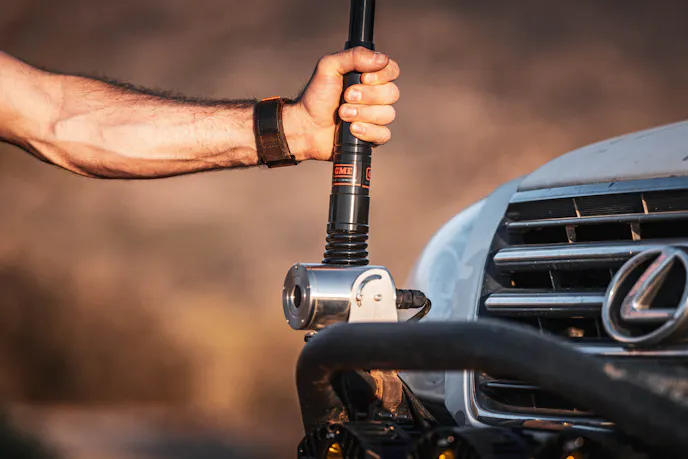
That development path mirrors what we’ve seen in modern overlanding. Today’s builds blend traditional self-reliance with digital tools. Navigation apps, satellite communicators, GPS tracking, and vehicle telemetry have become common on expedition rigs. GME’s connected UHF platforms reflect that shift, offering features like location services and advanced channel management without abandoning the rugged, tactile reliability that off-roaders still demand.
The company’s latest releases, including color TFT display UHF units and commercial-grade radio platforms, show that it’s not standing still. It’s adapting to a global market that expects durability and modern integration at the same time.
Why GME Makes Sense For The American Backcountry
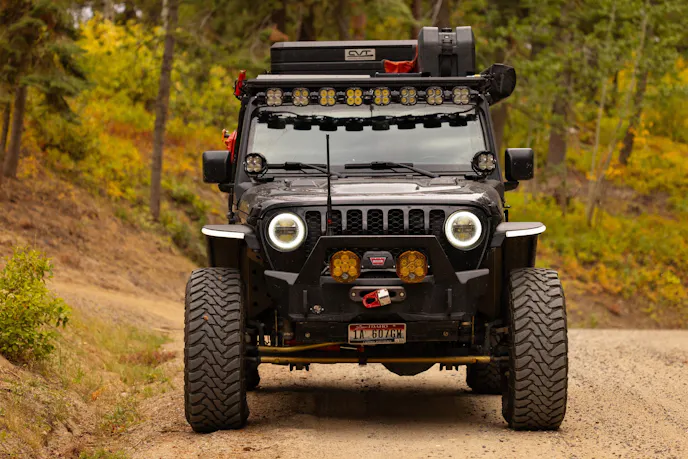
For years, GME was largely an Australian secret. In the U.S., brands like Cobra and Uniden dominated the CB market, while GMRS has seen a resurgence among overlanders and off-road clubs. But as American enthusiasts push farther into remote terrain — from the Mojave Road to the Alaskan backcountry — the demand for professional-grade communications has grown.
That’s where GME’s expansion into the United States becomes especially interesting.
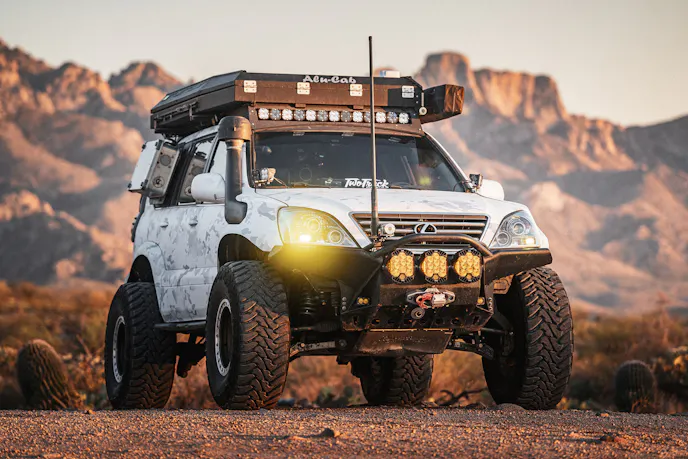
Australia’s touring culture shares a lot with the American overland scene. Long-distance travel, multi-vehicle convoy trips, rooftop tents, diesel-powered rigs, and weeks spent off-grid are normal in both markets. The difference is that Australia’s remoteness forced the communications standard higher decades ago.
GME brings that philosophy to the U.S. market. Its products are designed with the assumption that failure is not acceptable. Radios are built to withstand constant vibration from corrugated roads, extreme heat exposure, and extended use during multi-day trips. That mindset translates directly to American desert runners, rock crawlers, and full-size overland builds that see punishing conditions.
Entering The U.S. Market
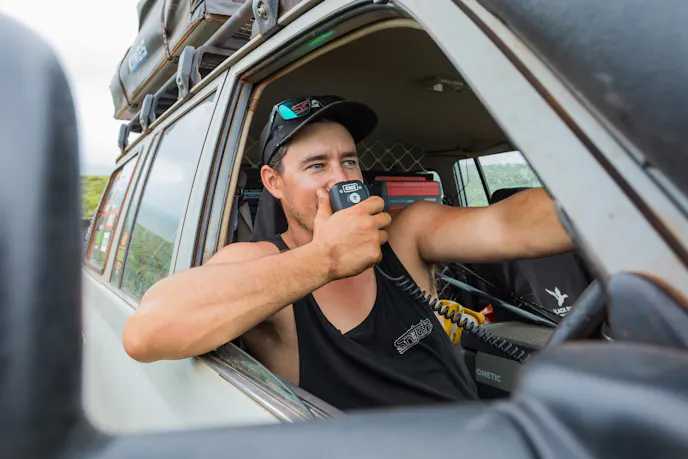
GME’s move into the United States marks a significant shift for the company. After decades of dominance in Australia and strong presence in other international markets, the brand is now actively positioning itself for American off-roaders, commercial fleets, and marine users.
For U.S. enthusiasts, this expansion offers access to equipment that was previously harder to source domestically. It also introduces a different design philosophy. Where traditional American CB radios often focused on truck-stop familiarity and highway use, GME’s UHF platforms were designed around convoy communication, remote travel, and harsh off-road environments.
As the U.S. off-road market continues to evolve, especially with the rise of overlanding and vehicle-based adventure travel, communication systems are becoming more integral to the build process. Radios are now mounted cleanly into dash panels, overhead consoles, and switch systems. Antenna placement is carefully considered alongside lighting, recovery gear, and rooftop storage. GME’s integrated and remote-head designs fit cleanly into modern builds, particularly those that prioritize a factory-style appearance.
For diesel truck owners, side-by-side enthusiasts, and long-range touring rigs, the ability to maintain consistent communication in areas without cell service remains a critical piece of the safety equation. GME’s U.S. expansion acknowledges that American enthusiasts are demanding higher-quality equipment as their adventures become more ambitious.
An Australian Legacy Meets American Terrain
GME’s story is one of steady growth rooted in real-world necessity. From a small two-way communications company in 1959 to a global manufacturer of radios and emergency beacons, the brand has consistently evolved without abandoning its core identity.
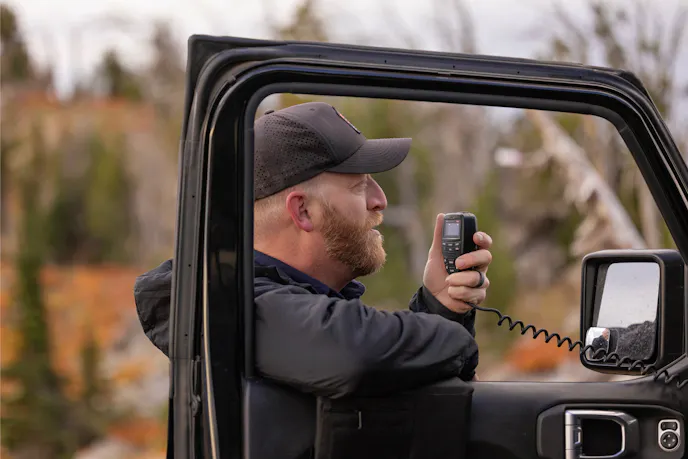
Now, as it establishes a stronger foothold in the United States, American off-roaders have access to equipment shaped by decades of Outback testing. For enthusiasts who take their rigs beyond pavement and beyond cell coverage, that pedigree matters.
In many ways, GME’s arrival in the U.S. feels like a natural progression. The American West, much like Australia’s interior, rewards preparation and punishes complacency. As overlanding and remote travel continue to grow, reliable communication isn’t just an accessory — it’s part of responsible adventure.
You might also like
Feeding The Coyote: Inside K&N’s NextGen Intake Upgrade For Ford’s 5.0-liter F-150
Boost your 5.0L F-150’s performance with K&N’s NextGen intake—gain horsepower, torque, improved airflow, and better fuel economy.