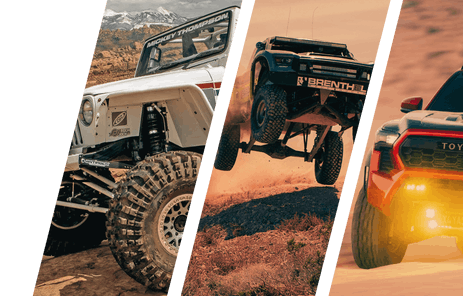

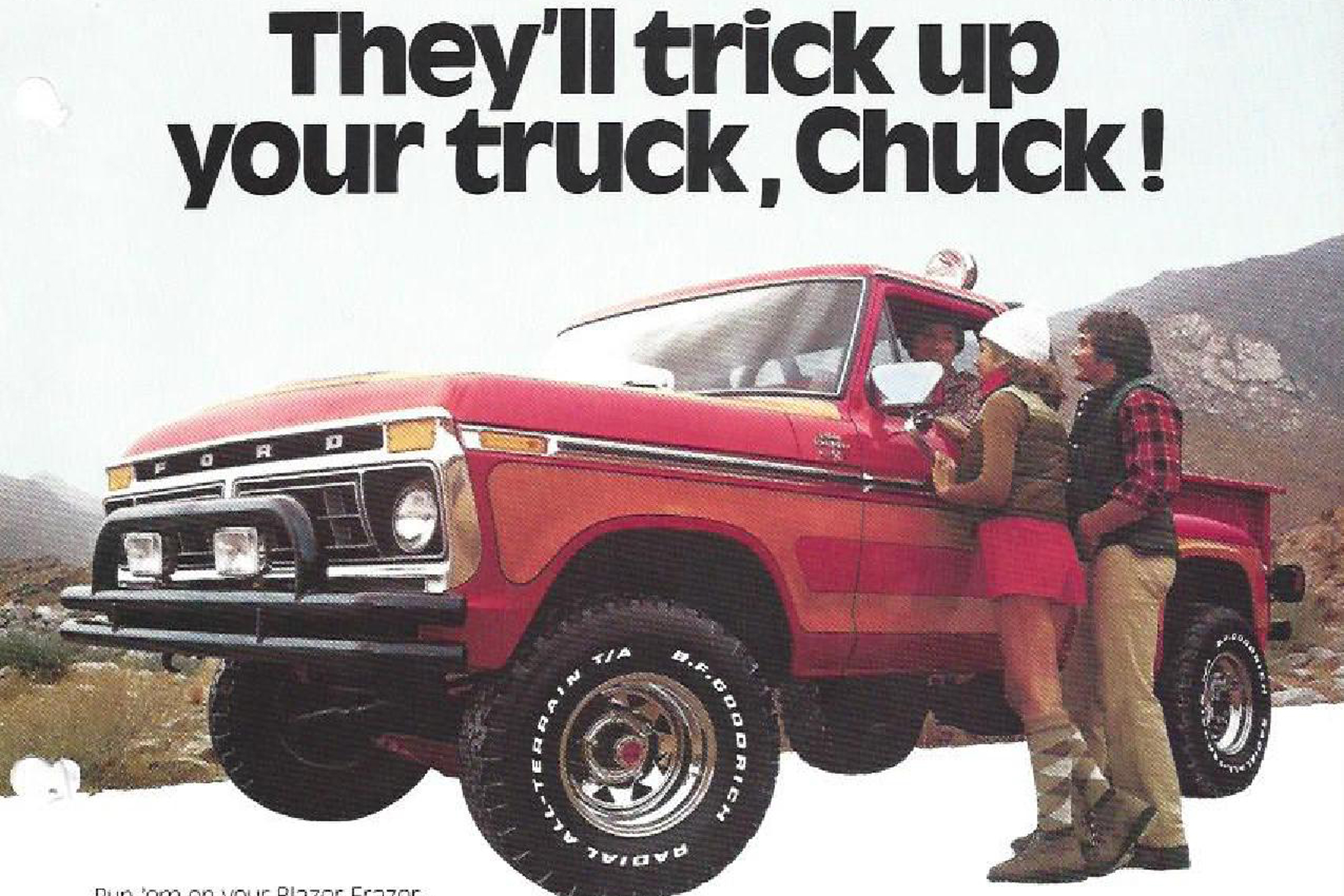
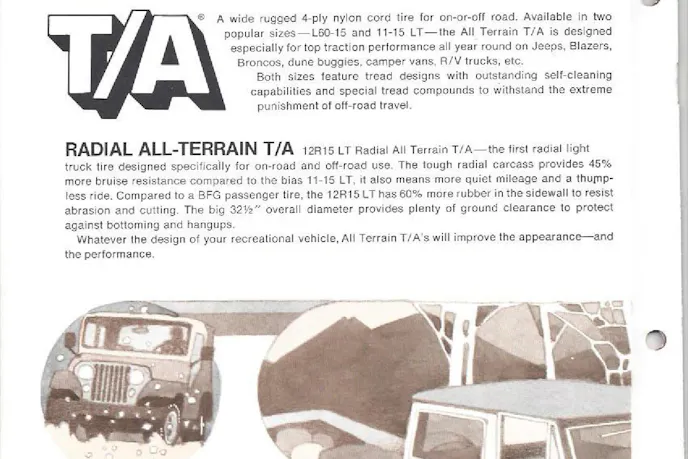
When BFGoodrich launched the Radial All-Terrain T/A on November 14, 1976, it wasn’t just a new tread pattern. It was a new idea: one tire that could commute all week, then survive rocks, sand, and ruts on the weekend without drivers having to swap wheels in the driveway. BFGoodrich itself frames 1976 as the moment the company created “the world’s first all-terrain tire,” and that claim makes sense in the context of the era, when most light-truck rubber was either street-focused or purpose-built for mud and dirt with big compromises on pavement.
The story of the past 50 years is really the story of how that original promise—daily drivability plus real off-road toughness—got stress-tested, re-engineered, and repeatedly updated as trucks got heavier, horsepower climbed, and expectations for wet traction, winter grip, and tread life kept rising.
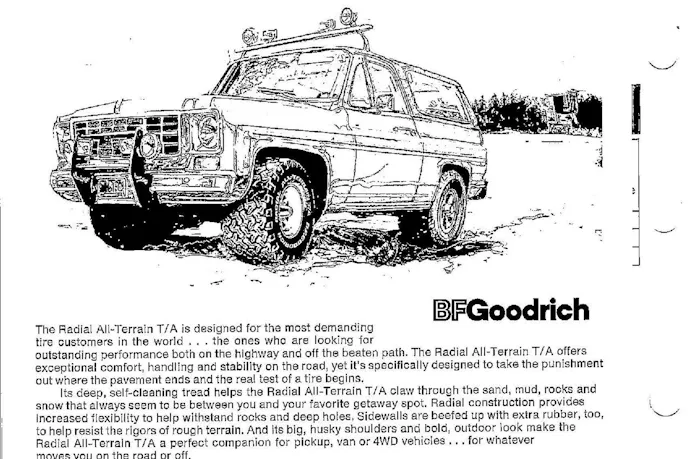
1976: The Radial All-Terrain T/A Changes What 4x4s Can Be
In the mid-1970s, the vehicles were ready for adventure long before the tire technology caught up. BFGoodrich’s own anniversary materials describe the gap clearly: many tires were designed for paved roads or for trails, but not for both—until the Radial All-Terrain T/A arrived in 1976 and “redefined an entire class of vehicles.”
Two details matter here. First, “radial” wasn’t just marketing. Radial construction brought stability, heat control, and on-road manners that bias-ply light-truck tires struggled to match in that era. Second, BFGoodrich treated the tire like a platform, not a one-off product—something that could evolve through racing, new compounds, and construction changes as the market grew.
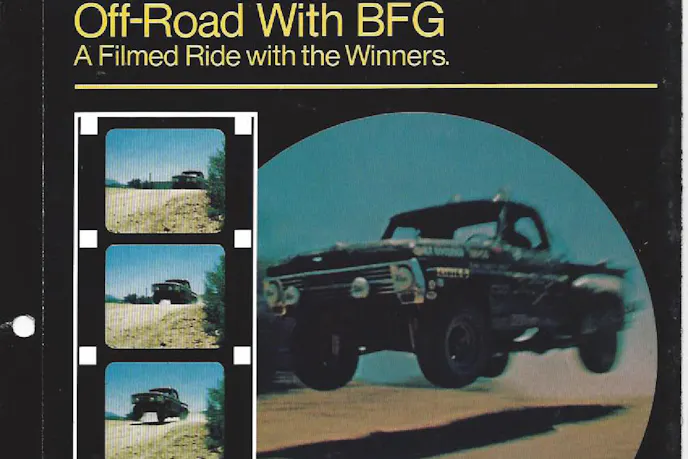
Late 1970s: Baja Becomes The Proving Ground
If 1976 created the category, the Baja peninsula helped validate it. BFGoodrich’s own “racing legacy” history notes that after a year of learning and development, the team earned Class 8 wins at both the SCORE Baja 500 and Baja 1000 in 1977 while running the world’s first radial all-terrain tires.
That matters because it established a pattern BFGoodrich would repeat for decades: race to learn, then feed those lessons back into consumer tires. Even as all-terrains became mainstream, the Baja mindset stayed central to the brand’s identity and engineering narrative.
The 1980s: The All-Terrain Idea Spreads And The Lineup Diversifies
As the all-terrain concept caught on, the market began demanding more specialized options around that original centerline of “do everything.” BFGoodrich expanded its off-road portfolio, and by 1980 the company had also introduced a radial mud tire, building a parallel track of extreme off-road capability alongside the balanced all-terrain approach.
For all-terrain buyers, the 1980s were about normalization. What began as a breakthrough became a default expectation for truck and SUV owners who wanted one set of tires to cover gravel roads, job sites, and hunting trails—without punishing them on the highway.
The 1990s: Corporate Change, Bigger Trucks, And The Road to “KO”
The 1990s brought two forces that shaped the next leap. One was corporate: Michelin ultimately ended up owning the BFGoodrich tire business/brand through the Uniroyal Goodrich acquisition path, with reporting that Michelin completed its buyout by 1990. The other was consumer-driven: trucks and SUVs got more powerful and more common as daily drivers, and “all-terrain” had to mean quieter, longer-wearing, and tougher—at the same time.
By the end of the decade, BFGoodrich’s all-terrain line was ready for a clear generational pivot.
1999–2000: All-Terrain T/A KO Becomes The New Benchmark
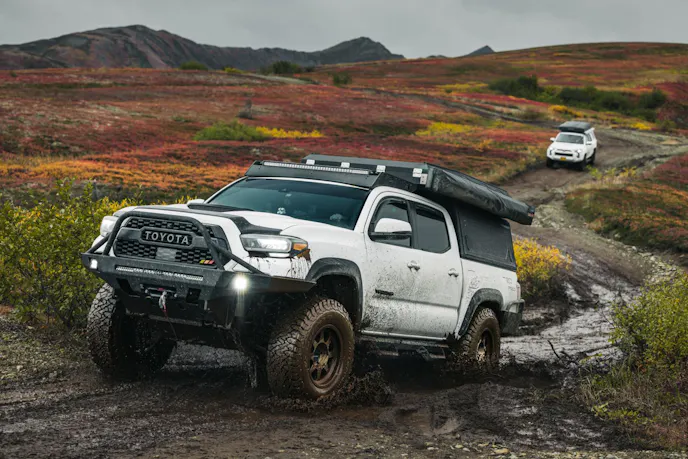
The move to the All-Terrain T/A KO is a key milestone because it’s the moment “all-terrain” stopped being a single historic model and became a modernized family identity that enthusiasts still reference today. Multiple outlets peg the KO’s introduction at 1999, describing it as a more aggressive, more durable evolution of the all-terrain formula. Some retail histories place its release in 2000, which fits with the reality that tire launches often span announcement timing, production ramp, and broad availability.
Either way, the KO era cemented the product shorthand that off-roaders still use: this is the tire you buy when you want a true all-terrain that leans tough, not soft. It also marked a shift toward stronger sidewall protection and tread designs intended to survive sharp rock and repeated impacts, not just forest roads.
2014–2015: KO2 Arrives And All-Terrains Enter the Modern Age
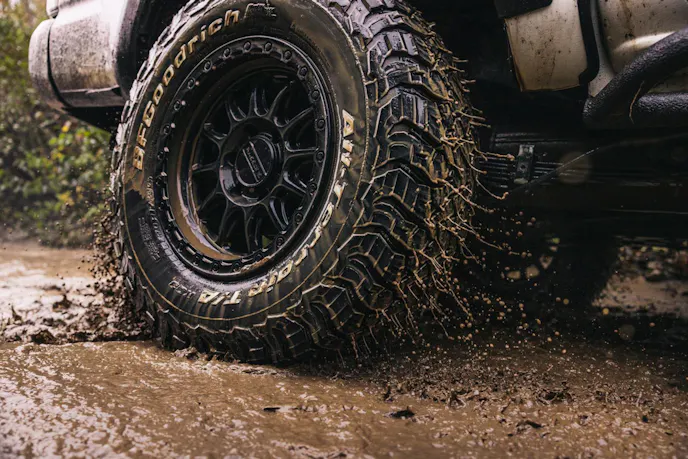
The next major generational leap came with the All-Terrain T/A KO2. BFGoodrich announced and launched KO2 in 2014 as its most advanced light-truck tire yet, explicitly tying the design back to lessons from off-road racing.
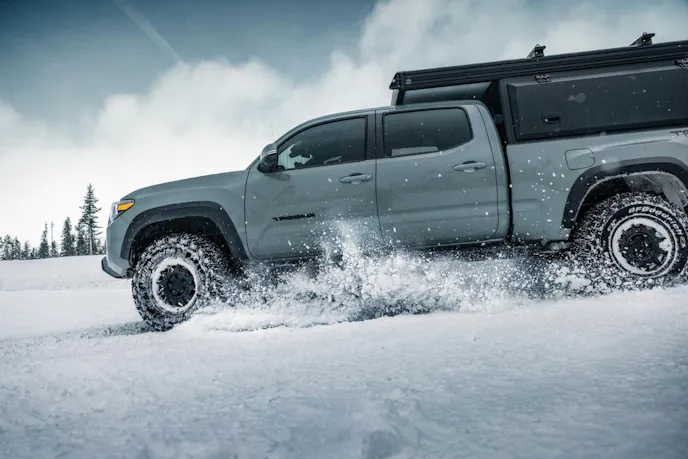
What made KO2 a milestone wasn’t only off-road performance; it was how well it matched modern expectations. By the mid-2010s, an all-terrain had to deliver credible winter traction, predictable wet braking, stable towing behavior, and long tread life—while still looking and behaving like a tire you could trust in the dirt. BFGoodrich’s own 2016 anniversary coverage noted the scale of KO2’s success, saying the company had sold more than 5 million KO2 tires since the tire launched in 2015.
KO2 also benefited from timing. Overlanding and “adventure truck” culture exploded, and KO2 became one of the default answers for builds that needed a single tire to handle highway miles, loaded vehicles, and unpredictable surfaces.
2024–2026: KO3 And The Next Evolution Of The Original 1976 Promise
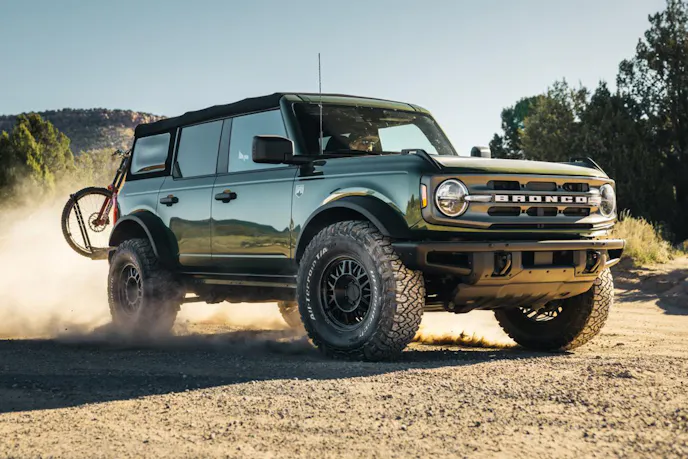
Fifty years after the Radial All-Terrain T/A debut, BFGoodrich is in the middle of another generational transition: the All-Terrain T/A KO3 rollout that began May 1, 2024 and is planned to continue through 2026. The company’s launch strategy has been phased, expanding sizes over time rather than flipping the entire market at once, with public-facing details pointing to a total lineup of more than 100 sizes by the end of the rollout.
Technically, the headline is familiar and very “BFGoodrich all-terrain”: more traction, more tread life, and more toughness than the outgoing KO2, achieved through updated tread design, compound work, and construction changes aimed at durability and even wear. If KO2 was about meeting modern expectations without losing the brand’s rugged identity, KO3 is about pushing that same balance further as vehicles get heavier, torque gets instant (including EV trucks), and consumers demand real all-weather capability without stepping down into mild all-seasons.
The Throughline: One Tire, Two Worlds, Constant Refinement
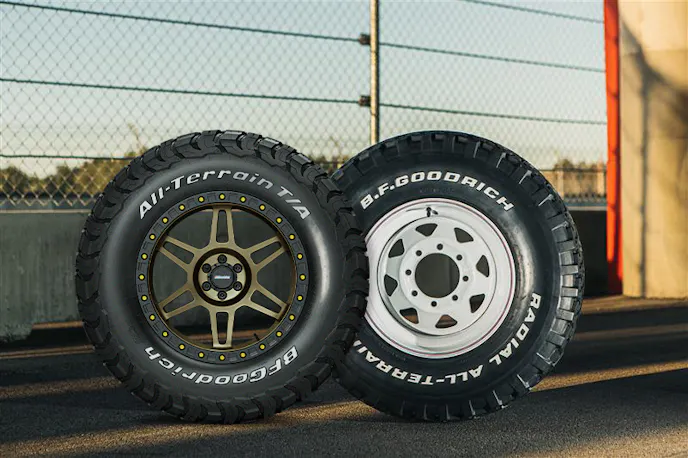
Across five decades, the BFGoodrich radial all-terrain story keeps circling back to the same engineering problem: building a tire that behaves civilly on pavement while taking real abuse off-road. The model names tell the tale. Radial All-Terrain T/A introduces the category in 1976. The KO generation modernizes toughness and tread aggression at the turn of the millennium. KO2 becomes the mass-market icon in the 2010s. KO3 marks the current chapter, still rolling out through 2026 as BFGoodrich scales fitments to match today’s trucks and SUVs.
Fifty years in, the remarkable part isn’t that all-terrains exist—everyone has them now. It’s that BFGoodrich’s original 1976 idea is still the blueprint the segment keeps chasing: a tire that lets you live in both worlds.
You might also like
Supercharged And Back-Halved: This 2010 Ford SVT Raptor Is Built To Dominate
This 2010 Ford F-150 SVT Raptor is supercharged, back-halved, and fitted with a long-travel suspension and so much more.