
There are plenty of aftermarket Broncos wearing expensive parts catalogs. Bolt on a lift, throw on bigger tires, hang a roof rack over the top, and suddenly it’s ready for Instagram. The 2025 RTR Bronco ROVR takes a different approach.
Rather than simply assembling a collection of premium components, RTR engineered the ROVR as a complete vehicle package. The people responsible for its development, RTR founder Vaughn Gittin Jr. and Ultra4 champion Loren Healy, aren’t building vehicles from behind computer screens. They’re building them from decades of experience racing, wheeling, and pushing Broncos beyond where most owners will ever venture.
That philosophy is apparent the first time you climb behind the wheel. The Bronco already stands among the most capable factory off-road vehicles ever built. Improving upon that isn’t easy. Yet after spending time with the RTR ROVR, it’s clear the company wasn’t interested in reinventing Ford’s formula. Instead, it refined nearly every aspect of the Bronco into something that feels more cohesive, more functional, and ultimately more adventure-ready.
Motorsport DNA Meets OEM Execution
RTR has spent years establishing itself as one of Ford’s premier specialty vehicle manufacturers through its Mustang lineup. The Bronco ROVR represents the company’s first comprehensive off-road vehicle, but the experience behind it runs much deeper than a first attempt would suggest.
The project was developed by Vaughn Gittin Jr., Loren Healy, the engineering team in Concord, North Carolina, and RTR’s dedicated off-road facility in New Mexico. That combination of OEM-quality engineering standards and championship-level off-road racing experience shows throughout the vehicle.
Rather than chasing maximum suspension travel or headline-grabbing horsepower numbers, the team focused on confidence. Confidence over rocks. Confidence on high-speed dirt roads. Confidence when the pavement ends, and the destination is still hours away.
As Gittin puts it, “Our mission is to elevate Bronco through RTR’s unique brand of personalization and performance to instill confidence in our customers and bring them into the RTR culture of fun and challenge them to explore further into the wild.”
Built On A Solid Foundation
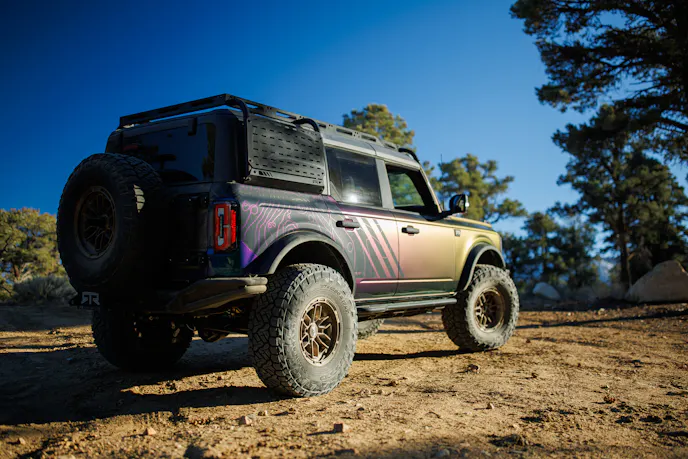
Our test vehicle started life as a four-door Bronco Badlands equipped with Ford’s Sasquatch Package and the twin-turbocharged 2.7-liter EcoBoost V6. The engine produces 315 horsepower and 410 lb-ft of torque on regular fuel, climbing to 330 horsepower and 415 lb-ft when premium is used. Power is routed through Ford’s 10R60 10-speed automatic transmission and Advanced 4×4 transfer case with a 3.06:1 low range, resulting in a 67.8:1 crawl ratio.
Those are already excellent numbers, but RTR wisely leaves Ford’s drivetrain untouched. Reliability remains factory-grade, and the full Ford warranty stays intact when purchased through an authorized RTR Ford dealer. Every RTR component is also backed by its own three-year/36,000-mile warranty.
The Suspension Package You Shouldn’t Skip
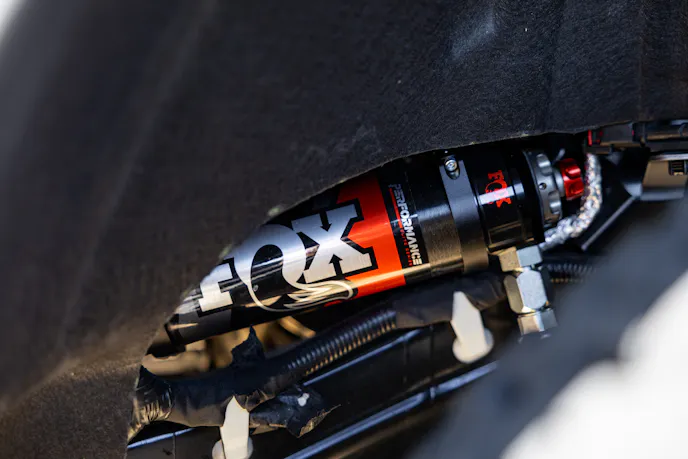
While the standard ROVR package dramatically transforms the Bronco’s appearance and utility, the optional Fox 2.5 Elite Suspension Package is where the vehicle truly earns its reputation.
In fact, Vaughn Gittin Jr. doesn’t mince words. “People really need to check the box for the Fox package. It takes ROVR to a whole new level and maxes its off-road capabilities for more grip on the rocks and a ton more traction on sand and trails to fully bring the ROVR experience to life.”
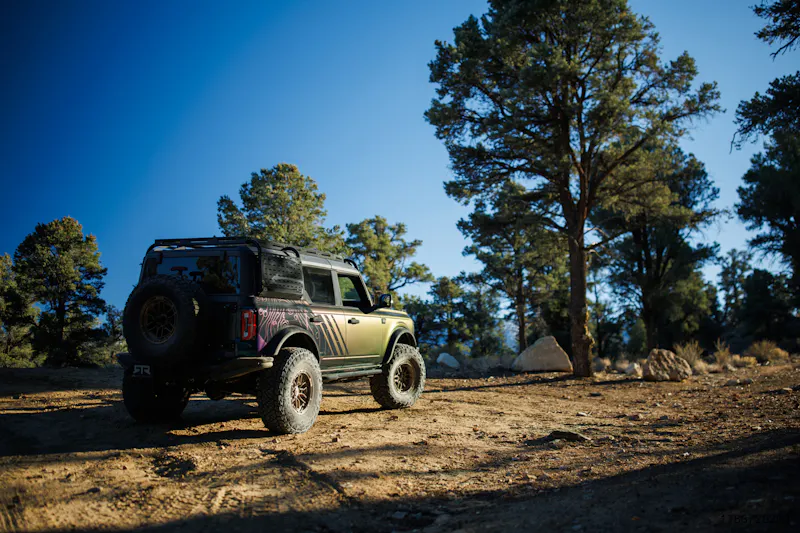
After driving it, it’s difficult to disagree. The package upgrades the Bronco with FOX 2.5 Performance Elite shocks, billet aluminum upper control arms, an adjustable rear track bar, a high-clearance front suspension system, and 37×12.50R17 Nitto Recon Grappler tires mounted on RTR’s 17×9-inch Evo 6 wheels.
Beyond simply fitting larger tires, RTR recalibrated the suspension geometry to maintain predictable handling while dramatically increasing capability.
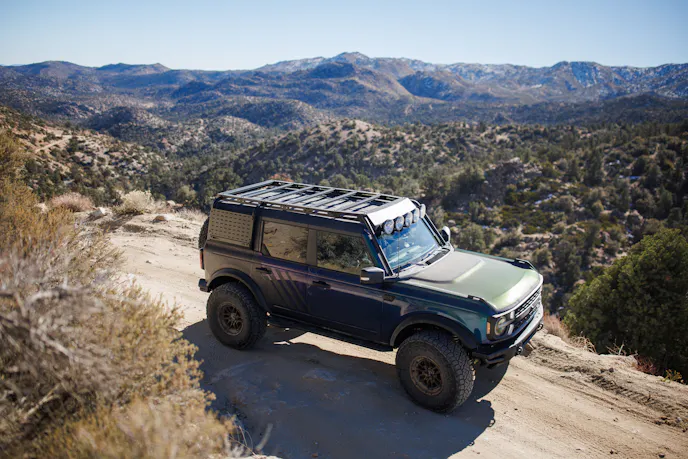
Ground clearance grows to 15.5 inches beneath the chassis, while the approach angle improves to 50.3 degrees. Breakover jumps to 36.1 degrees, departure increases to 43.2 degrees, and water-fording capability reaches 37.3 inches. Those numbers place the ROVR among the most capable production-based Broncos available anywhere.
Yet the biggest surprise isn’t measured with a tape measure. It’s how civilized everything feels.
The FOX dampers absorb washboard roads, broken pavement, and high-speed dirt with remarkable composure. Larger tires often introduce wandering steering or excessive body motion, but the ROVR remains planted and confidence inspiring. Body control is excellent, and the suspension seems equally comfortable crawling over ledges as it is covering miles of desert two-track.
The Roof Rack That Changes Everything
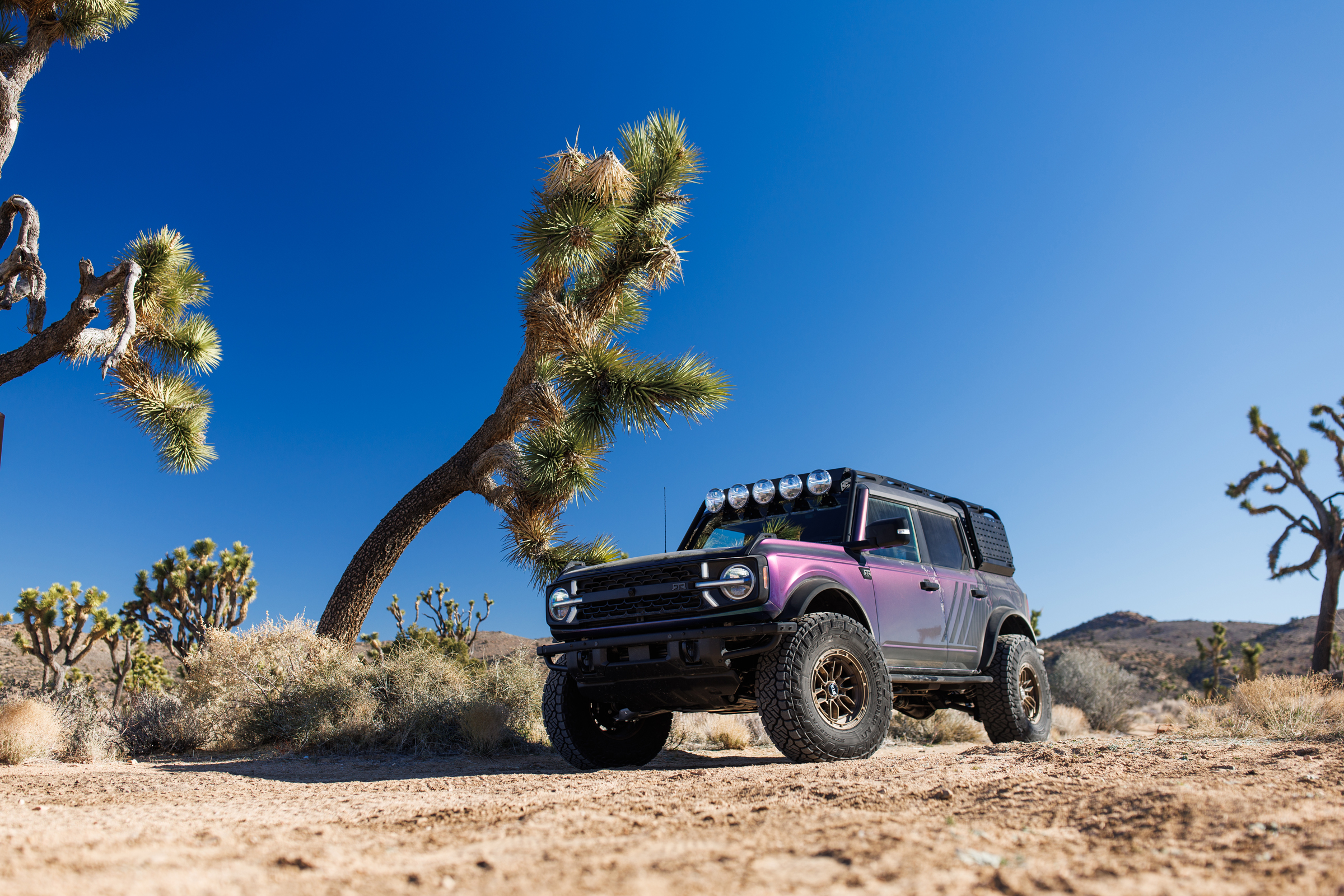
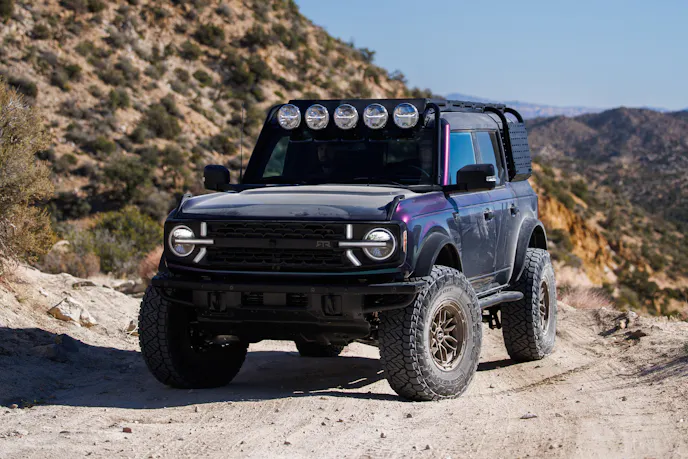
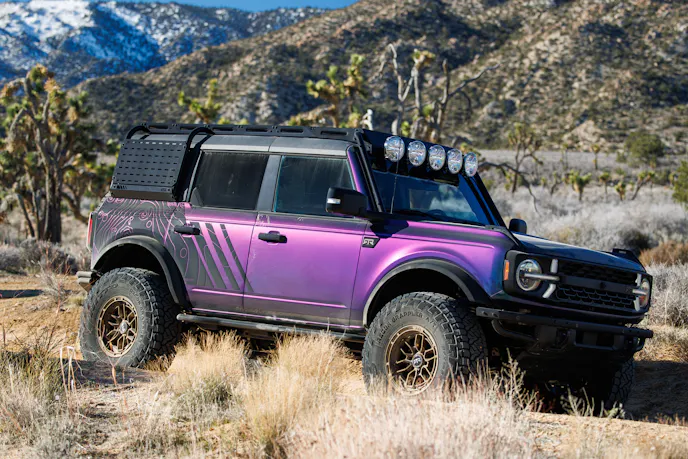
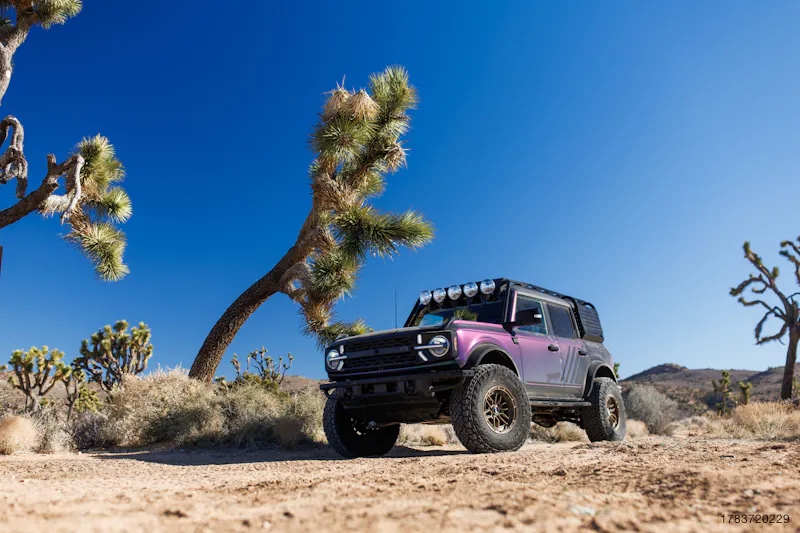
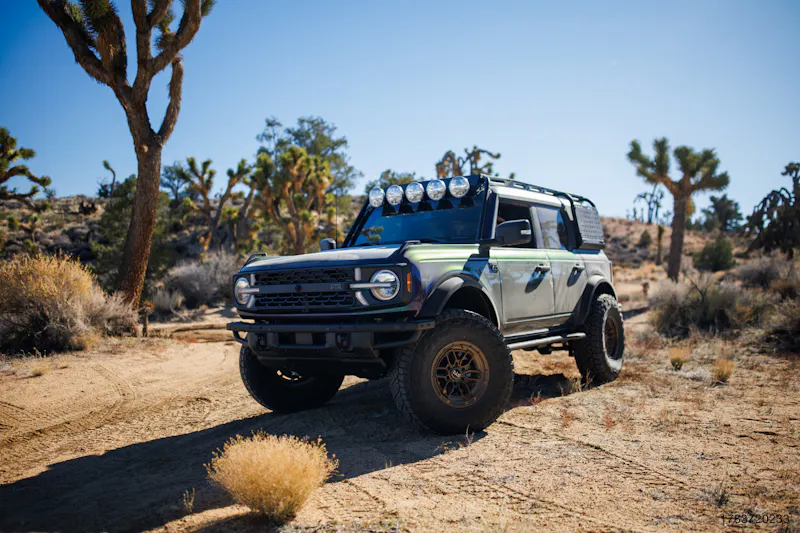
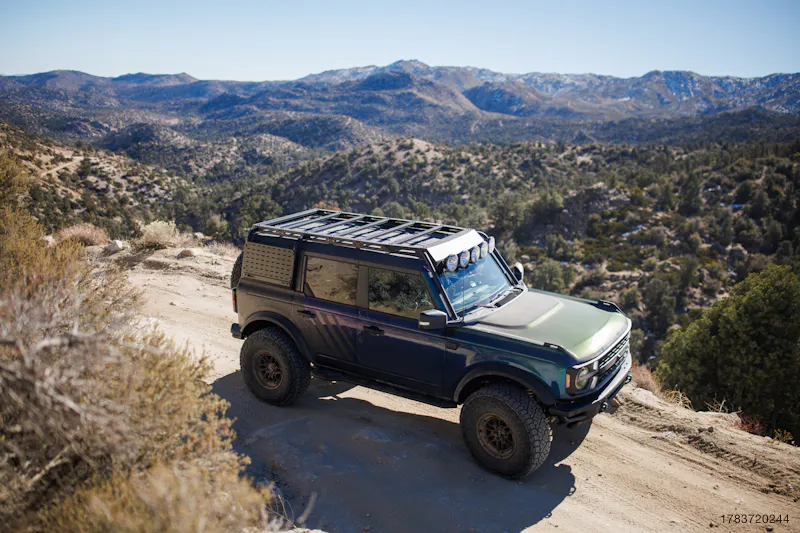
If there’s one component that defines the Bronco RTR ROVR, it isn’t the suspension. It’s the roof rack. Most aftermarket roof racks simply create a place to strap gear. RTR’s system becomes an integrated expedition platform.
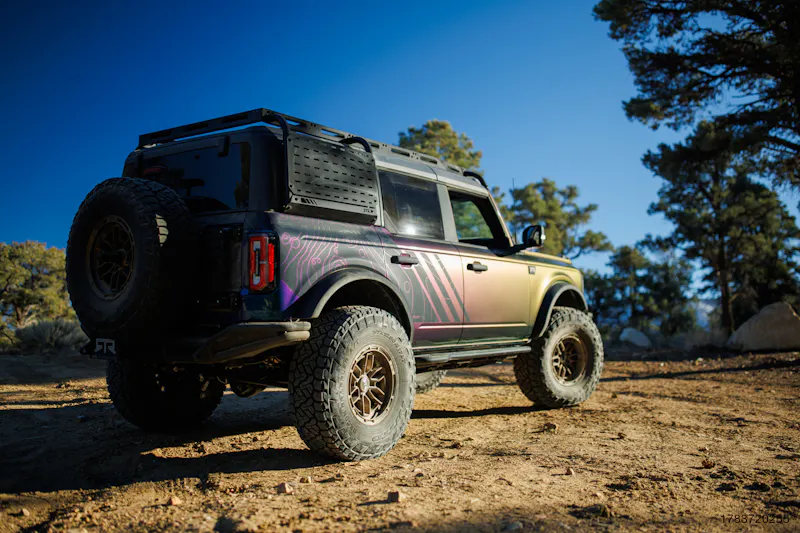
Constructed from heavy-duty 1/8-inch tubular steel with adjustable 30mm x 60mm aluminum T-slot crossbars, the rack supports up to 800 pounds while adding only 3.63 inches to the Bronco’s overall height. Even more impressive, it mounts using factory attachment points and remains compatible with both hardtop and soft-top Broncos.
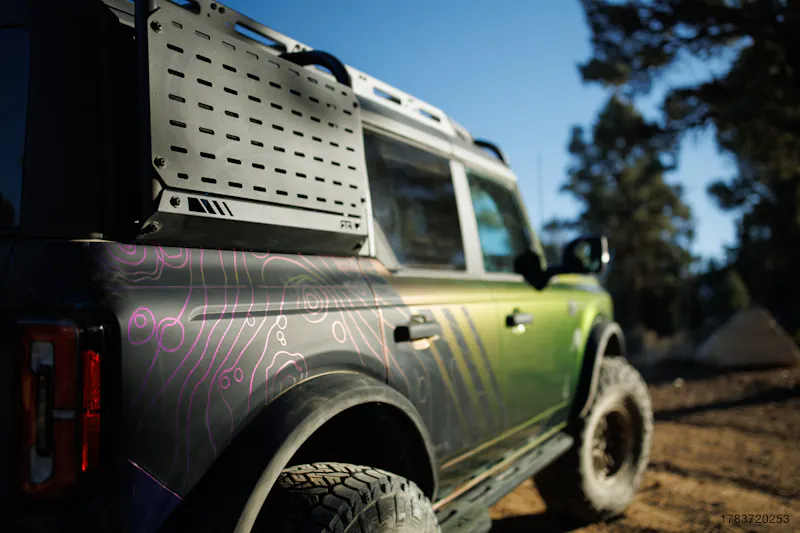
The large MOLLE side panels provide mounting locations for recovery gear, RotopaX containers, tools, camp equipment, or virtually anything else an overlander might carry.
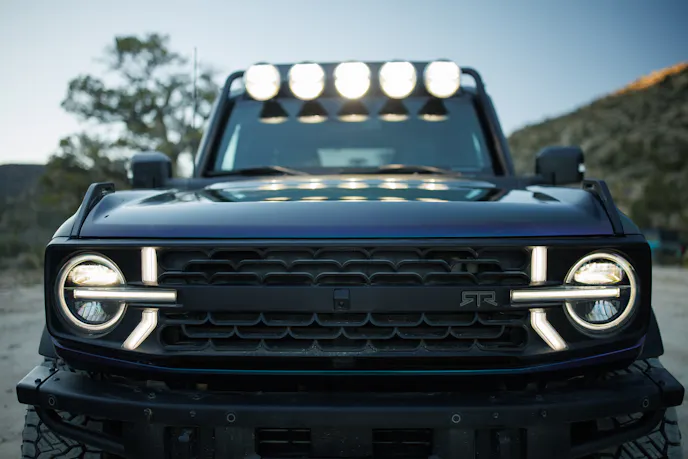
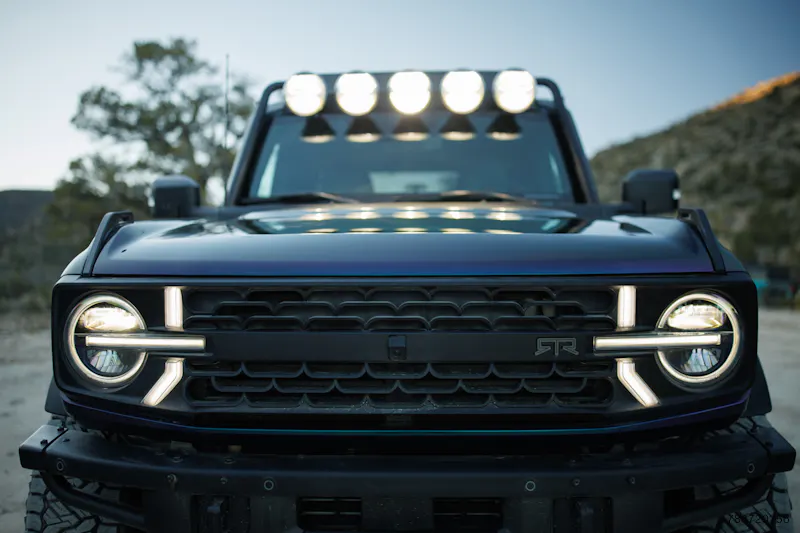
Integrated into the leading edge is a PROJECT X lightbar featuring five FF.70 high-output LED driving lights producing approximately 19,000 lumens, all wired directly into the Bronco’s factory upfitter switches.
Loren Healy describes it perfectly, “ROVR’s roof rack is the Swiss Army Knife of flexibility. It’s the signature part of ROVR that enables owners to challenge themselves without the vehicle getting in the way.”
Protection With Purpose
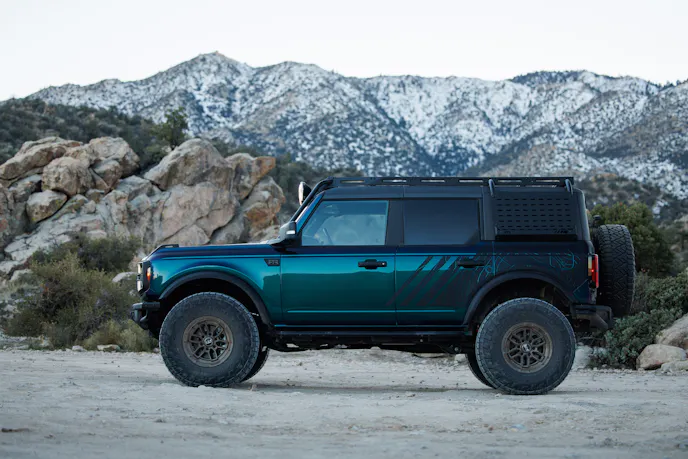
Every exterior addition serves multiple functions. RTR’s heavy-gauge steel rock sliders protect the rocker panels while doubling as functional side steps. Cleverly, they incorporate a seven-inch rear kick-out that makes accessing roof-mounted cargo easier.
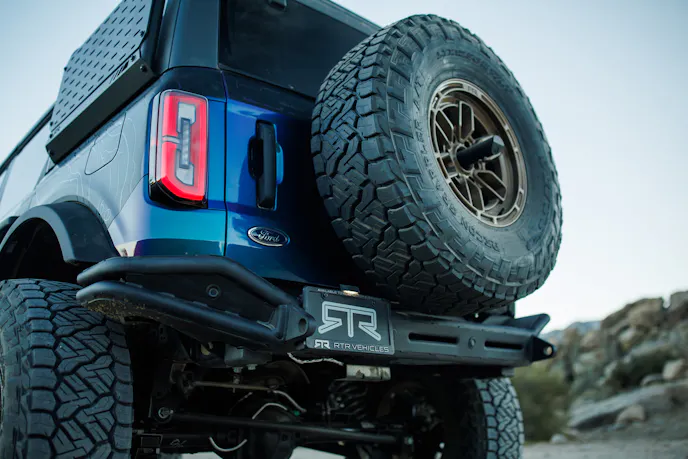
Out back, a heavy-duty steel rear bumper improves departure angle while integrating D-ring recovery points and a removable license plate bracket for trail use. A reinforced spare tire carrier and adjustable tailgate stop accommodate the additional weight of larger wheels and tires without overstressing the Bronco’s factory tailgate hinges.
Up front, RTR adds its signature grille with integrated LED lighting, wider bumper end caps for added protection, and PROJECT X HP.70 auxiliary lights mounted to a modular center bar.
A Design Theme Unlike Anything Else
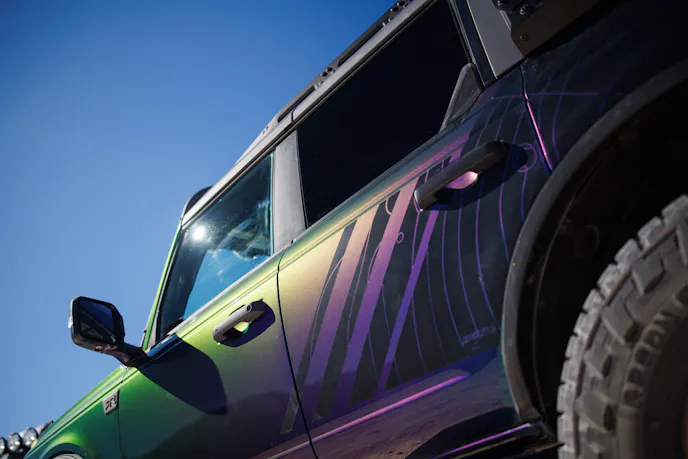
One of the more fascinating aspects of the ROVR is its design inspiration. Instead of borrowing from military themes or desert racing, RTR looked upward. The entire vehicle draws inspiration from Mars Rover missions and historic space exploration.
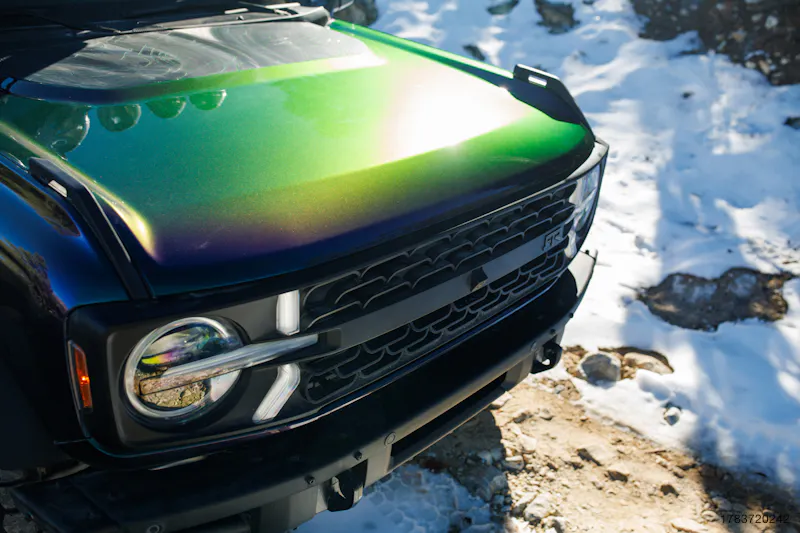
The hood graphics reference the Mars Pathfinder landing site at Ares Vallis. The driver’s side and tailgate incorporate Apollo 12 mission maps and crater topography, while the passenger side celebrates NASA’s Opportunity Mars Rover, which is a vehicle that exceeded its planned mission life by more than 57 times.
Our test vehicle wore Mystichrome from RTR’s Extended Color Palette, an iconic Ford finish that changes dramatically depending on lighting conditions. Originally associated with special-edition Mustangs, the color feels surprisingly appropriate on the Bronco. It’s a subtle theme that rewards closer inspection.
Performance On The Trail
The ROVR’s greatest accomplishment isn’t that it’s capable. It’s that everything works together.
The steering remains predictable despite the larger tires. Suspension movements feel controlled instead of floaty. Visibility remains excellent despite the additional accessories. Road noise from the Recon Grapplers stays surprisingly civilized for a 37-inch tire.
Off-road, the Bronco’s factory G.O.A.T. Modes, locking differentials, disconnecting sway bar, and advanced traction management continue doing exactly what Ford intended, only now with additional clearance, improved damping, and more usable protection.
Rather than feeling like an aftermarket build that sacrifices one attribute to improve another, the ROVR simply feels like a more complete Bronco.
Is The Bronco ROVR Worth The Investment?
The standard Bronco RTR ROVR package carries an MSRP of $26,595 beyond the donor Bronco, while the optional Fox 2.5 Elite suspension package adds another $7,695. Our heavily equipped media vehicle, finished in Mystichrome with additional options, totaled $111,295.
That’s certainly premium territory. However, replicating this level of engineering, fit-and-finish, warranty support, and dealer integration through the aftermarket would be difficult, and likely more expensive once labor, tuning, and inevitable compatibility issues are factored into the equation.
Final Thoughts
The Bronco aftermarket has no shortage of parts. What it lacks are thoughtfully engineered systems that elevate the entire vehicle rather than simply adding accessories.
Instead of asking how many components could be added to a Bronco, RTR asked how every component could work together to create a more capable, more functional, and more confidence-inspiring adventure vehicle.
You might also like
Pinned In Pennsylvania: Full Send At The 2026 Summer 4-Wheel Jamboree
The 2026 Summer 4-Wheel Jamboree rolled into Bloomsburg, Pennsylvania, bringing with it almost 2,000 4x4s and lots of off-road action.