
Back in 1995, Robert Warke bought a clapped-out ’69 Bronco that he could build into a fun, reliable rig to take his wife and baby daughter four-wheeling. He also wanted to feed his need for speed and get a little adrenaline flowing by participating in local sand drags and mud-bog competitions.
“When we bought the truck,” Warke recalls, “it was basically a total. It had a bunch of crappy stuff on it, and dents and digs all over the place. The only good part is it had a pretty nasty little 302 in it. It was a fun little rig for what it was—more built as a sand drag Bronco running 36s than a true off-roader.”
A Reputation Is Born
Warke started building out the four-wheel-drive beater over the next couple of years, made it street legal, got it painted, and raced and wheeled it just as he’d planned. When he stepped up to running 39.5-inch comp-cut Interco TSL Boggers, custom Dana 60 axles, and a long-travel suspension in the late ’90s, his fellow Bronco club members thought he was crazy.
Now, some 31 years later, the Crazy Bronco Man has earned a highly respected reputation for building Broncos that are next-level in performance, reliability, and looks.
“I’m well known in the Bronco community for destroying things,” says Warke, founder of CBM Designs, which focuses on restoring and building custom Broncos in Canby, Oregon.
“I’ve crashed multiple times in Moab and on the Oregon Dunes. I love running hard and tackling tough challenges off-road. I’ve competed in tough truck-type stuff, used to jump it a lot, and basically ran it pretty hard over the years. Broke a few things along the way.
“When it comes to my truck, I never built it back the same. When something broke, we always tried to upgrade and change things up to make it better.”
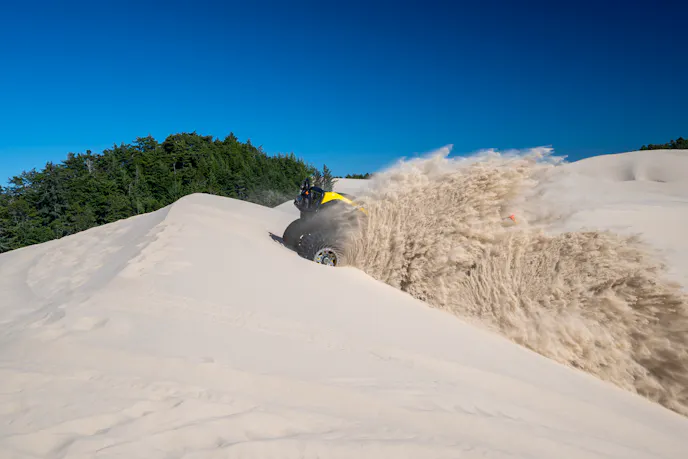
A Wicked Rock-Crawling Sand Runner
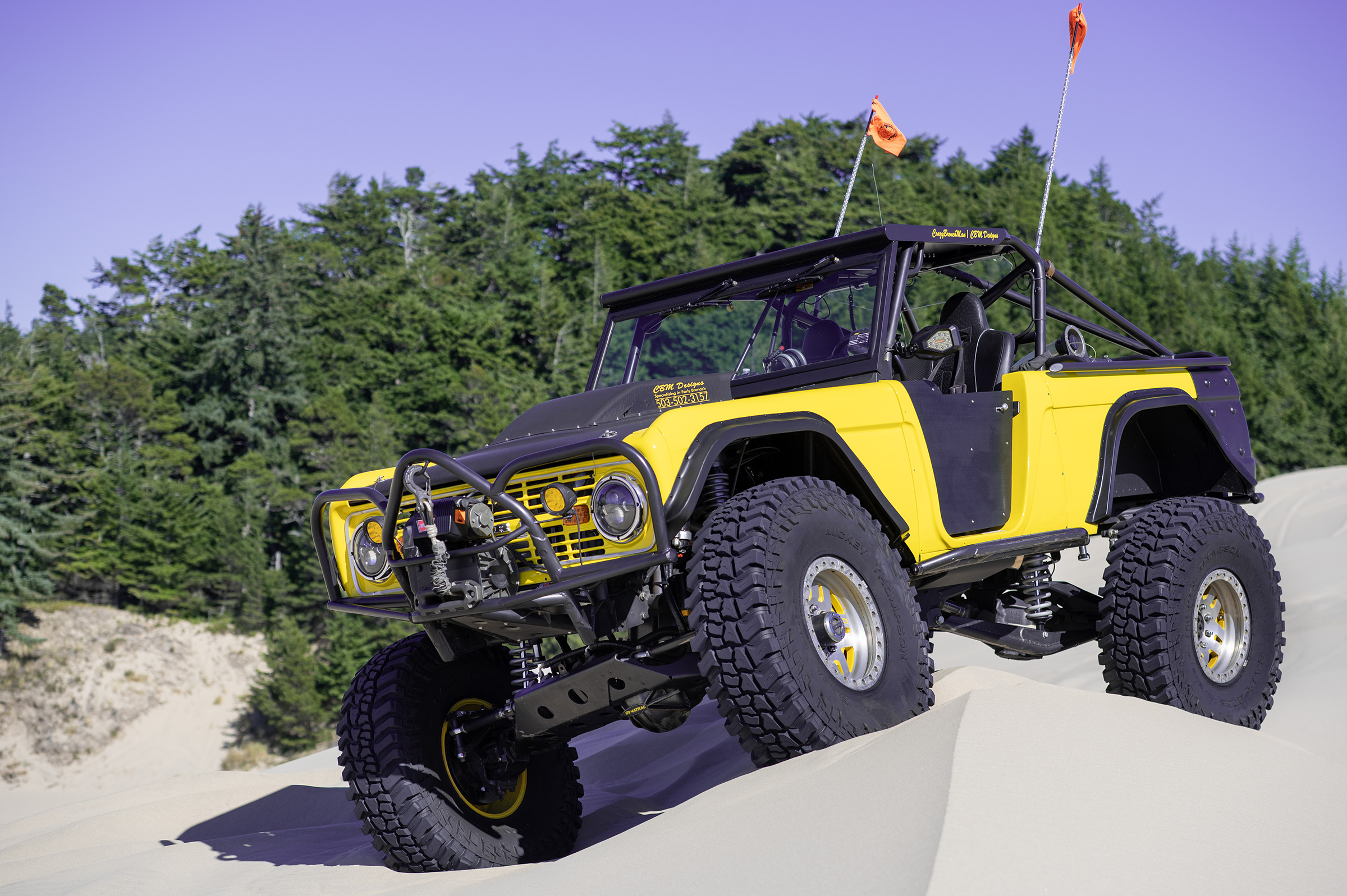
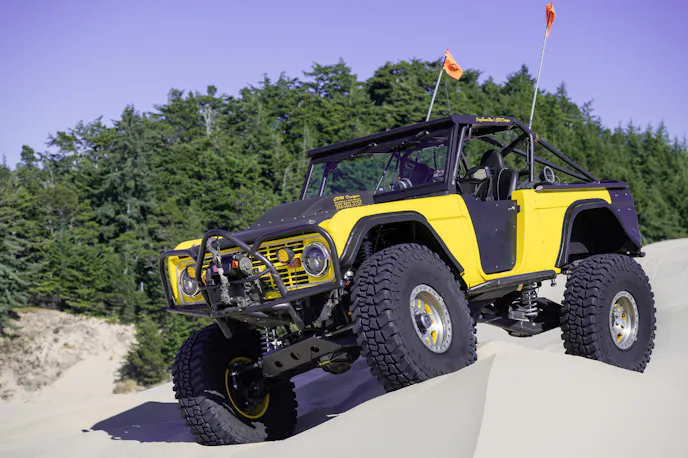
A prime example is the same clapped-out Bronco Warke originally bought, which is now a beautifully built black-and-yellow street/trail machine that has gone through a number of transformations during the last three decades.
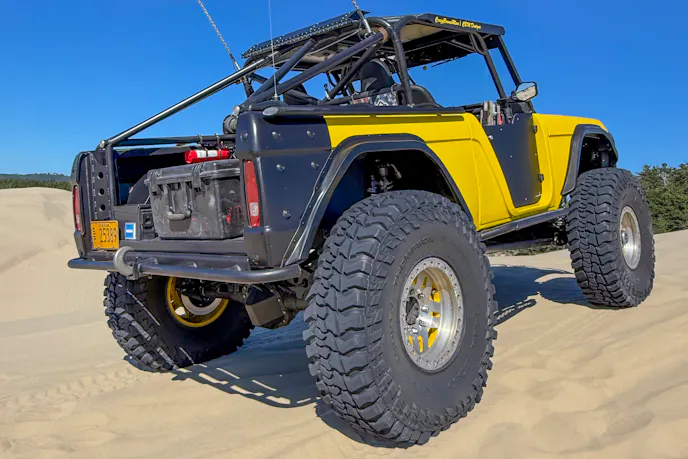
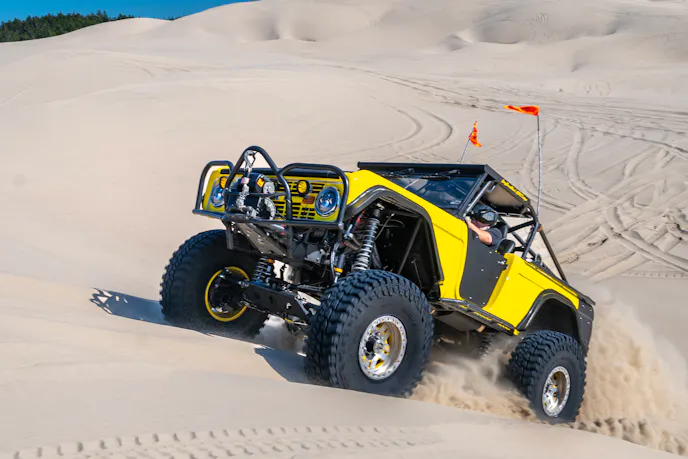
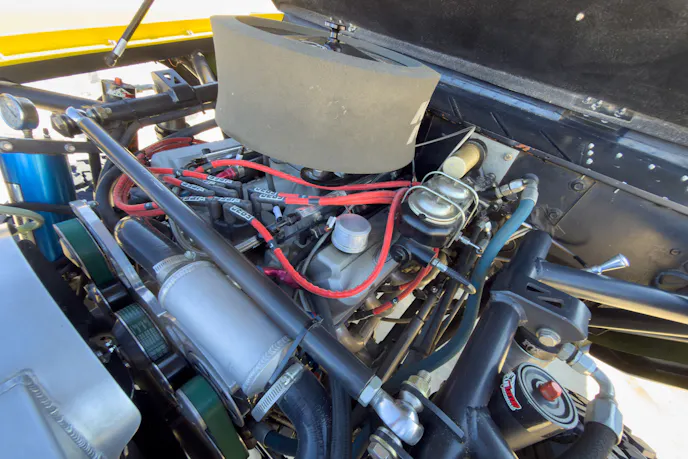
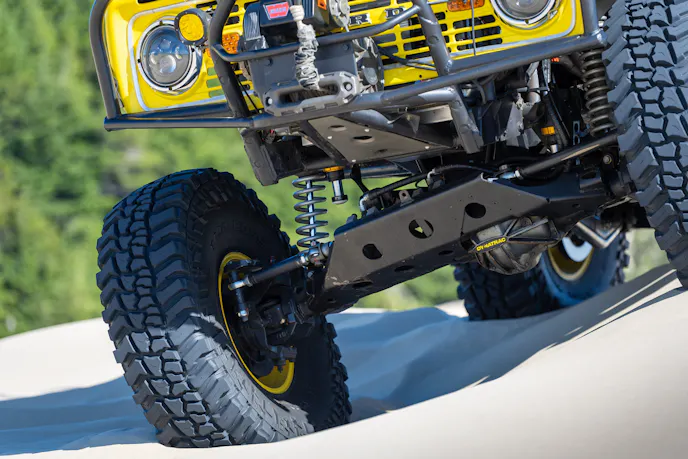
It sports 42-inch Mickey Thompson Baja Boss M/T rubber, a modified Ultra4 suspension, and a built 460-cid Ford Racing Boss 351 stroker shoehorned under the hood.
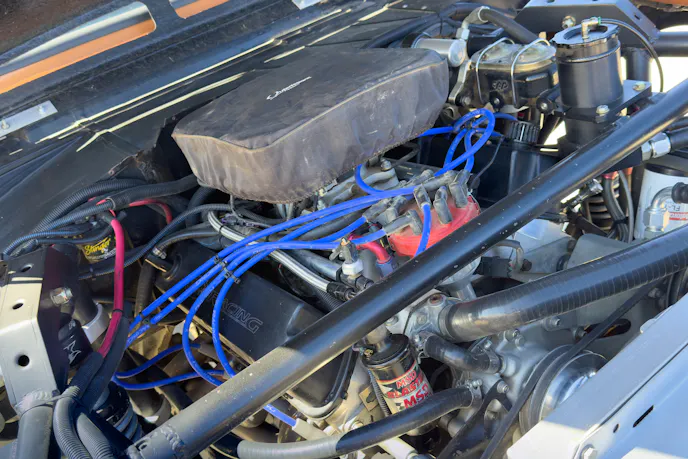
The Ford Performance Z460 crate engine, fitted with an Edelbrock intake topped by a Holley Terminator X EFI system, was tuned by one of Warke’s retired friends who used to build racing engines in Portland, Oregon.
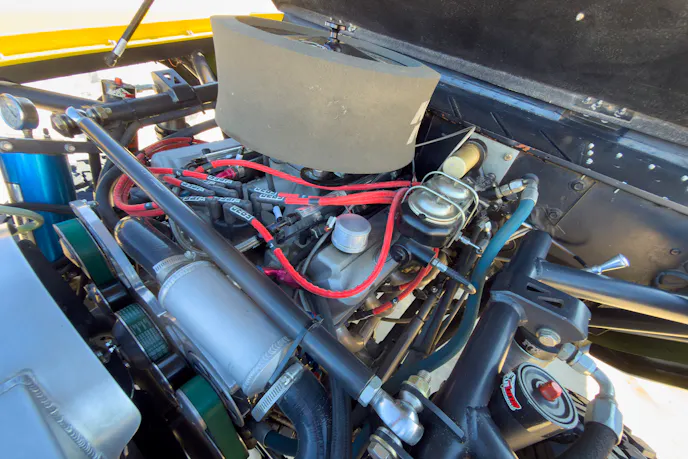
That expertise in electronic tuning and header design bumped the stroker small-block’s output from the factory-rated 575 hp to a bit more than 600 hp. Torque, a valuable asset in both rock crawling and eating up sand, is also said to be in the 650-plus lb-ft range.
“When I dig deep into the throttle, it’ll pull the front tires more than a foot off the ground,” says Warke of the power available from the Ford racing engine. “It has incredible torque when you need it.”
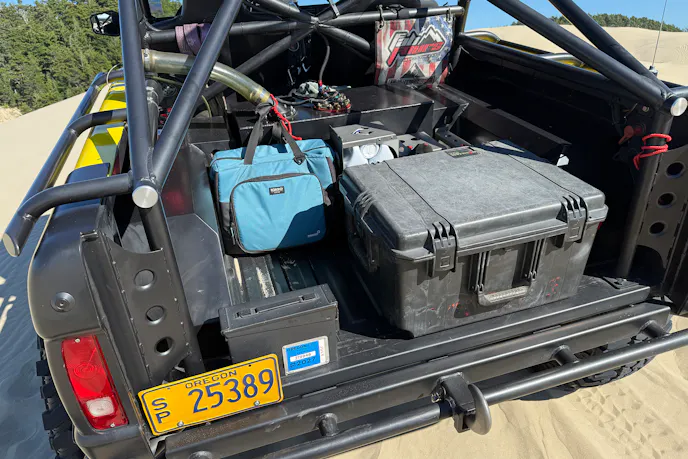
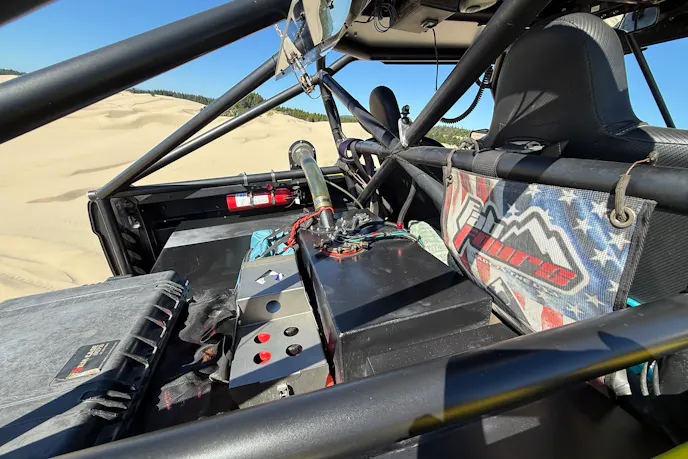
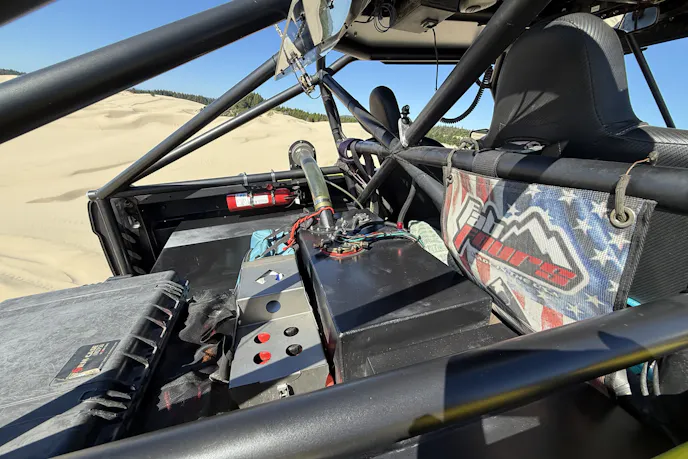
On another front, Warke says he just runs pump gas in a custom 24-gallon fuel tank in the bed. He also has two fuel pumps in case one fails while out in the vast dunes or crawling over the rocks. “I just have to unplug one wire, plug it into another, and off we go.”
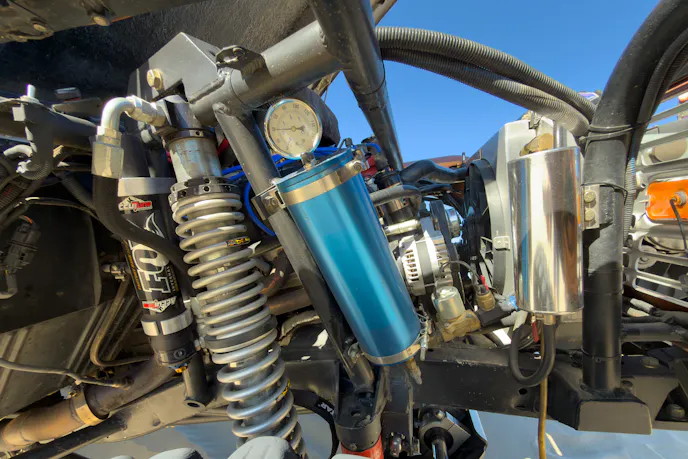
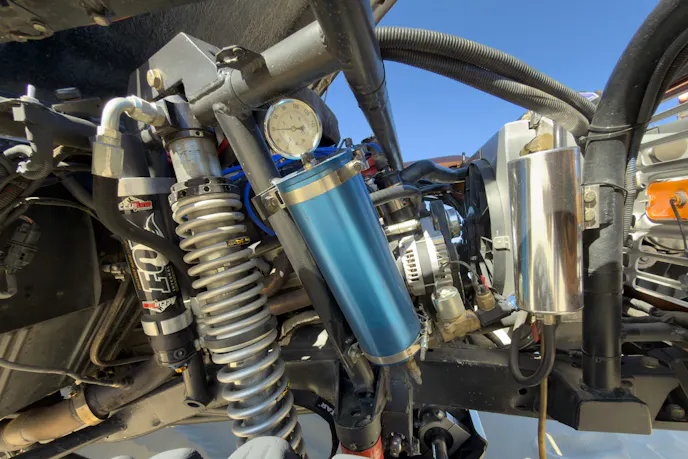
Another addition to help ensure long engine life is an Accusump engine pre-oiling system. It holds two quarts of engine oil under pressure. When the remote oiling system sees less than 20 psi of oil pressure, it feeds oil into the engine’s lubrication system.
“The pre-oiling system comes in handy when the Bronco is at extreme angles, or when it has sat for a long time in the shop, so I can pre-oil the engine before starting it up.”
Shifting Gears With The Best
Controlling 600-plus ponies at speed, or while slowly inching over rocky terrain, requires precision in the shifting department. To that end, Warke now relies on a modified 6R80 six-speed automatic mated to an Advance Adapters Atlas 2 3.0:1 two-speed transfer case to get the Ford’s power efficiently to all four corners.
The automatic transmission has been upgraded with a US Shift Quick 6 controller, a B&M Hi-Tek deep pan that adds an extra 3 quarts of fluid, and a custom bump shifter.
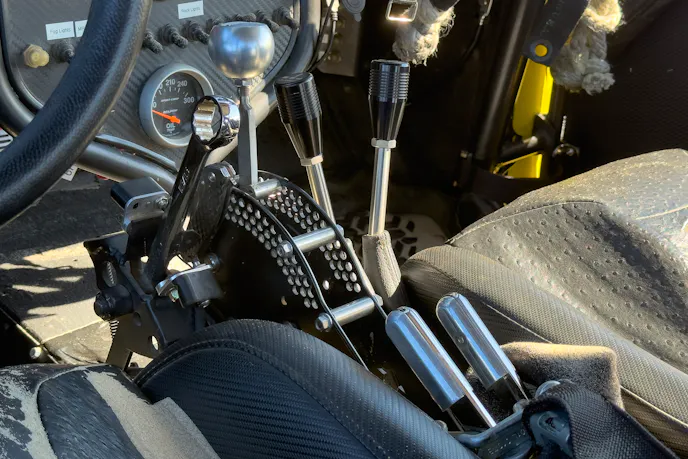
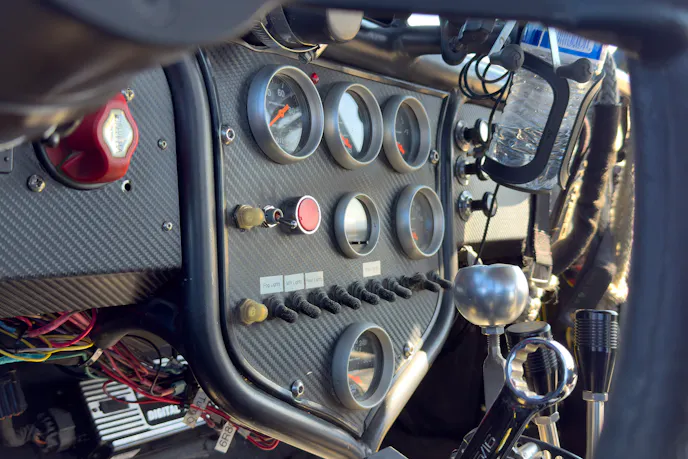
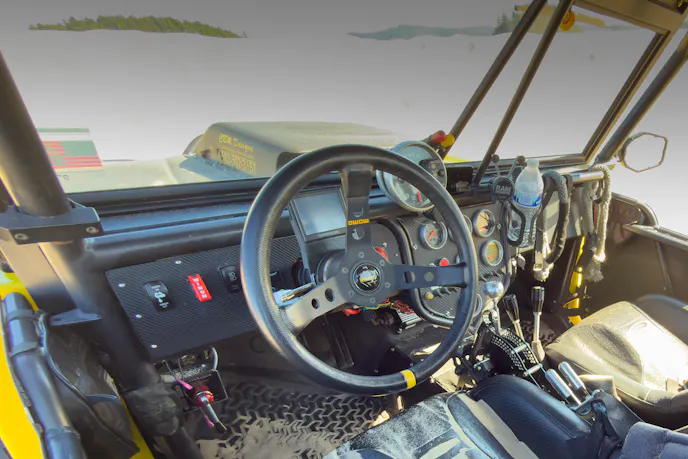
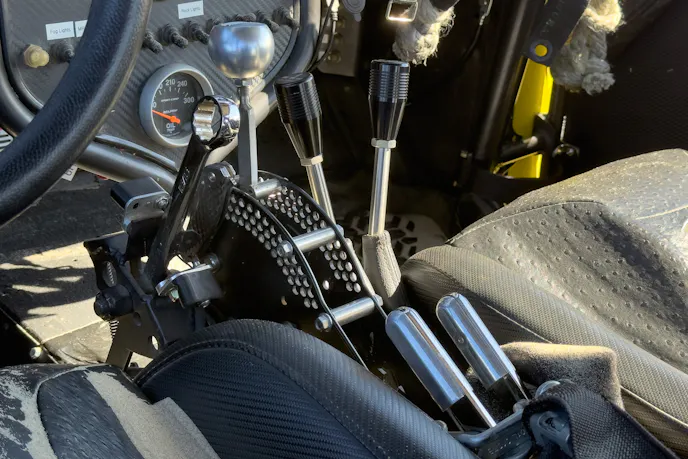
The 6R80, which utilizes Tiptronic-style gear selection, is controlled by a RAD Designs VX floor shifter. He modified the shifter so he can instantly go from forward to reverse in some of those “crazy times in the crazy places we go down in Southern Utah where I will have to reverse on the rear tires so I don’t wheelie over backwards.”
Warke says that combination gives him precise, gear-specific manual shifting, a must for rock crawling as well as tackling massive dunes. When he needs to lock the transmission into a gear, he grabs the box-end wrench made into a shift handle and locks it into whatever gear he wants.
“When we changed to the 6R80 several years ago, it was a huge game changer in everything we do with our Bronco because it’ll hold a thousand horsepower and it has two overdrives, with a really low first gear,” explains Warke.
“Once you have your adapters, the transmission itself is relatively cheap—even used ones with low miles. To date I’ve never been able to actually break one to where it won’t work.”
The Atlas 2 transfer case is a race case with polished cryo-treated gears that Warke describes as “basically an Ultra4, high-horsepower transfer case. The Atlas has a 4.17:1 first gear, combined with the 5.38s in the diffs. That gearing combination is awesome for how I use my Bronco.”
Rock-Solid Axles
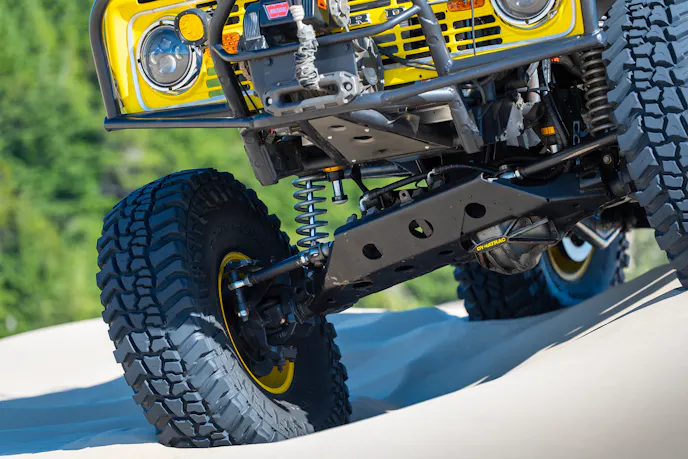
Everything under Warke’s Bronco is custom. Once the power heads through the quarter-wall DOM 1350 custom driveshafts, it ends up feeding heavy-duty, custom-built axles.
The front uses a DynaTrac ProRock 60 housing built so the pinion angle and brake placement are exactly where Warke needed them to achieve the caster and handling required for good highway manners.
The rear was done in a similar fashion using a GM 14-bolt. Both axles run 5.38:1 gears, with a Detroit Locker up front and an ARB Air Locker in the rear.
Paying Attention To Details
Having all the power in the world and more traction than spiked shoes on ice means little if the suspension isn’t up to handling the tasks at hand. In this case, those tasks include sand running, rock crawling, and highway commuting on 42-inch rubber.
First, the stock Bronco frame has long since been modified and strengthened with a plethora of gussets, cross-tubing, and plating to make it as strong as possible in all the critical areas and resist bending. The front three-quarters of the frame is Ford; the back quarter is a boxed-tube design of Warke’s own making that rises three inches above the factory line to maximize suspension up-travel.
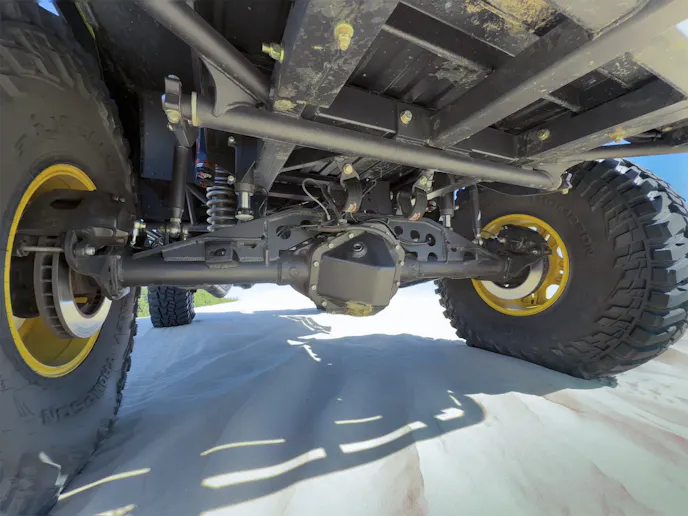
Everything from the frame to the body has been coated with a stainless-steel-infused polyurethane paint called Steel-It, which keeps rust and corrosion at bay for years to come. Warke says the coating also makes stress cracks easier to spot and allows welding or other repairs without the need to remove it.
He then dumped the antiquated steering system and replaced it with the same type of orbital steering used in Ultra4 desert racing.
“I’ve found a PSC orbital valve made by M+S Hydraulic PLC works great for this application. It’s basically an Ultra4 race car type steering. So it’s very quick. That’s the only thing that takes getting used to on the street is how quick and precise the steering responds. It’s basically a 1:1 steering ratio with minimal effort.”
He also stepped up the lighting for night runs off-road with LED headlights, rock lights all around the frame, and side-by-side ATV mirrors with built-in LEDs “to eliminate those shadows cast by the big tires.”
Bronco Ultra4 Underpinnings
Warke set up his ride with what he calls a “hybrid Ultra4 design” that complements the Bronco’s short 92-inch wheelbase, which was stretched to 101 inches.
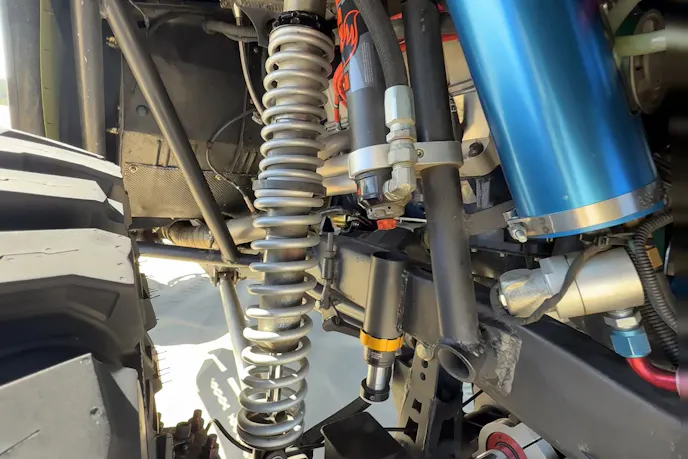
The combination of a three-link front and four-link rear suspension, anchored by Fox Factory Racing 2.5 Series 16-inch coilovers in front, 14-inchers in the rear, and Fox bump stops, contributes to a well-tuned ride whether running fast or slow.
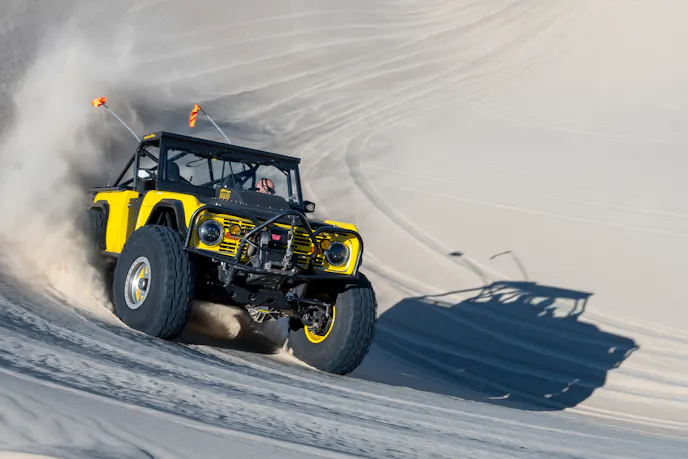
“I can keep up with the fastest side-by-sides on the dunes, yet I can also crawl in the rocks with full-on rock buggies and heavily modified Broncos that are just designed for rocks,” says Warke, flashing a big grin. “I can run 70-75 mph all day long on the highway, which they can’t do.”
Safety A Big Priority
Warke readily admits that he quite often pushes the limits when he’s wheeling. That’s why those who know his driving style and love of life affectionately call him the Crazy Bronco Man.
Every iteration of his Bronco has included features that help keep him and his passenger as safe as possible in the event a ride goes wrong, whether that means trying to scale a near-vertical rock wall in Moab or getting surprised by a whoop or witch’s eye on the Oregon Dunes.
In addition to desert-racing-style seats and PRP four-point racing harnesses, Warke has designed a stout, race-level roll cage, plus robust bumpers and skid plates to protect what’s inside the 60-year-old Bobtail.
Warke says that if you remove the body, what you essentially see is an entire roll cage extending from the engine compartment to the rear bumper and tied to the frame at six points. The tubing surrounds the entire engine, and body parts such as the front clip are tied to the cage as well.
The owner of CBM Designs has even added his own tubular body armor that extends over the Bronco’s rear quarter panels, protecting them in the event of a rollover.
“It’s really hard to fix those bedsides because they’re radiused, they’re heavier metal, and it just really messes up the tub if you mess those up,” explains Warke, who is also an expert metal fabricator. “So I put those on to reduce that risk. I think that’s the third set I’ve done because I’ve actually bent them and damaged them from tipping over or cartwheeling.”
Still A Work-In-Progress
With all of the modifications, the level of performance, and the attention to smaller details, the Crazy Bronco Man still isn’t satisfied with where his vintage-looking Bronco is today. He has plans to further “upgrade” the suspension to the next level in a year or two.
“My wife, daughter, and I have a lot of fun with it, running around doing our thing. My focus here is to try to keep this build as simple as we can, as strong as we can, and as comfortable as we can,” Warke says of his ride.
“Like I said, we cut the truck completely in half last year, fixed a lot of dents and dings, squared it up, went through the motor, did a big upgrade to a bunch of things that were just kind of messed up because my truck’s always the one that sits in the corner of our shop and doesn’t get any love.”
One of the many fascinating aspects of this near-race-ready Bronco is that it actually looks and sounds like any other 4×4 running a deep-throated dual exhaust courtesy of a pair of Flowmasters.
“Over the past five years, we’ve utilized a lot of desert-race, drag-race, and Ultra4 race-car technology to build out what we can within the confines of a vintage Bronco box so it can be driven down the road without getting arrested.
“At the same time, you can hit the sand and beat up on side-by-sides and the next day go rock crawling with all the rock-bouncer or rock-buggy guys. That’s a win-win in my book.”
You might also like
Brett Dickey: The 17-Year-Old Rock-Crawling Champion Chasing Bigger Lines
Meet 17-year-old rock-crawling champion Brett Dickey as he tackles Trail Hero 2026 and lives 3W Auto-life’s “Fit For Your Wild.”