
Most restoration projects that give a vintage 4×4 new life and a fresh look are fairly straightforward. Mechanically skilled owners handle the nuts and bolts of the rebuild themselves, then either tackle the bodywork and paint or turn those tasks over to a professional auto body shop.
Some vintage truck owners, typically those with deeper pockets, let a shop that specializes in such restorations handle the entire project from start to finish. Others take a hybrid approach, combining their own mechanical skills with those of a custom shop to bring new life to an old rig such as a vintage Bronco.
Whichever approach an owner takes, bringing a beloved 4×4 back to life typically requires several years. For Shane Harness, the process took considerably longer.
The Rough Road To Perfection
It took Harness, a member of the NW Vintage Broncos club in Washington state, more than 17 years to bring his show-quality ’72 to where it is today.
Shane, a retired Emmy Award-winning cinematographer, producer, and writer who called Hollywood home for some 40 years, has always taken pride in doing every job or project to the best of his abilities. That dedication to quality applies to his Bronco, which he bought in 2000 while living and working in California.
“I’ve loved Broncos since I was a kid and saw the sports movie ‘American Anthem,’” Harness recalls when asked why he chose this era of iconic Ford trucks for his own build. “That movie featured a really sweet 1970 Bronco with a bikini top and big tires. I always thought that was the meanest machine out there. It just looked so cool.”
In 2000, Harness’s dream of owning his own Bronco came true.
The Good, The Bad, The Ugly
“I looked for years for a Bronco and never could find a good deal. It was either too expensive for what I wanted or needed far more work than I could handle to bring it back to life,” says Harness of his long search.
“What I was really looking for was a vintage Bronco that was semi-done. Something I could tinker with as I had time. Something I could make my own changes to along the way. I wanted to find a vintage-era Bronco that wasn’t a full frame-off restoration or a rust bucket. It took years and years to find one in Southern California at a decent price,” he recalls.
Finally, in 2000, he stumbled upon a green ’72 while living and working in the Hollywood area of Los Angeles, where he spent about 40 years. The Bronco had very few visible body issues, and its owner, who was going through a divorce, had it for sale on consignment at the shop handling the restoration work.
The owner turned out to be a grandson of actor Dick Van Dyke, and the shop showed Harness receipts for about $30,000 in work it had already completed. After considerable negotiation, they agreed on a price.
“I felt it was a pretty good Bronco to start with. It was a California truck, so there wasn’t any body rust that I could see immediately, and overall it looked pretty good for what I wanted. It had a 302 in it with an AOD, a nine-inch rear, and was a decent runner,” Harness says of the initial purchase.
The Long Road To Restoration
“It was after I bought it, got it home, and really started closely looking it over that I realized the quality of that shop’s work was pretty poor.”
The first problem he noticed after driving it for a short while was the power brakes—or lack thereof.
“Sometimes it had brakes. Sometimes it didn’t have brakes,” he recalls. “I drove it about three years, used it, prayed to stop every time I hit the brakes. I was trail riding with my buddy, and we came to a steep downgrade where I had to stop to make a hard 90-degree turn or risk going off a cliff. I hit the brakes and nothing happened. Fortunately, I was able to put it in the high-side ditch to stop.
“It was right then I thought about having my whole family in the Bronco, and I was like, ‘Nope, we’re going to deal with this. We’re going to fix it. Now.’”
Harness says he immediately took it to a buddy’s shop and started digging into it. The rear brake calipers were mounted upside down, and they found a few hidden rust issues in the tub.
On The Trail Of Bad Body Shops
“‘Hey, do you want to paint this thing while we have it out here? I’ve got a painter who could possibly do it for a cheap price,’ my buddy asked,” Harness recalls. “I’m like, ‘Yeah, let’s do that while we’ve got it torn apart. I hate that green color.’”
The decision to have it painted proved costly. It marked the beginning of a restoration process that would consume nearly 17 years of time and money before producing the Bronco he proudly drives today.
The first paint shop took it completely apart without labeling or bagging a single nut, bolt, or part. After the shop had it for nearly six months, Harness learned that the painter had been arrested. He got his Bronco back in pieces, with nothing primed or painted.
He took it to a second body shop in the Los Angeles Basin on another acquaintance’s recommendation. The result was another disappointing experience.
“Those guys decided they were just going to prime the truck without ever etching, sanding, or doing any normal automotive paint prep. They just sprayed on the primer and proceeded to paint. Shortly after getting it back home, the paint and primer just started peeling right off the truck,” Harness recalls.
His Bronco sat in that state for a couple of years while his movie and studio work consumed his time and attention. Then he retired, and the family moved to Washington state, with the disassembled Bronco in tow on a trailer.
Spray-On Liner From Hell
Shortly after the move, Harness had the Bronco sandblasted to bare metal and towed to a body shop in the Portland area. The shop owner asked if he wanted a spray-on bed liner applied to the underside of the tub. Harness agreed, envisioning Rhino Linings or another high-end product.
“Without even asking me what I wanted specifically, without even priming the truck, it was sprayed inside and out with a third-party liner that looked like mud,” recalls Harness. “To add to my bodywork and paint woes, that stuff just peeled right out of it, and it was porous. So it would’ve rusted like crazy.”
To make matters worse, only half of it bonded. Harness says he “spent about another two years just trying to get that liner off the tub using a variety of methods.”
Harness then trailered his vintage 4×4 back to Southern California to a shop known for its quality work on custom cars and vintage vehicles. Two workers spent a full week using blowtorches to remove the spray-on liner. He then had the shop powder-coat the entire body and frame.
“I’d already spent a lot of time and money getting to this point,” says Harness. “This part of my Bronco’s restoration was an expensive, multiyear, time-consuming lesson in bodywork. But now it’s done right, and it’s never going to rust again.”
Adding The Final Touches
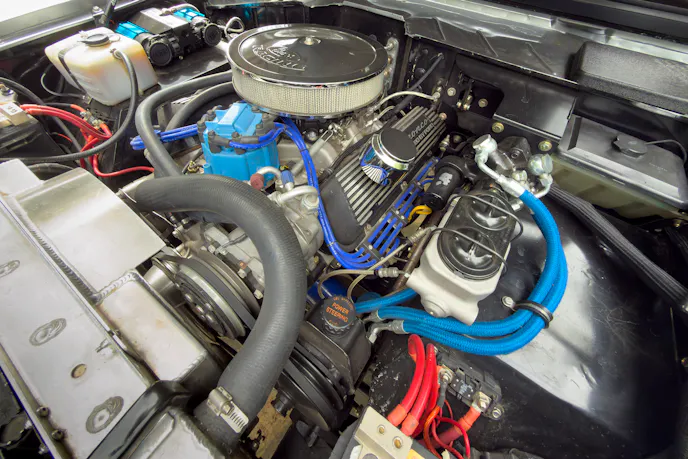
Harness spent nearly two years reassembling his Bronco in his garage, working as time allowed. That included installing a stout, fuel-injected, 600-hp 351W built by his friend Tom Paulson in Torrance, California, and backed by a built AOD from a mid-’80s Super Duty.
“At that point, I still needed to get it painted,” recalls Harness. “So I finally made the right choice, and my wife and I towed it across the country in the middle of February, braving ice and snowstorms, to Maxlider Brothers Custom, Ford Bronco restoration experts in Bloomington, Illinois.
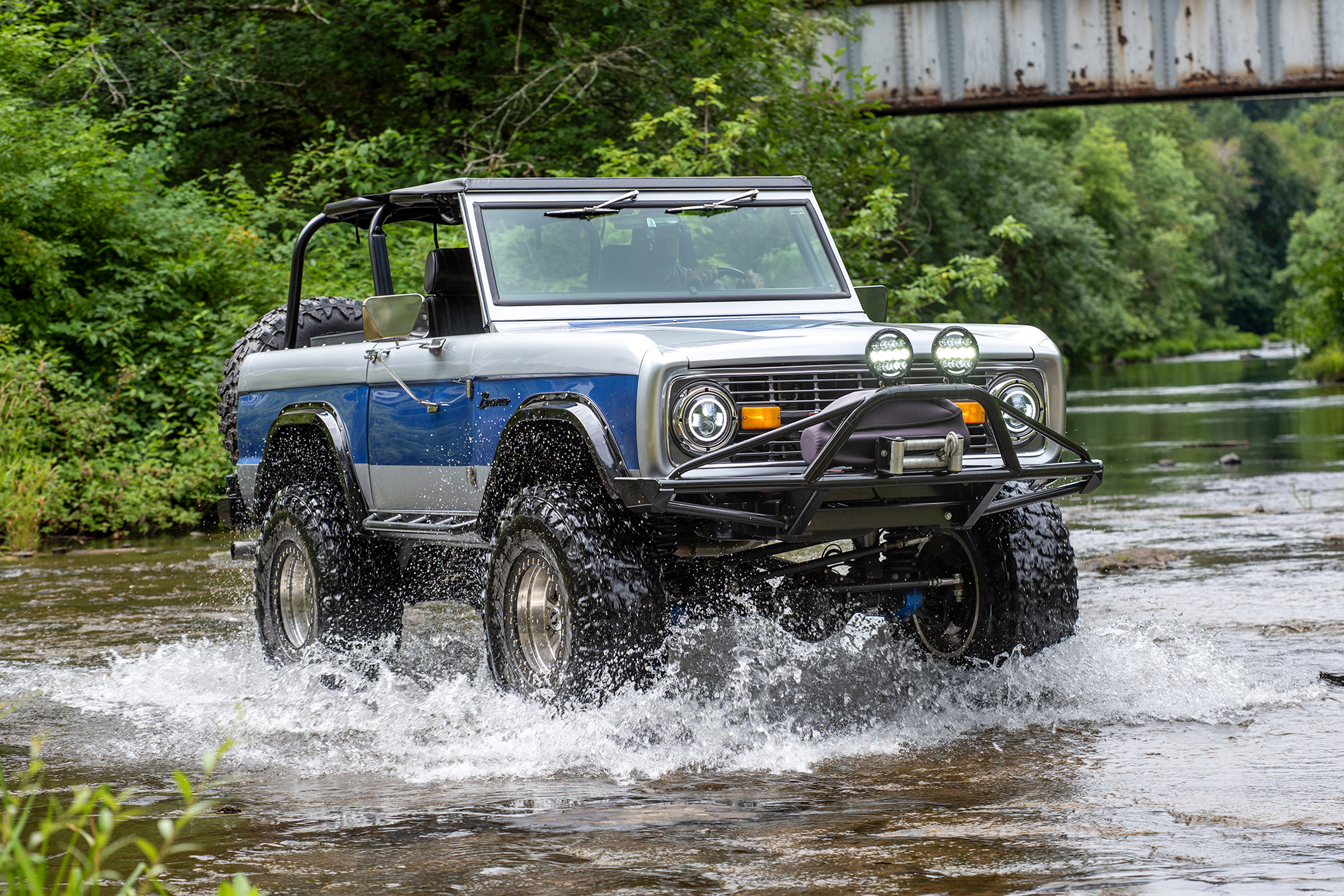
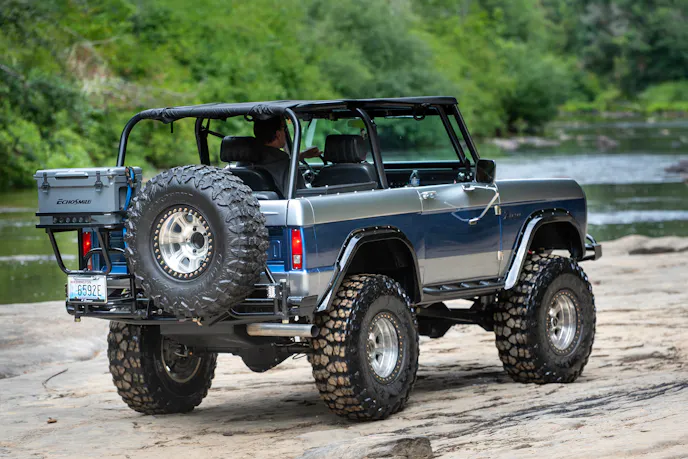
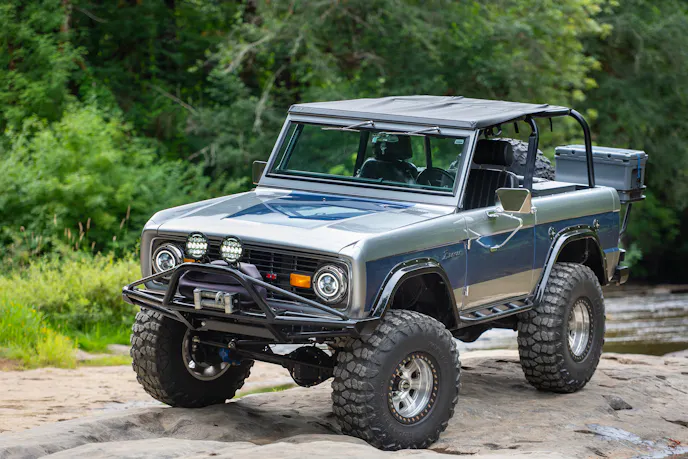
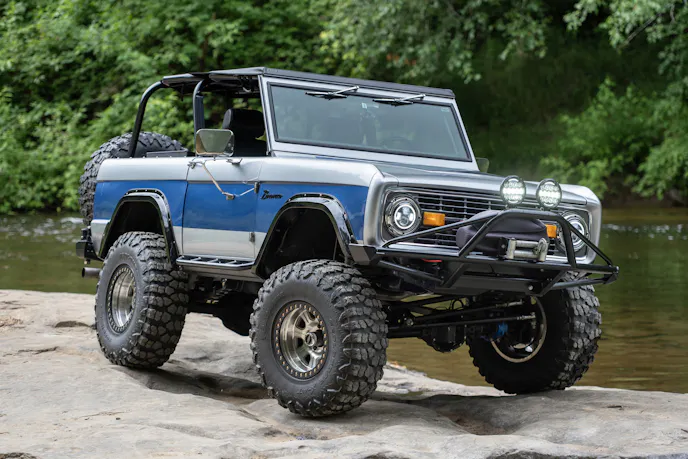
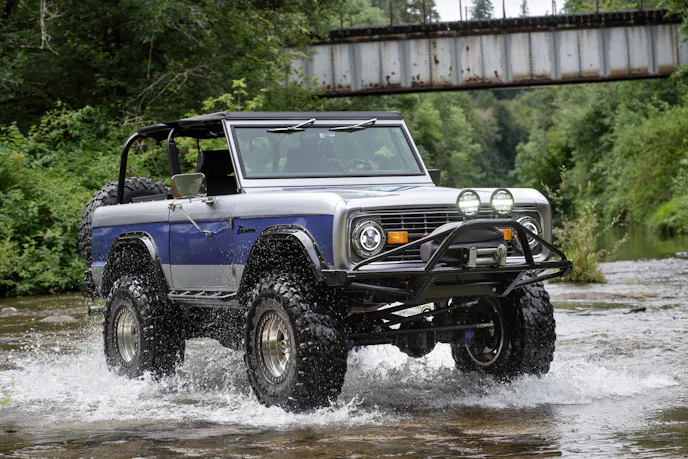
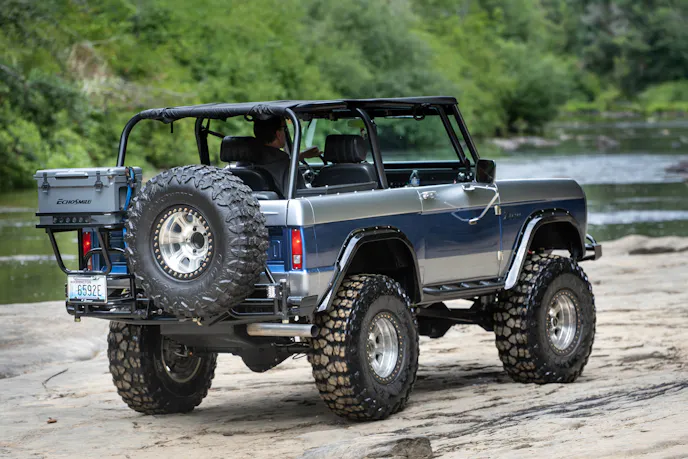
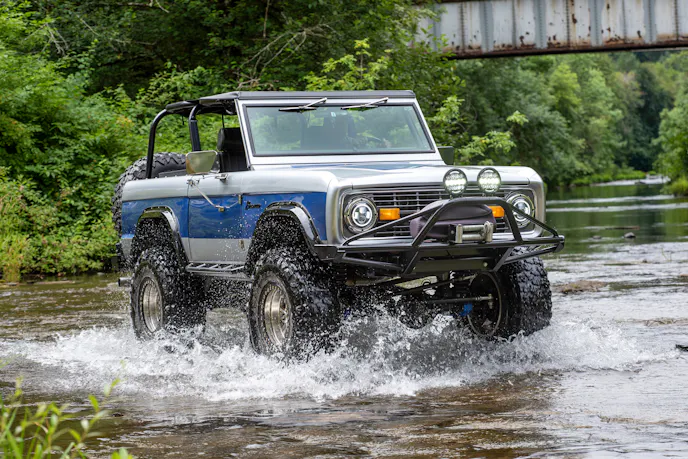
“I told them I wanted a trail rig. Something with decent paint, but not super pretty. I told them to fit it in as they had time. I got it back from them two and a half years later. It was gorgeous. The two-tone silver-and-blue paint was absolutely insane. They did an amazing job. So much so that it basically ruined my vision for the truck being a trail rig,” Harness says with a chuckle.
A 17-Year Learning Experience
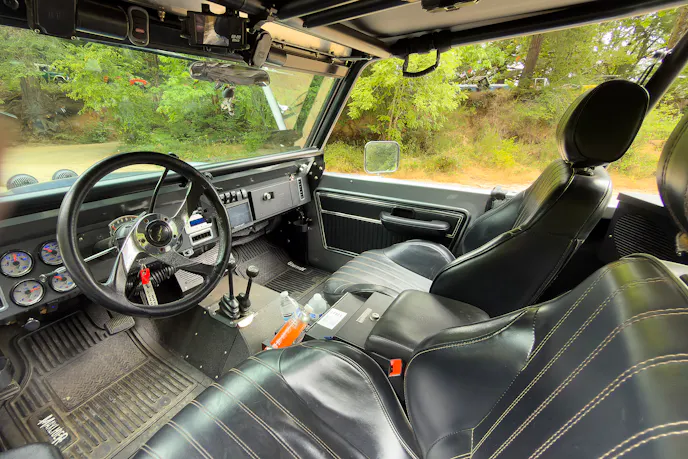
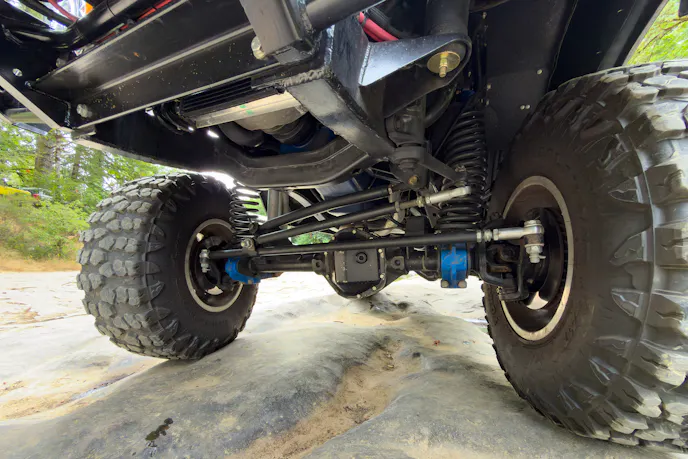
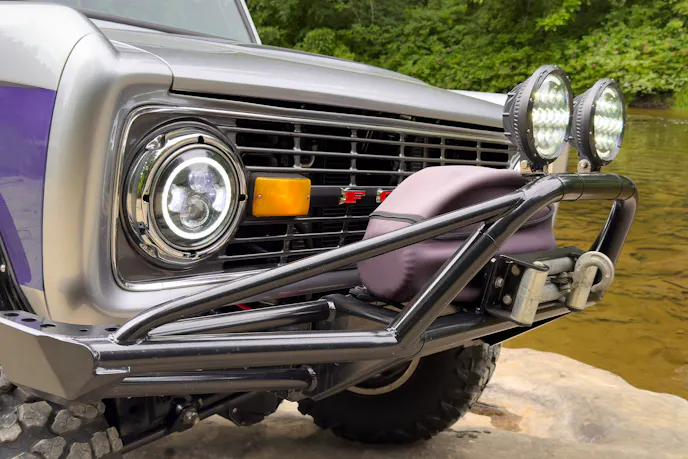
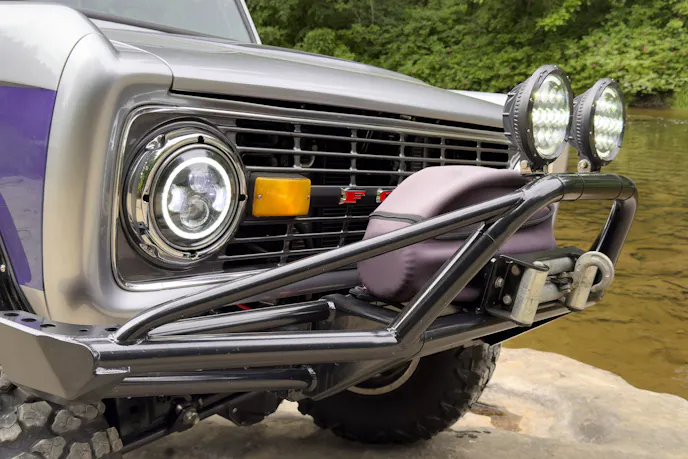
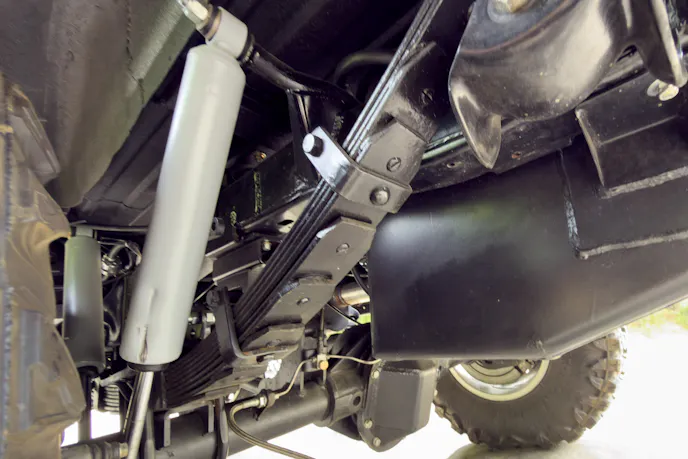
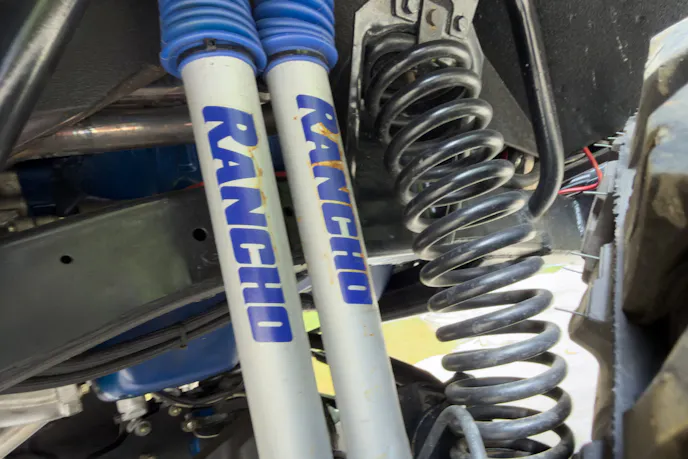
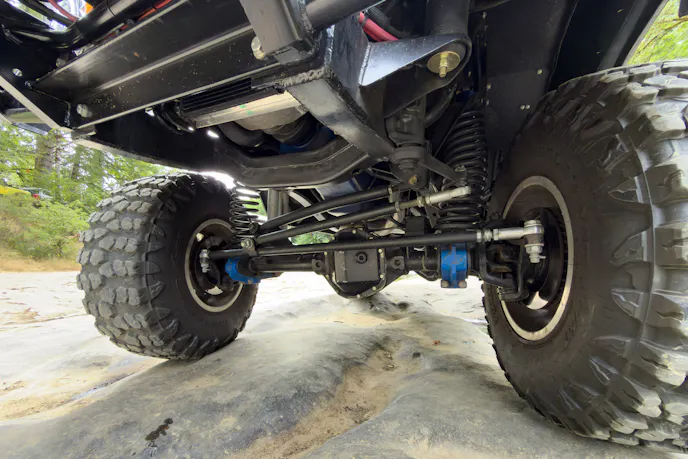
Harness says he then spent about another year putting it all back together. That included a custom interior and roll cage by Tom’s Off Road, a 5.5-inch BC Broncos suspension lift, custom-built Dana 44 and Dana 60 axles with ARB Air Lockers, and numerous exterior add-ons for both form and function.
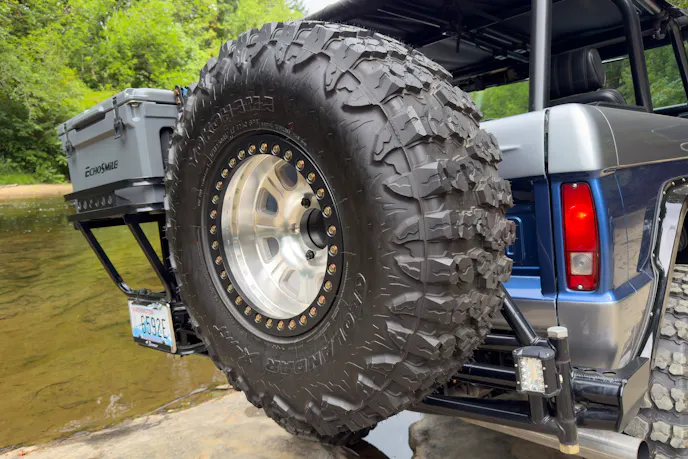
The “big tires” on the movie Bronco that sparked Harness’s love of these vintage Fords have nothing on the 37-inch Yokohama Geolandar X-MTs wrapped around the 17-inch Raceline Monster beadlocks under his truck.
“Here is my dream Bronco some 17 years later,” says a smiling Harness from the driver’s seat. “What I have learned over those years is there are no shortcuts when it comes to building your first Bronco. Plan on it taking way longer and costing a whole lot more money than you planned. Do your own research. Be especially wary when choosing body and paint shops.
“I made plenty of mistakes and had to start my build all over several times. Doing my next Bronco, which will be a true trail rig, will go way faster and be a much smoother process.”
You might also like
2027 Jeep Cherokee Trailhawk Packs Real Off-Road Hardware
The 2027 Jeep Cherokee Trailhawk combines hybrid efficiency with low-range 4x4, 9 inches of ground clearance, and Trail Rated capability.