

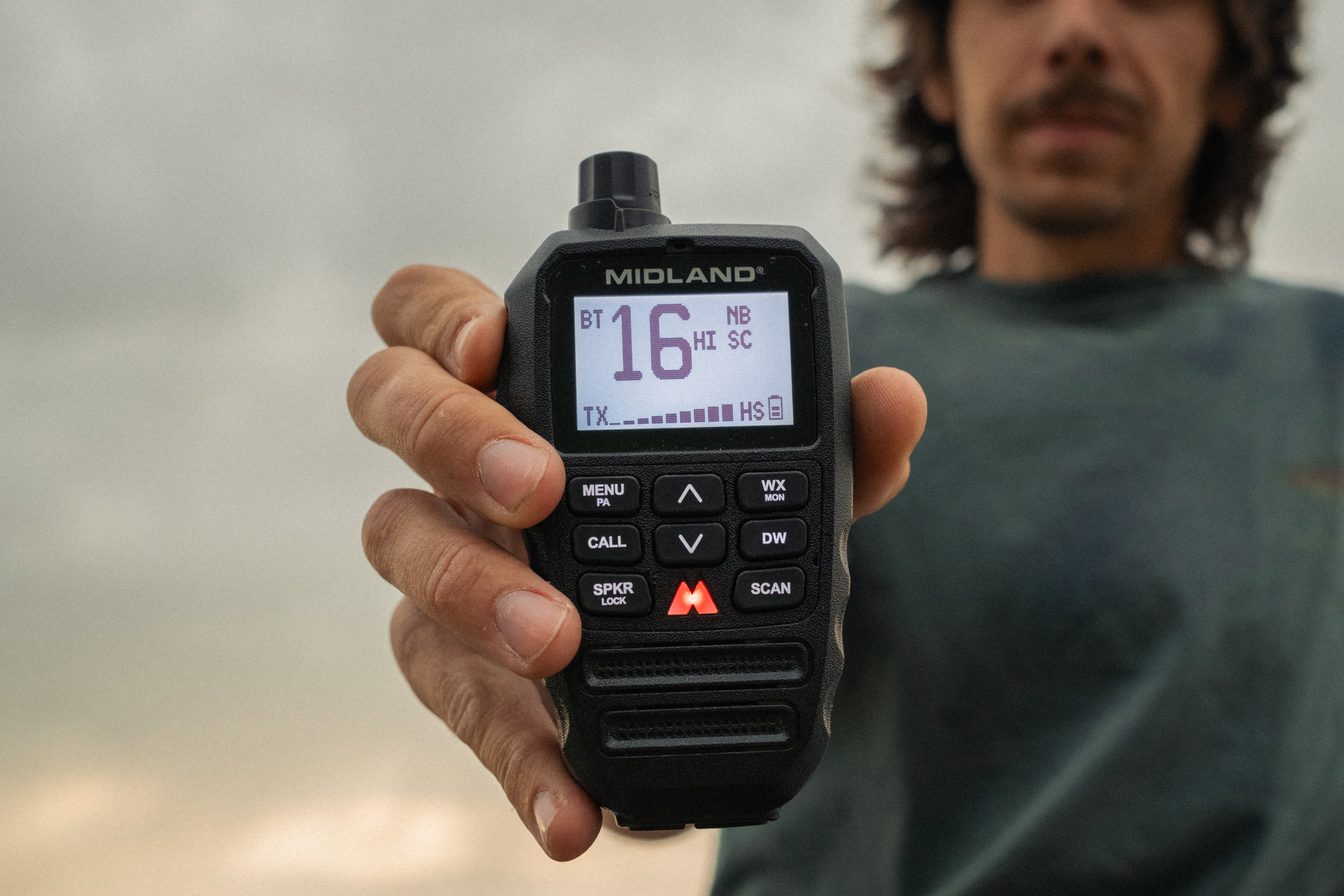
For off-roaders, overlanders, side-by-side owners, and anyone who spends time beyond dependable cell coverage, a vehicle-mounted GMRS radio can be one of the most useful communication tools in the cab. Midland’s new MXT295 PRO MicroMobile takes that idea a step further by addressing one of the biggest drawbacks of traditional mobile radios: installation clutter.
The MXT295 PRO is a compact 15-watt GMRS mobile radio built around a fully integrated wireless Bluetooth control microphone. Midland calls it “the next generation of MicroMobile,” and the description fits. The radio combines wireless operation with IP67 weather protection, repeater capability, automatic noise cancellation, wired intercom support, public-address functionality, NOAA weather reception, and expanded channel and privacy controls.

Wireless Where It Matters
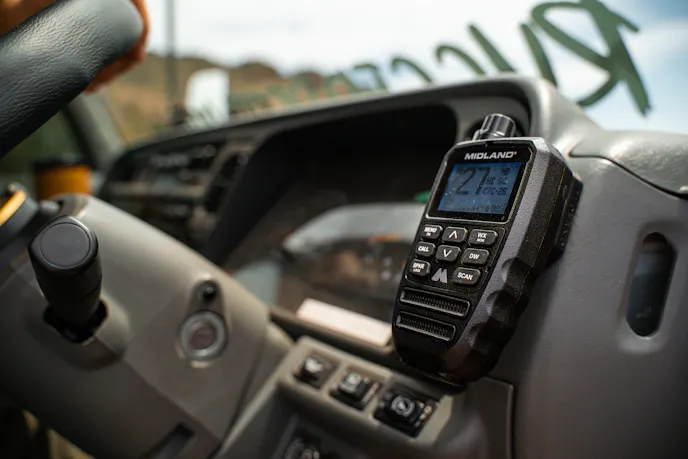
The defining feature of the MXT295 PRO is its Bluetooth-enabled microphone, which allows the radio’s base unit to be mounted out of sight while keeping the controls within easy reach. That can be a major advantage in a modern trail rig where dashboard and console space is already occupied by navigation screens, switch panels, phones, cameras, and other accessories.
The Bluetooth microphone and radio base come paired from the factory. Once connected, the microphone provides channel information and operating controls without requiring a traditional mic cable running across the cabin. Midland also supports compatible Bluetooth headsets, its Bluetooth intercom system, a wireless PTT button, and selected Bluetooth speaker configurations.
A traditional wired microphone can still be used if preferred, giving owners flexibility in how the radio is installed and operated.

15 Watts Of GMRS Power
The MXT295 PRO delivers up to 15 watts of transmit power, with selectable 15-watt High and 5-watt Low settings on channels where higher output is permitted. Midland says that 15 watts provides three times the power of traditional handheld radios.
As always, terrain and antenna placement have a major effect on real-world range. Midland lists maximum communication distances of up to 15 miles from mountain peak to mountain peak, up to 10 miles in suburban or rural areas, and up to 5 miles in neighborhoods or dense forest. Those figures assume favorable conditions, with maximum range achievable over water or open rural areas under optimum conditions.
Antenna location remains critical. Mounting the antenna high on the vehicle and as close to the center of the mounting surface as practical can improve performance, while fiberglass and vinyl surfaces may reduce range. The included antenna cable measures 19.7 feet, or 6 meters, giving installers plenty of routing flexibility.
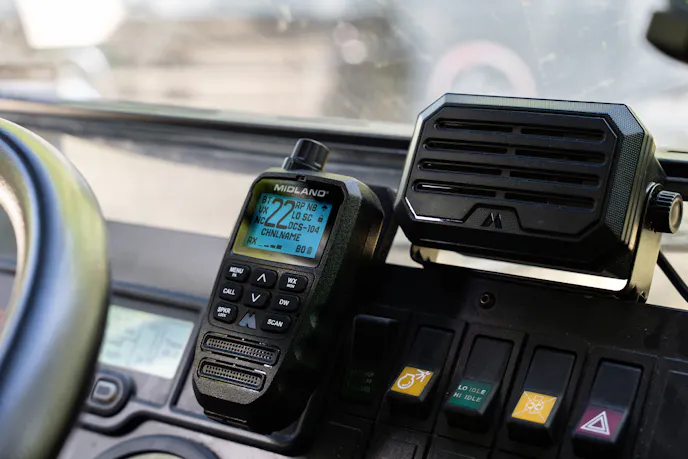
Built For The Trail
For vehicles that routinely see dust, mud, water, and rough weather, the MXT295 PRO carries an IP67 waterproof and dustproof rating.
Its operating-temperature range stretches from -22 to 122 degrees Fahrenheit, making it well suited to the temperature extremes encountered in year-round off-road and overland travel.
Automatic noise cancellation is another feature aimed squarely at noisy vehicles. When enabled, ANC processes microphone audio to reduce background noise during transmission. That can be particularly useful in open-cab UTVs, soft-top Jeeps, trucks with aggressive tires, or vehicles dealing with significant engine, wind, and drivetrain noise. Midland notes that ANC is optimized for noisy environments and can make softly spoken audio sound broken when used in quieter conditions.

More Channels, Repeaters, And Privacy Controls
The MXT295 PRO offers 50 GMRS channels, including 28 with preset CTCSS/DCS privacy codes, along with eight dedicated GMRS repeater channels.
When repeater operation is enabled, channels 15 RP through 22 RP are added to the channel list. These use the same receive frequencies as standard channels 15 through 22 but transmit on offset frequencies for repeater access.
The radio also supports split privacy tones on repeater channels, allowing separate transmit and receive CTCSS or DCS settings. In total, the MXT295 provides 154 privacy-code options: 50 CTCSS tones and 104 DCS codes.
Privacy codes are useful for filtering unwanted traffic from the speaker, although they do not encrypt a conversation. The radio simply stays muted unless it receives the selected tone or code.
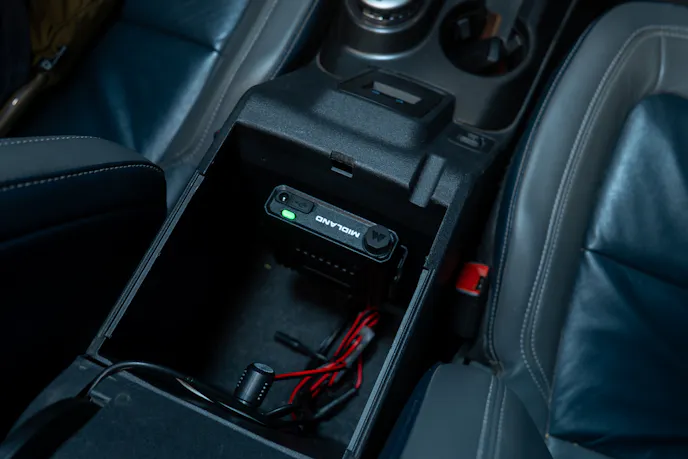
Intercom, PA, And Flexible Audio
The MXT295 PRO is designed to integrate into more than just a traditional truck or SUV.
A rear-panel TA5 mini-XLR connection supports compatible wired intercoms or headsets, a useful feature for side-by-sides and other vehicles where helmet-based communication is common.
There is also a public-address output. An optional external PA speaker can be connected, allowing the operator to switch from GMRS communication to PA mode and broadcast microphone audio through an exterior speaker.
Received audio can be routed through the base-unit speaker, the microphone or headset, or both. An external 8-ohm speaker rated for at least 4 watts can also be connected through the radio’s 3.5mm speaker jack.
Weather, Scan, And Dual Watch
For travelers heading far from reliable mobile data, the built-in NOAA weather receiver adds another layer of utility. The MXT295 PRO includes 10 weather channels covering 161.650 to 163.775 MHz.
Weather-alert detection can remain active while the radio is being used in GMRS mode. If an alert is detected, the radio sounds an eight-second alarm and automatically switches to weather mode.
The radio also includes GMRS scanning and dual-watch capability. Scan mode searches selected channels for activity, while dual watch alternates between the primary operating channel and a user-assigned secondary channel. That can be useful for trail groups that want to monitor a secondary frequency without abandoning their main channel.

Easy To Live With
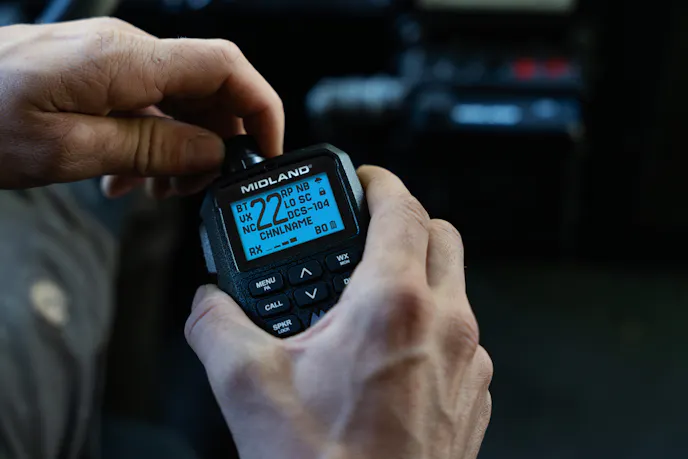
The control microphone includes dedicated buttons for Push-To-Talk, channel selection, Menu/PA, Call, speaker selection, keypad lock, Scan, Dual Watch, and Weather/Monitor functions. The display shows Bluetooth status, VOX, noise cancellation, signal strength, privacy codes, weather mode, bandwidth, repeater operation, and transmit power.
The LCD backlight offers seven color choices—white, blue, green, red, cyan, purple, or yellow—along with three brightness levels and an independent keypad backlight.
Installation is straightforward in a 12-volt negative-ground vehicle. The radio can use the included 12-volt accessory adapter or be hardwired to the vehicle’s electrical system. A USB-C port is also included for device charging.
The package includes the MXT295 PRO radio, wireless Bluetooth control microphone, slide-in mount and hardware, magnetic-mount antenna, magnetic mic mount, 12-volt power cord with DC adapter, quick-start guide, and documentation.
A More Flexible MicroMobile
What makes the MXT295 PRO stand out isn’t simply its 15-watt output. It is the combination of mobile-radio performance with a wireless control system that allows the base unit to disappear into the vehicle.
For a pickup or Jeep, that means a cleaner cabin. In a UTV, where interior space is at a premium, it can simplify installation considerably. And for overland vehicles already loaded with electronics, the wireless microphone gives owners more freedom to place the radio where it makes sense instead of where a microphone cable dictates.
Add IP67 protection, repeater capability, automatic noise cancellation, intercom integration, PA functionality, NOAA weather alerts, 50 GMRS channels, and extensive privacy controls, and the MXT295 PRO becomes one of Midland’s more versatile MicroMobile offerings for off-road use.
One final requirement remains: GMRS operation requires an FCC license. (Don’t worry, it only requires a $35 application fee and is good for 10 years.)
For enthusiasts looking to move beyond handheld radios without adding another bundle of wires to the dashboard, the MXT295 PRO brings a genuinely useful twist to the mobile-GMRS formula.
You might also like
600 HP And 17 Years: One Incredible 1972 Ford Bronco
A 17-year journey transformed Shane Harness’s 1972 Ford Bronco into a 600-hp restomod built for style, performance, and adventure.