
There was a time—not that long ago—when you could simply buy a Toyota 4Runner, bolt on a roof rack, throw a cooler in the back, and head for the nearest dirt road without anyone questioning your credentials.
That time is over.
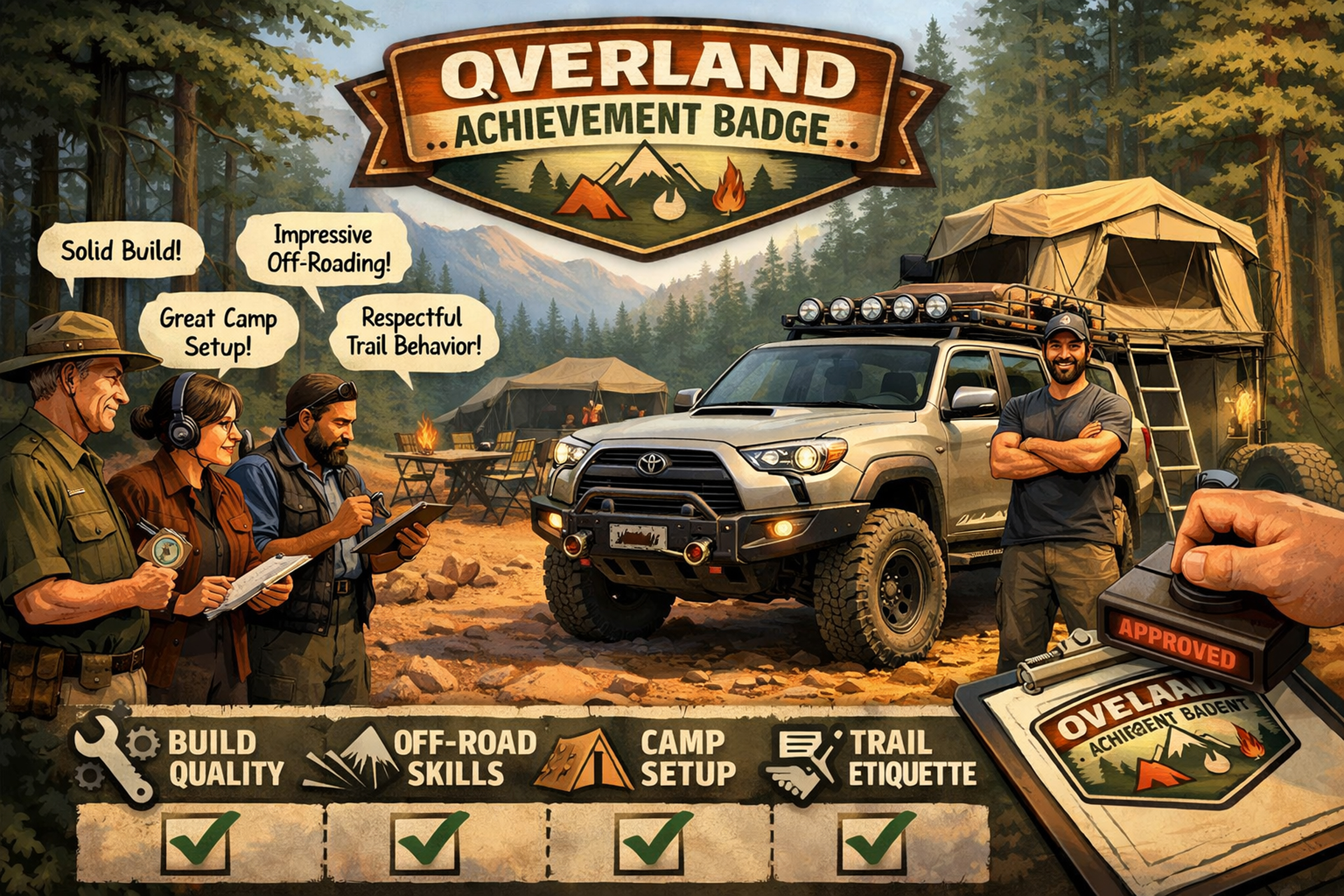
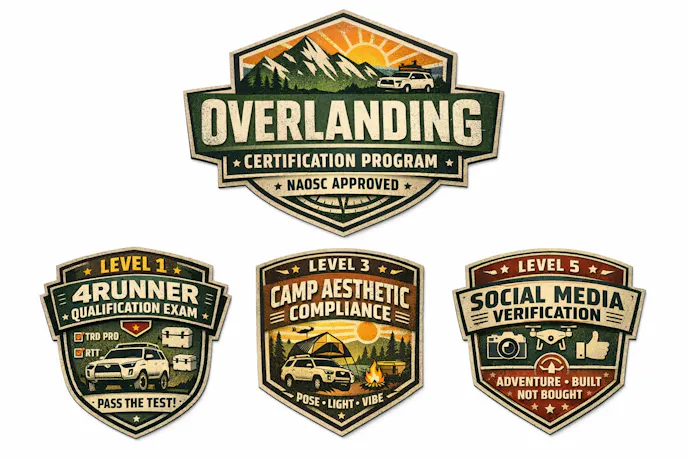
In a move that has sent shockwaves through trailheads, Instagram feeds, and REI parking lots nationwide, the newly formed North American Overlanding Standards Council (NAOSC) has officially launched the first-ever Overlanding Certification Program (OCP)—a rigorous, multi-stage evaluation designed to “ensure all overlanders meet minimum competency, aesthetic, and lifestyle benchmarks.”
And yes, 4Runner owners are at the center of it.
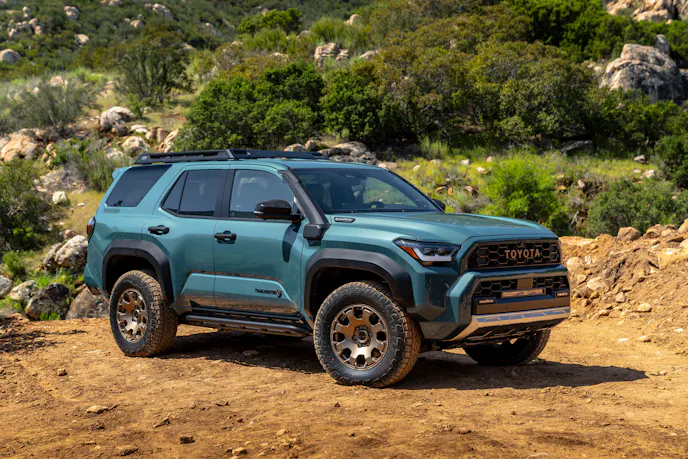
Level 1: The 4Runner Qualification Exam
Before even touching dirt, all 4Runner owners must pass a basic entry-level assessment.
Required components include:
- TRD Pro badge recognition (visual and emotional)
- Ability to explain why you “went with the 4Runner over the Jeep”
- Demonstrating ownership of at least one:
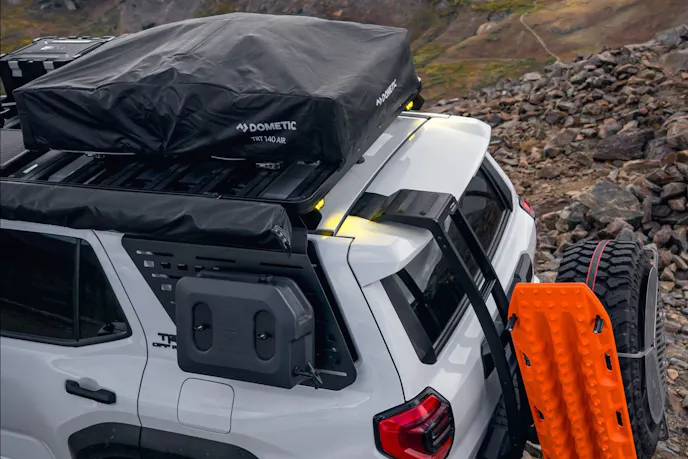
- Rooftop tent
- Traction boards (unused preferred)
- Dometic or YETI cooler
Failure to casually mention “Toyota reliability” within the first five minutes results in immediate disqualification.
Level 2: Gear Layout Certification
This is where things get serious.
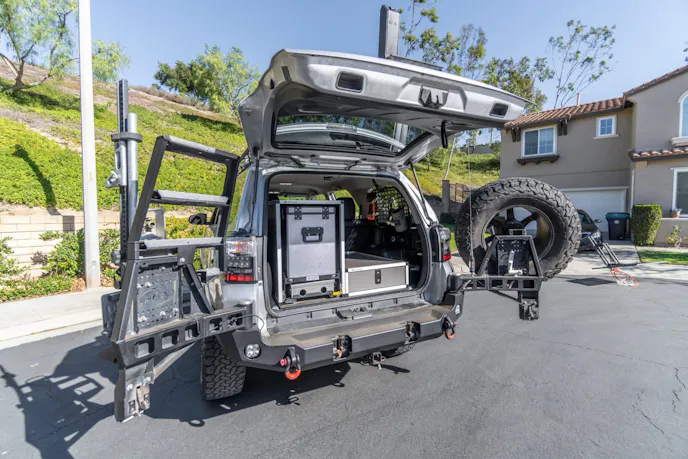
Candidates must present their cargo area for inspection, where judges evaluate:
- Symmetry of storage bins
- Brand cohesion (no mixing budget gear with premium optics)
- Visibility of recovery gear for Instagram purposes
Bonus points are awarded for:
- Perfectly coiled extension cords
- Matching color palettes between traction boards and vehicle accents
- A fridge slide that has never actually been used in anger
A deduction is issued if anything appears… practical.
Level 3: Camp Setup & Aesthetic Compliance
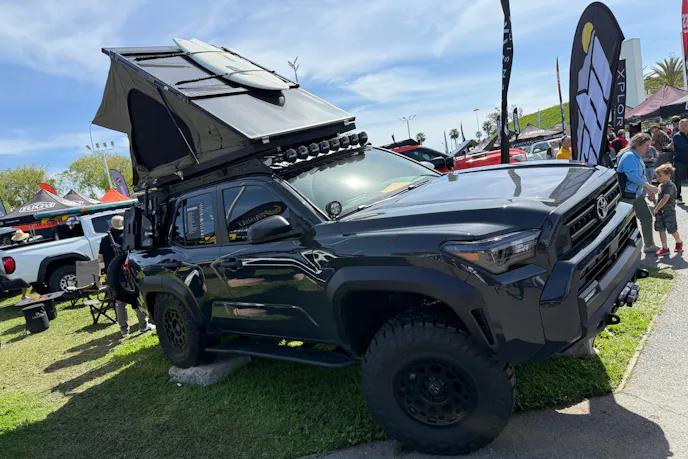
Often considered the most difficult phase, this portion tests a 4Runner owner’s ability to create a campsite that looks remote—even when it’s 40 feet from a paved turnout.
You will be graded on:
- Rooftop tent deployment time (must be under 90 seconds, including dramatic pause for photos)
- Camp chair angle relative to sunset
- Lantern placement for optimal golden-hour glow
Instant failure conditions:
- Using a headlamp instead of ambient lighting
- Cooking food that doesn’t photograph well
- Admitting you prefer hotels occasionally
Level 4: Trail Performance (Optional)
Interestingly, this section is not required for certification.
According to NAOSC officials, “Modern overlanding is about the journey, not the terrain—or technically needing 4WD.”
For those who opt in, the test consists of:
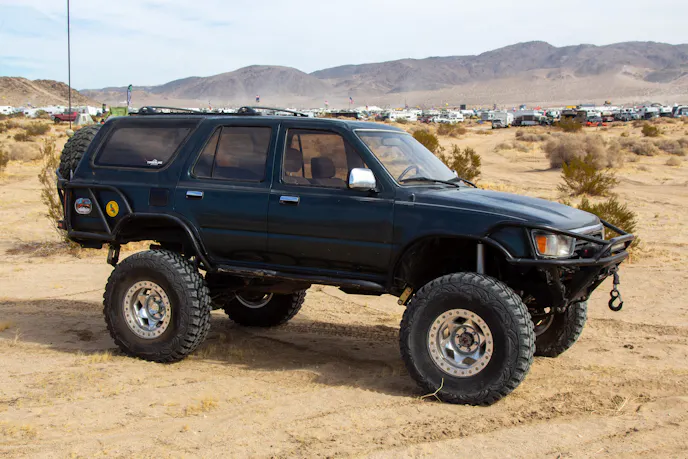
- Driving over a moderately uneven fire road
- Saying “this thing is super capable” at least twice
- Avoiding pinstripes at all costs
4Runners equipped with 37-inch tires and 200 pounds of skid plates are encouraged to bypass obstacles entirely.
Level 5: Social Media Verification
Perhaps the most critical component.
Candidates must submit:
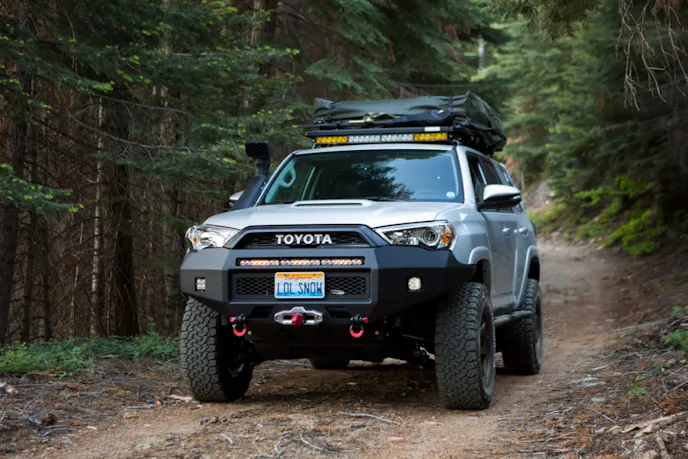
- At least 12 edited photos
- 3 drone clips (mandatory slow pan)
- One caption including the words:
- “adventure”
- “built not bought”
- “weekend therapy”
Engagement metrics will be reviewed. A minimum of 200 likes is required for provisional certification.
Applicants who actually enjoyed their trip without documenting it will be flagged for “non-compliance.”
The 4Runner Advantage (and Burden)
While the certification applies to all overlanders, 4Runner owners are widely expected to dominate the program—largely due to their natural predisposition toward:
- Meticulously curated builds
- Strong opinions about reliability
- An uncanny ability to spend $8,000 without increasing capability
However, this also places them under increased scrutiny.
“4Runner owners set the standard,” one NAOSC representative explained. “Which is why we’re holding them accountable.”
Recertification Requirements
Certification is valid for one year and must be renewed through:
- At least one new accessory purchase
- Updated build photos
- Public acknowledgment that you’re “not done yet”
Failure to comply may result in your vehicle being reclassified as a “daily driver.”
Final Thoughts
While critics argue the program overcomplicates what was once a simple hobby, supporters claim it brings much-needed structure to the rapidly growing overland community.
As one certified Level III 4Runner owner proudly stated while adjusting his traction boards for the fourth time:
“It’s not about getting out there anymore—it’s about doing it correctly.”
Applications are now open. Just remember:
If your 4Runner is actually dirty… you might want to clean it first.
You might also like
This 1990 Chevy 3500 Gets A 4WD Swap And Gains An LB7 Duramax
This 1990 Chevy 3500 wears decades of patina, but has been upgraded with 4WD and a Duramax turbodiesel engine.