

For as long as the modern Ram Power Wagon has existed, there has been a single, persistent question echoing through campgrounds, forums, dealer lots, and trailheads alike: When will Ram finally put a Cummins in it?
For the 2027 model year, Ram has its answer. The first-ever Cummins diesel-powered Ram Power Wagon is no longer a hypothetical build-sheet dream or a shop-floor swap. It’s real, it’s factory-backed, and it fundamentally reshapes what the most off-road-capable full-size pickup can be. With the introduction of the 2027 Ram Power Wagon Diesel, Ram blends the brand’s most revered engine with its most extreme off-road platform, creating what may be the most versatile heavy-duty adventure truck ever offered straight from the factory.
Why It Took So Long: The Diesel Power Wagon Dilemma
Given the passion surrounding the Ram Power Wagon and the near-mythical status of the Cummins inline-six, it’s fair to ask why this combination didn’t happen years ago. On the surface, the idea seems obvious—take Ram’s most capable off-road truck and install the brand’s most revered engine. In reality, the delay was the result of a complex engineering puzzle, one that forced Ram to balance physics, durability, and the very definition of what a Power Wagon is supposed to be.
The primary challenge has always been weight. The 6.7-liter Cummins is a cast-iron diesel and that strength comes at a cost. Compared to the gasoline V-8 historically used in the Power Wagon, the Cummins adds several hundred pounds over the front axle. For a conventional heavy-duty pickup focused on towing, that mass is manageable. For a truck designed to articulate over rocks, climb ledges, and maintain balanced suspension travel, it presents a serious obstacle. Excess front-end weight reduces suspension compliance, limits articulation, and can compromise approach angles and steering precision—traits that define the Power Wagon’s off-road identity.
Packaging has been equally problematic. The Power Wagon’s underbody layout is far more crowded than that of a standard Ram Heavy Duty. Skid plates protecting the transfer case, fuel tank, and chassis components occupy space typically used by diesel aftertreatment hardware, cooling systems, and exhaust routing. The Cummins engine also requires additional cooling capacity and robust emissions components, including selective catalytic reduction hardware and a diesel exhaust fluid tank. Integrating all of this without sacrificing ground clearance or water-fording ability took years of incremental chassis and thermal-management development. And that’s not even mentioning the Warn recovery winch.
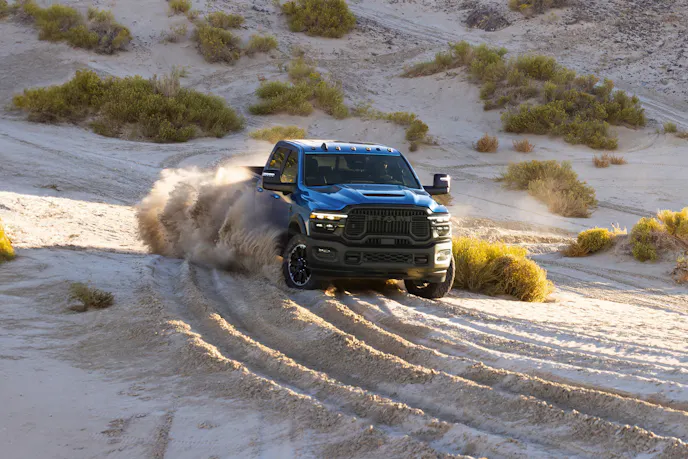
There was also the matter of torque delivery. Diesel engines produce peak torque at much lower engine speeds, which is ideal for crawling—but only if the drivetrain and axles can withstand sustained high loads at low rpm. Earlier generations of Power Wagon axles, gearing, and driveline components were optimized for gas-engine power curves and off-road responsiveness rather than continuous diesel torque. Simply installing the Cummins without reengineering these systems would have risked long-term durability, particularly in high-load, low-speed off-road scenarios where drivetrain stress is at its highest.
Another often-overlooked factor was the Power Wagon’s original mission. Historically, the model prioritized extreme off-road performance over maximum towing and payload. Diesel engines, while incredibly efficient and powerful, traditionally favor towing and long-haul efficiency rather than lightweight agility. For many years, Ram viewed the gas-powered Power Wagon as a purist’s off-road tool, leaving diesel power to the more work-oriented Ram 2500 and 3500 models. Introducing a diesel too early risked turning the Power Wagon into something it was never intended to be—a heavy tow rig rather than a trail-first machine.
What changed for 2027 is not just customer demand, but the underlying hardware. Advances in suspension tuning, axle strength, electronic locking differentials, and transmission control have finally allowed Ram engineers to fully exploit diesel torque without sacrificing articulation or ride quality. The introduction of the 3.42 axle ratio, the TorqueFlite HD eight-speed automatic, stronger axle components, and optional automatic-leveling rear air suspension collectively solved the compromises that once made a diesel Power Wagon unfeasible.
The Cummins was never absent from the Power Wagon due to lack of interest or imagination. It was absent because Ram refused to deliver a version that diluted what the Power Wagon stands for. The 2027 model represents the moment when engineering finally caught up with expectation—allowing the Power Wagon to gain diesel power without losing its soul.
A Cummins Where It Always Belonged
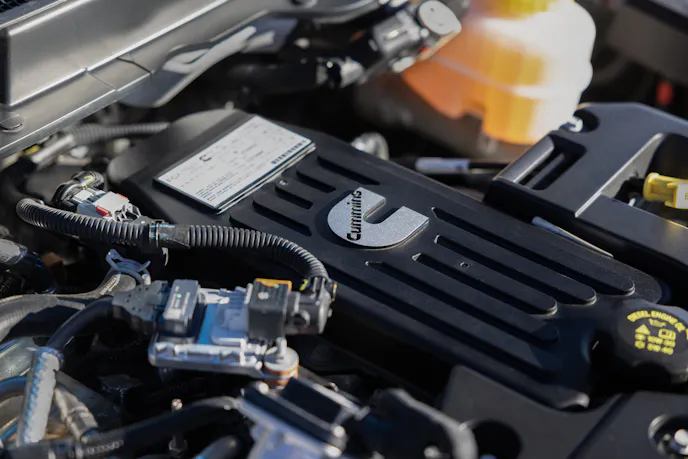
At the heart of the 2027 Ram Power Wagon Diesel is the 6.7-liter Cummins High-Output turbo-diesel inline-six. Rated at 430 horsepower and 1,075 lb-ft of torque at just 1,800 rpm, this is the same High-Output configuration that has built Ram’s reputation as the standard torque king of the HD segment .
“The customers have been telling us for years to put the Cummins in the Power Wagon,” said Tim Kuniskis, Head of American Brands for Ram. “Matching the Power Wagon with the Cummins turbo diesel delivers everything our hardcore Ram fans expect—off-road capability with the best diesel in the HD segment. It’s the Power Wagon they’ve been waiting for.”
Power is routed through a TorqueFlite HD eight-speed automatic transmission, a ZF-sourced unit specifically engineered to manage the diesel’s immense output. With closely spaced lower gears for control and acceleration, and tall overdrives for highway efficiency, the transmission plays a critical role in making the diesel Power Wagon feel equally at home crawling over rocks or covering long distances between fuel stops.
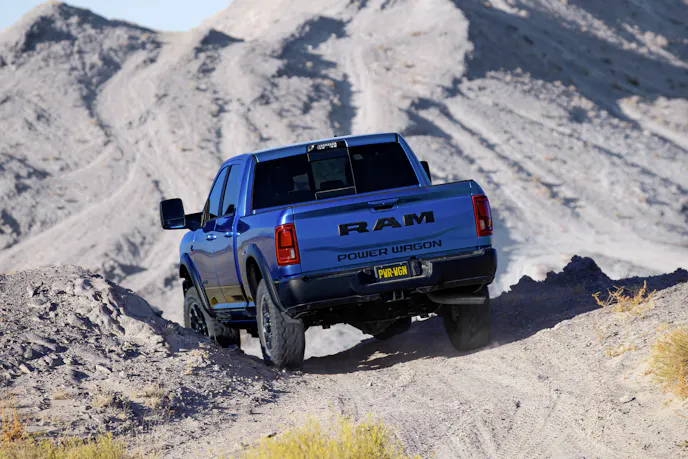
Torque Meets Trail: Reengineering The Power Wagon Formula
The Power Wagon has long held the title of the most off-road-capable full-size pickup, and Ram was adamant that adding a diesel could not compromise that distinction. To that end, the 2027 Power Wagon Diesel retains all the hardware that defines the nameplate.
Both front and rear axles are solid units sourced from American Axle Manufacturing, with a 9.25-inch beam axle up front and an 11.5-inch rear axle out back. Electronic-locking differentials are standard at both ends, allowing full torque transfer when traction disappears. When disengaged, the rear locker functions as a mechanical anti-slip differential, maintaining predictable handling on mixed surfaces.
A class-exclusive electronic disconnecting front sway bar remains standard, dramatically increasing articulation when the trail turns technical. Suspension tuning is handled by Power Wagon-specific Bilstein monotube shocks, paired with Ram’s signature five-link coil-spring rear suspension. Unlike traditional leaf springs, the coil setup delivers a rare combination of ride comfort, articulation, and load control—an approach that continues to set Ram apart in the HD space.
New for the diesel Power Wagon is the availability of an automatic-leveling rear air suspension. Previously unavailable on Power Wagon models, the system maintains a level stance under load and introduces a bed-lowering mode that simplifies hitching trailers or loading gear. It’s a subtle addition with major real-world benefits, especially for overlanders and recreational towers pushing deep into remote terrain.
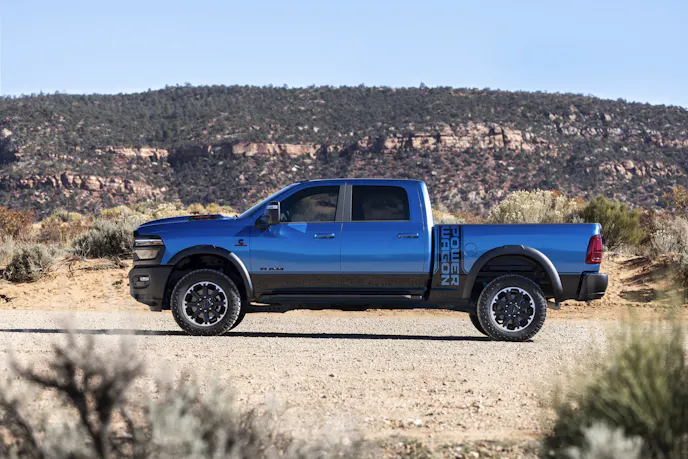
Built To Go Farther Than Ever Before
One of the most compelling advantages of the diesel Power Wagon is range. A standard 31-gallon fuel tank, combined with the efficiency of the Cummins engine, delivers an estimated 600 miles of driving range. For overland travelers, hunters, and expedition crews, that kind of autonomy changes trip planning entirely. Fewer fuel stops mean deeper exploration and more time off the grid.
Underbody protection is extensive. Skid plates shield the transfer case, fuel tank, and diesel exhaust fluid tank, while Mopar rock rails protect the cab from trail damage. Approach and departure angles check in at 26.1 and 26.0 degrees respectively, with a breakover angle of 20.6 degrees and an impressive 13.2 inches of ground clearance.
The electronic BW 44-48 transfer case provides 2WD, 4WD High, Neutral, and 4WD Low ranges, with a 2.64:1 low-range ratio that works in concert with the diesel’s torque curve for precise throttle control on steep or uneven terrain.
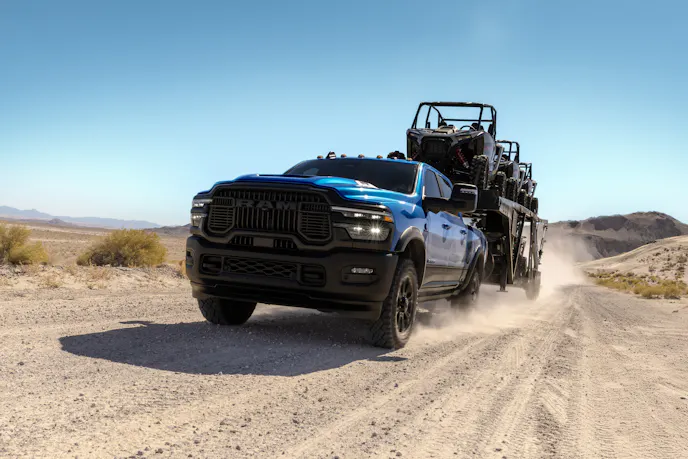
A Heavy-Duty Truck That Can Still Work
While off-road performance remains central to the Power Wagon’s identity, the diesel variant finally brings legitimate heavy towing capability into the mix. The 3.42 rear axle ratio—introduced across the Ram HD lineup in recent years—strikes a balance between low-speed pulling power and highway efficiency. Paired with the eight-speed automatic, it enables confident towing without sacrificing drivability or refinement.
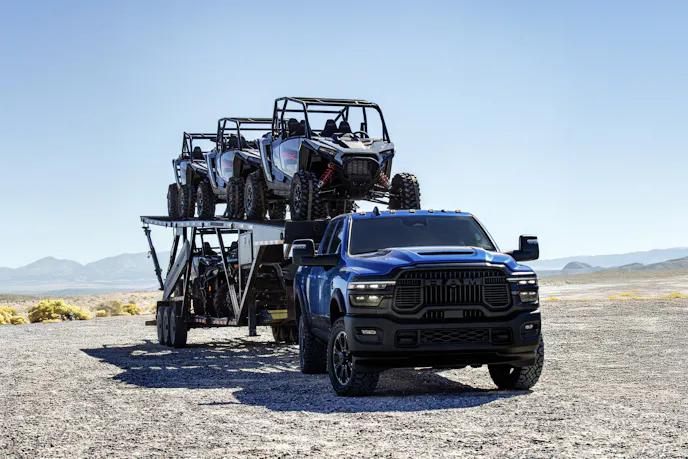
For the first time, the Power Wagon Diesel can be equipped with fifth-wheel and gooseneck trailer preparation, expanding its usefulness well beyond recreation. Integrated trailer brake control, available surround-view cameras, trailer tire pressure monitoring, and trailer reverse steering control transform the truck into a highly capable towing platform without undermining its trail-ready DNA.
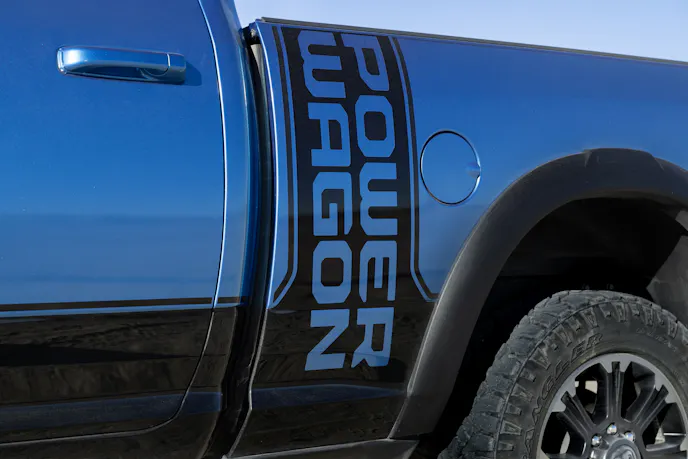
Purposeful Design With Subtle Diesel Attitude
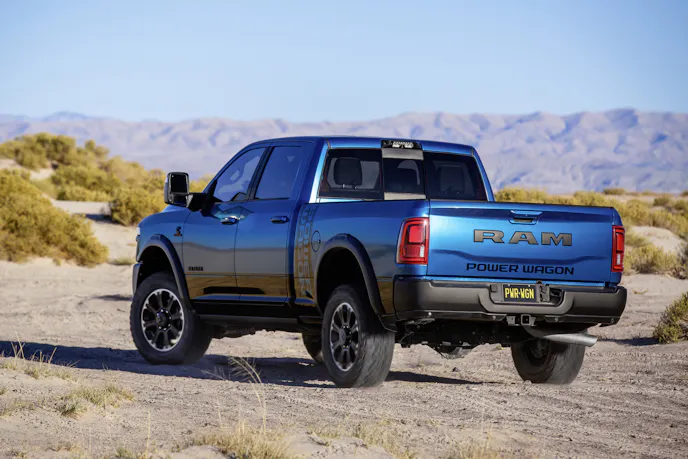
Visually, the 2027 Power Wagon Diesel stays true to the aggressive, functional styling that has become its signature. The sport performance hood remains standard, hinting at the torque beneath. Satin black accents and discreet Cummins badging distinguish the diesel model without shouting for attention, while Power Wagon bedside graphics reinforce its identity.
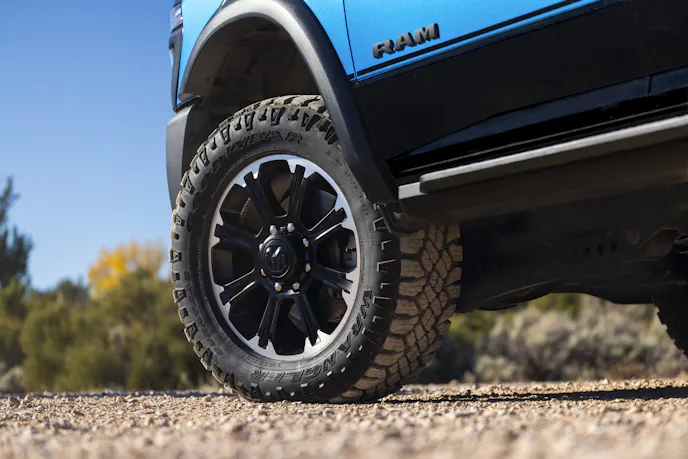
Twenty-inch black diamond-cut aluminum wheels are wrapped in 34-inch all-terrain tires, a combination chosen to balance off-road capability with stability and load capacity. Powder-coated front and rear bumpers provide durability, while functional wheel arch extensions help protect bodywork when the trail narrows.
Available exterior upgrades include body-color door handles, extended LED lighting, and RamBox cargo management, giving buyers the ability to tailor the truck to their specific blend of work and adventure.
Inside The Most Luxurious Power Wagon Ever
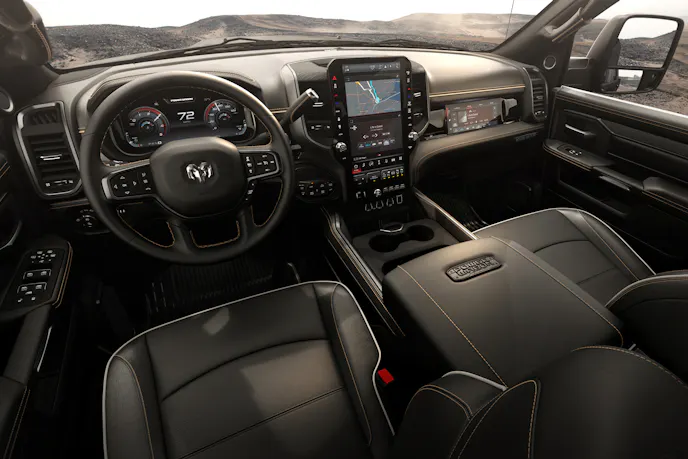
Step inside, and the diesel Power Wagon reveals a cabin that rivals premium SUVs for comfort and technology. Even in standard form, the truck features a 12-inch Uconnect 5 touchscreen, digital instrumentation, and a robust suite of driver-assistance features including adaptive cruise control, blind-spot monitoring with trailer coverage, and hill-descent control .
Optional upgrades push the interior firmly into luxury territory. The available 14.5-inch Uconnect touchscreen dominates the dashboard, joined by a class-exclusive front passenger interactive display. Premium audio systems from Harman Kardon offer up to 17 speakers, while leather-trimmed seating with heating and ventilation transforms long drives into genuinely relaxing experiences.
Material quality is a clear focus, with available extended leather trim, aluminum accents, and thoughtful storage solutions including in-floor rear storage bins.
A Legacy Nearly Eight Decades In The Making
To understand the significance of a diesel Power Wagon, it helps to revisit the name’s origins. The original Power Wagon debuted in 1945, derived from Dodge’s World War II-era WC military trucks. Built for civilian use but grounded in military durability, it quickly earned a reputation as an unstoppable workhorse and remained in production through 1980.
The modern Power Wagon returned in 2005 as a purpose-built off-road variant of the Ram Heavy Duty, reviving the spirit of the original while integrating modern engineering. Over the years, it developed a fiercely loyal following—one that consistently asked for a diesel option. The 2027 Power Wagon Diesel represents the fulfillment of that long-standing request, bridging the historical gap between brute-force capability and modern diesel performance.
The Power Wagon, Fully Realized
Set to arrive in the second half of 2026 with a starting price of $88,470 including destination, the 2027 Ram Power Wagon Diesel is more than just a new variant. It’s the realization of a concept enthusiasts have envisioned for decades—a heavy-duty truck that can crawl, haul, tow, and roam farther than ever before without compromise.
You might also like
Pinned In Pennsylvania: Full Send At The 2026 Summer 4-Wheel Jamboree
The 2026 Summer 4-Wheel Jamboree rolled into Bloomsburg, Pennsylvania, bringing with it almost 2,000 4x4s and lots of off-road action.